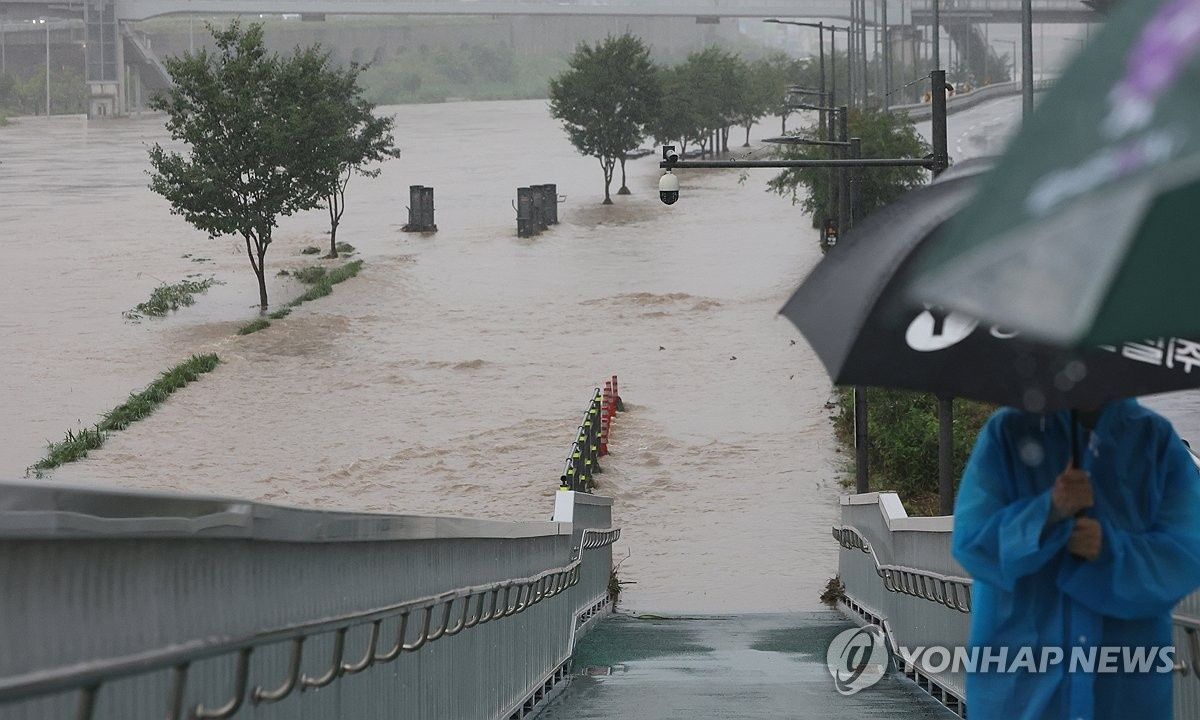
South Korea's capital region and surrounding eastern areas experienced a severe weather event overnight, with heavy rains triggering widespread flooding and damage that affected hundreds of properties across Seoul and Gangwon Province. The Central Disaster and Safety Countermeasure Headquarters reported approximately 540 cases of property damage by Saturday morning, following intense precipitation that continued through the early hours and into mid-morning. Although the downpour caused significant disruption to daily life, authorities confirmed that no deaths or serious injuries resulted from the extreme weather, marking a fortunate outcome given the scale of the deluge.
Rainfall intensity during the early morning hours proved particularly severe, with measurements recorded between midnight and 10 am showing near or exceeding 190 millimetres in multiple locations across the metropolitan area and Gangwon Province. Paju received 192.5mm, the highest recorded amount, followed closely by Dongducheon with 189.5mm. Other heavily affected areas included Pocheon, which registered 179mm, Gimpo with 166.5mm, and Cheorwon recording 159.5mm. The concentration of such heavy precipitation in a relatively short timeframe overwhelmed local drainage systems and left many communities struggling to cope with sudden inundation of streets and residential areas.
The immediate impact on homes and infrastructure was substantial. Authorities documented 148 separate reports of flooded residences and roadways, while an additional 392 incidents involved fallen trees and scattered debris blocking streets and damaging property. The combination of standing water and environmental hazards created hazardous conditions throughout the affected regions. In response to safety concerns, 95 people from 44 households across six cities were temporarily relocated to secure facilities as a precautionary measure, though the evacuations reflected administrative caution rather than any reported imminent threats to life.
As the morning progressed, weather authorities maintained heavy rain alerts across 10 regions of Gangwon Province, with particular concern focused on Pocheon where a specific mudslide warning remained active. The topography of Gangwon, characterised by mountainous terrain and steep slopes, creates vulnerability to ground instability during extended wet weather. This geographic factor prompted heightened vigilance from emergency management officials who anticipated continued ground saturation would increase landslide risk in the coming hours.
Recreational and tourism activities across the nation ground to a halt as officials closed access to 10 national parks to prevent exposure of visitors to dangerous conditions. Among the affected sites was Mount Bukhan, a popular hiking destination near Seoul that regularly attracts thousands of visitors. Beyond the national parks themselves, authorities also cordoned off 275 individual hiking paths throughout the region. Seven ferry routes operating from the western coast were suspended, reflecting the decision to keep people off waterways where strong currents and reduced visibility posed additional hazards.
The weather pattern showed no signs of abating. Forecasters predicted that heavy rainfall would persist through Sunday, with some areas potentially receiving up to 300 millimetres of precipitation per hour at peak intensity. This projection raised serious concerns about cumulative water accumulation and the potential for secondary disasters such as more extensive flooding and ground movement in already-saturated soil. The extended forecast represented the meteorological basis for Prime Minister Han Seong-sook's decision to convene an emergency response meeting and issue direct orders to mobilise resources.
Prime Minister Han acknowledged both the fortunate absence of casualties and the genuine hardship faced by those whose homes and possessions were damaged. Speaking during the emergency coordination session, she expressed sympathy for affected residents while emphasising the government's commitment to rapid response operations. Her statement recognised that while loss of life had been avoided, the destruction of homes and the financial burden of property damage imposed real suffering on vulnerable households. This framing acknowledged the psychological and economic toll of natural disasters beyond immediate physical danger.
Government directives focused on two complementary objectives. First, authorities were instructed to expedite deployment of equipment and personnel to affected areas to restore normalcy as quickly as possible, clear debris, pump out standing water, and repair damaged infrastructure. Second, officials were placed on heightened alert status for anticipated rainfall in central Chungcheong Province and northeastern Gangwon Province later Saturday and into early Sunday. The prime minister specifically highlighted landslide preparedness, understanding that steep terrain combined with prolonged saturation creates critical instability risk.
The incident underscores vulnerabilities in South Korean infrastructure and urban planning related to extreme weather events that appear to be increasing in frequency and intensity. Seoul, despite its status as a highly developed global city with sophisticated systems, demonstrated susceptibility to rapid flooding when precipitation exceeds design specifications. For Malaysian and Southeast Asian observers, the Seoul flooding offers relevant lessons about climate adaptation and disaster response readiness. Tropical and subtropical regions increasingly experience sudden extreme rainfall events, and the South Korean experience illustrates both how well-prepared systems can minimise casualties and how even advanced economies struggle with property damage and service disruption when weather intensity exceeds historical norms.

