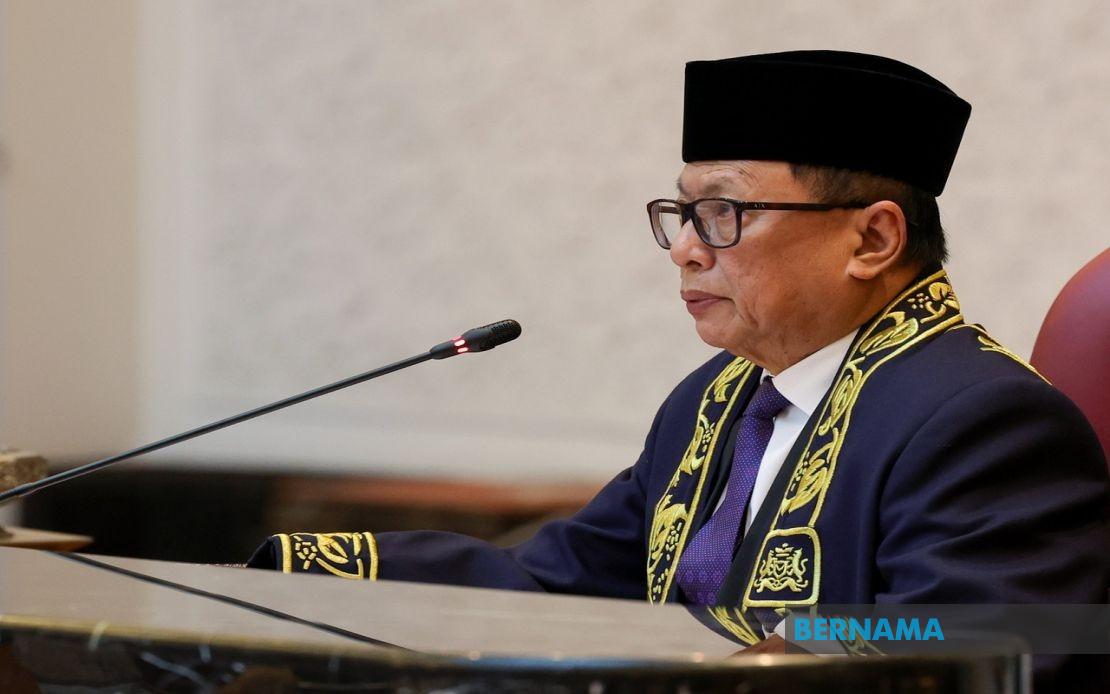
The departure of Datuk Dr Mohd Puad Zarkashi from UMNO marks a significant rupture within Johor's political establishment, as the party's Supreme Council member used his exit to launch scathing accusations against the state's chief minister. Announcing his resignation on June 25, 2026, Puad Zarkashi claimed the move was driven by principle rather than personal grievance, framing it as an act of political courage necessary to expose what he characterised as systemic wrongdoing within the party's upper echelons. His departure arrives at a particularly sensitive moment for UMNO in Johor, as the party navigates succession dynamics and candidate selection processes ahead of upcoming state elections.
Puad Zarkashi's central allegation targets Johor Chief Minister Onn Hafiz, whom he describes as a "pak turut" or yes-man lacking genuine independent authority. The characterisation suggests that Onn Hafiz operates as a subordinate figure rather than a decisive leader, effectively rendering Johor UMNO a "tethered puppet" constrained by forces beyond the state's command structure. This framing carries profound implications for perceptions of Johor's governance and raises questions about the actual locus of decision-making power within the party apparatus. Such accusations, coming from someone positioned within UMNO's top decision-making body, undermine confidence in institutional leadership and suggest factional tensions have reached a breaking point.
The former Batu Pahat Member of Parliament prefaced his resignation with claims of irregularities in the Barisan Nasional candidate selection process for the Johor state election. Puad Zarkashi's decision to step down rather than contest the Rengit state seat—which he successfully defended in the 2022 elections—appeared initially positioned as a generational gesture toward younger candidates. However, his subsequent announcement reframed this withdrawal as strategic distancing from a selection mechanism he regards as compromised. The timing and framing suggest his grievances extend well beyond ordinary intra-party disagreements, pointing toward institutional failings that Puad Zarkashi believes require public exposure.
Puad Zarkashi explicitly rejected suggestions that personal considerations motivated his departure, a preemptive denial suggesting he anticipated such interpretations. His political track record provides nuance to this assertion. The former Deputy Education Minister from 2009 to 2013 and Director-General of the Special Affairs Department from 2015 to 2018 occupied significant positions within Malaysia's federal bureaucracy, indicating institutional seniority and network positioning. His loss to PKR's Datuk Mohd Idris Jusi by merely 1,524 votes in the subsequent general election demonstrates competitive vulnerability, yet his subsequent appointment to UMNO's Supreme Council suggests party confidence in his continued relevance beyond electoral performance.
The strategic language of his resignation statement merits careful analysis. Puad Zarkashi emphasised that his departure would permit him to criticise UMNO without accusations of disloyalty—a carefully constructed position that preserves his right to remain intellectually engaged with party matters whilst escaping institutional constraints. This formulation differs markedly from complete estrangement; rather, it signals intentional distance that maintains critical commentary capacity. For Malaysian political observers, such precision in exit language suggests calculated positioning for future relevance, whether through formal party re-engagement or alternative political alignments.
The institutional context surrounding this resignation encompasses broader UMNO vulnerability within Johor. The party has faced persistent questions regarding generational transition, merit-based advancement, and the concentration of decision-making power within narrow leadership circles. Johor, traditionally UMNO's strongest state bastion, has witnessed increasing internal competition and occasional defections that complicate the party's electoral calculations. Puad Zarkashi's departure thus represents not merely an individual rupture but symptomatic manifestation of accumulated institutional stress and leadership credibility challenges that extend beyond personalities toward structural governance concerns.
Puad Zarkashi's invocation of political courage deserves examination within Malaysian political discourse conventions. The phrase carries distinct weight in contexts where party discipline traditionally constrains public criticism and internal dissent remains largely submerged beneath institutional uniformity. His deployment of this language suggests deliberate positioning within broader narratives regarding political integrity, individual conscience, and institutional accountability. For readers navigating Malaysian political complexity, this framing indicates sophisticated understanding of how departure announcements function as political acts with implications extending beyond immediate resignation mechanics.
The allegations of candidate selection irregularities warrant particular attention given UMNO's historical sensitivity regarding such processes. Candidate selection mechanisms represent crucial junctures where party ideology, factional interests, and electoral viability calculations intersect. Accusations of impropriety in these processes strike at institutional legitimacy itself, implying that meritocratic principles have been subordinated to factional advantage or external pressure. Puad Zarkashi's willingness to publicise such concerns through his resignation suggests confidence that substantial party elements share similar misgivings, potentially signalling broader factional dissatisfaction beyond visible public discourse.
For Southeast Asian political observers, this episode illuminates dynamics within Malaysia's dominant Malay-Muslim political formations. UMNO's internal cohesion remains essential to broader Barisan Nasional stability and federal governance continuity. Successive defections or public recriminations from senior figures erode party morale and signal external stakeholders regarding institutional fragility. Johor's particular importance as UMNO's strongest state redoubt amplifies significance; territorial loss here carries disproportionate weight for party prestige and electoral confidence.
The immediate electoral implications remain uncertain. Puad Zarkashi's vacated Rengit seat will require candidate replacement, presenting opportunities for younger politicians yet potentially exposing organisational disruption. His absence from UMNO's Supreme Council removes a voice critical of incumbent leadership, though his public criticisms may embolden similarly discontented figures to reassess their own commitments. The party must now manage narrative framing of his departure whilst addressing underlying governance concerns his departure highlighted.
Puad Zarkashi's career trajectory—from parliamentary representation through ministerial appointments to party elite status—provides cautionary template regarding institutional vulnerability at senior levels. His departure demonstrates that formal position confers insufficient security when fundamental disagreements arise regarding leadership competence or institutional direction. This realisation may influence calculations among other UMNO figures similarly positioned, particularly those harbouring reservations regarding current Johor leadership effectiveness or party trajectory.
The broader political ecosystem will absorb this departure's ripple effects gradually. Whether Puad Zarkashi seeks alternative party affiliation, maintains independent political status, or eventually reconciles with UMNO remains unclear. His public platform and institutional experience ensure continued political relevance regardless of formal organisational attachment. For UMNO leadership, his departure represents both institutional loss and opportunity to demonstrate renewed governance commitment through addressing legitimate criticisms his exit publicly articulated.
Ultimately, Puad Zarkashi's resignation functions simultaneously as personal rupture, institutional indictment, and political positioning manoeuvre. His allegations regarding Onn Hafiz's supposed subordination challenge Johor UMNO's leadership credibility at a politically significant moment. Whether his departure catalyses institutional reform, factional reorganisation, or merely temporary controversy depends substantially upon responses from remaining party leadership and whether other senior figures share or validate his governance concerns. For Malaysian political observers tracking UMNO's evolution and Johor's governance dynamics, this episode warrants sustained attention as additional details emerge and responses crystallise.

