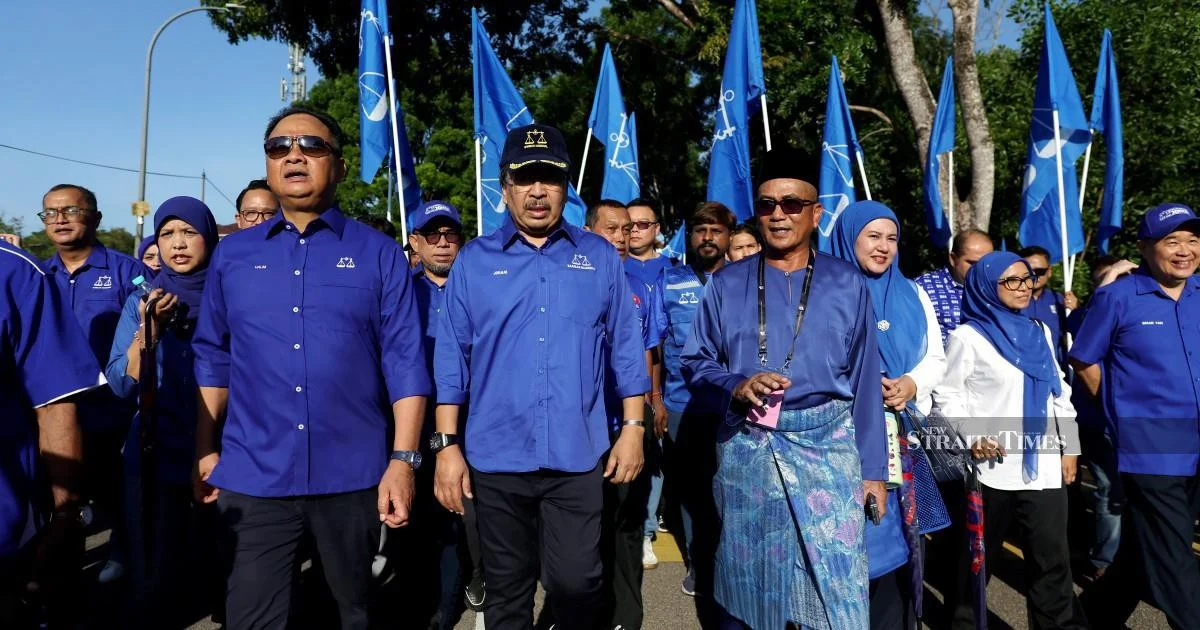
The Johor state election campaign gained momentum when Umno vice-president Datuk Seri Johari Abdul Ghani appeared at the Taman Pelangi Indah community hall in Johor Baru, where he pledged backing for the Barisan Nasional candidate contesting the Tiram seat. His presence underscored the ruling coalition's determination to consolidate support in a strategically important state where voter sentiment remains closely contested and shifting allegiances could reshape the political landscape.
Johari's participation in grassroots campaigning reflects a broader Barisan strategy of deploying senior party figures to reinforce messaging and galvanise party machinery at the constituency level. As deputy chairman of Umno, one of Malaysia's largest political organisations, his visit carried symbolic weight—signalling that the coalition views Tiram as a battleground where senior leadership intervention could tip the balance. The mobilisation of high-profile figures for local campaigns typically occurs when internal polling or ground intelligence suggests a seat requires enhanced momentum or when incumbent positions face unexpected challenges from opposition advances.
The Tiram constituency, situated within Johor Baru's expanding suburbs, represents the type of demographically diverse, middle-income electoral ward where elections are increasingly decided. These areas have witnessed significant population growth, migration patterns from rural districts, and shifting voter preferences that defy traditional political strongholds. Younger voters, small business owners, and middle-class families dominate such constituencies, making them volatile across Malaysia's recent electoral cycles. Their support cannot be assumed by any coalition, requiring sustained engagement and responsive policy messaging.
Barisan Nasional's emphasis on fielding experienced campaigners in Tiram reflects lessons learned from previous state and federal elections where the coalition lost ground in seemingly secure seats. The appearance of national and state-level leaders at community events serves multiple functions: it boosts candidate visibility, demonstrates central party commitment to local concerns, and generates media coverage that extends campaign reach beyond attendees. For grassroots party members, such visits provide morale reinforcement and talking points for door-to-door outreach.
Johor remains pivotal to national political equilibrium because it constitutes Malaysia's second-largest state economy and electorate. The state's political complexion influences not only state governance but also the federal balance, particularly in supply-and-demand dynamics affecting parliamentary stability. Barisan's performance in Johor carries implications for overall coalition strength and negotiating capacity at the national level. A diminished Johor presence would constrain the coalition's options in future federal arrangements and governing coalitions.
The opposition has similarly intensified activities across Johor constituencies, understanding that capturing or retaining seats in this state represents crucial progress toward challenging federal dominance. Competition has escalated particularly in urban and semi-urban constituencies where traditional Umno-Barisan dominance has weakened. Tiram's competitive nature reflects these wider patterns whereby no Malaysian seat can be considered genuinely safe anymore without continuous effort and demonstrated responsiveness to constituent grievances.
Community halls like Taman Pelangi Indah serve as important venues for Malaysian political engagement because they facilitate direct interaction between party representatives and residents. Such settings allow voters to voice concerns about infrastructure, services, economic opportunities, and governance quality without the formality of official channels. For candidates and party leaders, these encounters provide intelligence about voter priorities and anxieties that shape campaign emphasis and policy positioning. The informal atmosphere often generates more candid feedback than formal surveys.
Johari's campaign appearance also highlighted Umno's reliance on veteran party operatives to maintain electoral competitiveness as the party navigates internal reformations and leadership transitions. The visible backing of a deputy chairman provides the Tiram candidate with organisational support from Umno's extensive network across Johor. This network encompasses party divisions, branches, youth wings, and women's sections that constitute ground-level campaign machinery. Integration of these structures around a single candidate amplifies campaign reach and messaging consistency across the constituency.
The broader context of Johor state politics involves complex interactions among multiple coalition and opposition configurations that have evolved significantly since the 2018 political earthquake that toppled the long-governing Umno-led administration. Subsequent state elections demonstrated that traditional political calculations no longer guarantee outcomes. Voters have become more fluid in their preferences, rewarding parties perceived as delivering competent governance while punishing those associated with perceived inaction or scandal. This volatility has forced all political organisations to treat every constituency as competitive and deserving intensive engagement.
Campaigning in Johor constituencies increasingly requires parties to address concerns ranging from infrastructure maintenance, education quality, and local economic development to housing affordability and environmental management. Voters weigh manifestos against perceived implementation capacity, evaluating whether candidate backgrounds and party track records suggest genuine commitment to promised improvements. Community hall events allow candidates to demonstrate local knowledge, understanding of specific area challenges, and proposed solutions, thereby building voter confidence in their representational capability.
As the Johor campaign progresses, similar high-profile campaign visits can be anticipated across both Barisan and opposition camps as competing coalitions seek to consolidate support in marginal constituencies. The state election will ultimately be decided by millions of individual voter decisions in dozens of constituencies, each influenced by local dynamics, candidate factors, and broader national political currents. Johari's campaigning in Tiram exemplifies how national political contests ultimately depend upon sustained local engagement where voters and candidates interact directly, sharing concerns and testing commitments to the communities they seek to represent.

