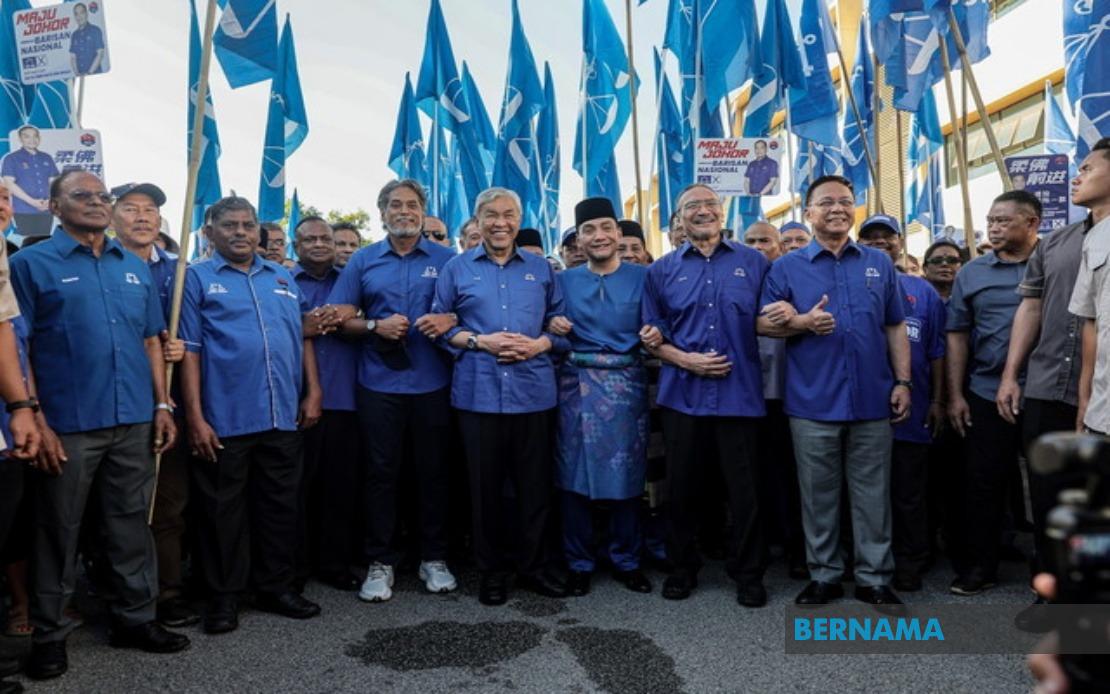
Johor Barisan Nasional chairman Datuk Onn Hafiz Ghazi formally submitted his nomination papers for the state election on June 27, presenting a united front with top-tier party leadership at the Muafakat Hall in Simpang Renggam District Council. The submission, completed at 9.10 am, represented a symbolic show of strength as the coalition mobilises resources ahead of the contest, with the Machap incumbent securing backing from some of UMNO's most influential personalities.
The high-profile turnout underscored the significance of Onn Hafiz's candidacy within the broader state election framework. UMNO president Datuk Seri Dr Ahmad Zahid Hamidi's presence alongside him carried particular weight, signalling the party's commitment to the Johor campaign at the highest organisational level. Such endorsements from the national party leadership typically serve to bolster a candidate's credibility among grassroots supporters and demonstrate internal party cohesion during competitive electoral periods.
Sembrong MP Datuk Seri Hishammuddin Tun Hussein also made the journey to Simpang Renggam to lend his support, reinforcing the message that prominent figures across different electoral tiers remain aligned behind the coalition's state strategy. Hishammuddin's involvement reflects the interconnected nature of federal and state politics in Malaysia, where successful state administrations contribute to broader national political narratives and power consolidation.
Former minister Khairy Jamaluddin's attendance added another dimension to the gathering, highlighting generational diversity within UMNO's leadership circle. His presence alongside more established figures suggested efforts to project the party as capable of bridging different age cohorts and ideological perspectives, a consideration increasingly important as UMNO navigates internal competitions and broader electoral dynamics.
Former Johor Menteri Besar Datuk Seri Hasni Mohammad's participation linked historical continuity to present ambitions. His involvement served as a reminder of prior BN governance in the state while potentially signalling endorsement of current leadership approaches, though the distinction between supporting the candidate and commenting on broader state direction remained implicit rather than explicit during the nomination process.
The nomination centre itself became a focal point for party mobilisation, with supporters from various BN component parties assembling in surrounding areas. The visual presentation of loyalty through party colours, banners, and flags represented standard electoral theatre, yet such demonstrations serve practical functions in energising volunteer networks and signalling organisational capacity to rival camps and media observers.
The gathering at Simpang Renggam occurred within the context of Malaysia's ongoing realignment of state-level politics, where Johor has maintained particular significance due to its economic importance, population size, and historical influence within UMNO structures. Competition for control of the state assembly carries implications extending beyond Johor's borders, affecting calculations about federal power distribution and coalition viability in subsequent national contests.
Onn Hafiz's candidacy as BN chairman represented continuity in the coalition's approach to the election, though the intensity of support mobilised around his nomination suggested some elements within party structures viewed the contest as consequential for broader political positioning. The decision to deploy such senior personalities underscored recognition that state elections increasingly function as referendums on federal government performance and coalition credibility.
The nomination filing itself constituted a procedural requirement, yet the manner of its execution—surrounded by party dignitaries and supporters—transformed a bureaucratic formality into a political statement. Such staging reflects sophisticated understanding of how media coverage and social media circulation of images can amplify messages about party unity, organisational strength, and candidate viability to audiences beyond immediate voters.
For Malaysian political observers, the composition of supporters accompanying Onn Hafiz offered insights into factional alignments within UMNO and broader coalition dynamics during this electoral period. The apparent absence of certain party figures, conversely, could itself carry interpretative weight, though drawing conclusions from absences requires caution given the multiple legitimate reasons officials might be unavailable for any given event.
The 16th Johor state election represented a substantial test of BN's capacity to maintain dominance in a state where its control has sometimes appeared vulnerable to challenges from opposition coalitions. The energy invested in Onn Hafiz's nomination suggested party strategists anticipated a competitive contest requiring sustained mobilisation of resources and personalities throughout the campaign period.
As the election campaign intensified following nomination day, the supporting cast assembled at Simpang Renggam would likely feature prominently in subsequent campaign activities, their visibility serving to reassure both party members and potential voters of institutional commitment to BN's electoral prospects. Whether such visible unity would translate into electoral performance remained contingent on numerous factors extending well beyond nomination day ceremonials.

