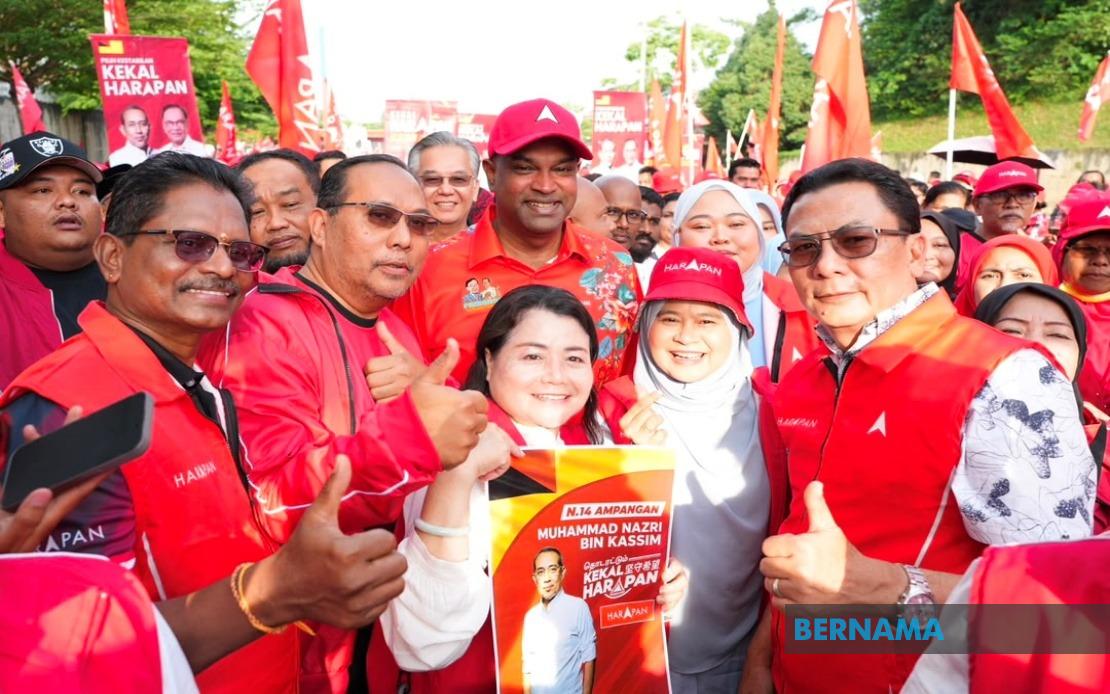
Senior leaders of the Pakatan Harapan coalition gathered at Wisma MBS in Seremban on July 18 to publicly endorse six state election candidates, signalling the opposition alliance's determination to maintain its foothold in the central state. PKR vice-president Datuk Seri R. Ramanan, who represents Sungai Buloh at the national level, was joined by DAP deputy secretary-general Steven Sim and other coalition figures in their show of solidarity at the Seremban City Council Building's nomination centre, where the half-dozen contenders were formally registering their candidacies.
The six candidates receiving this high-profile backing represent a cross-section of Negeri Sembilan's constituencies: Nor Azman Mohamad will contest Sikamat, while Datuk Muhammad Nazri Kassim will represent Ampangan. The slate also includes Zarinna Abu Zarin in Lenggeng, Chew Seh Yong in Lobak, J. Arul Kumar in Nilai, and Ho Weng Wah in Temiang. Their nomination marks the formal beginning of an intensive campaign period that will run until July 31, with early voting scheduled for July 28 and the actual polling day set for August 1. The 36 seats in the Negeri Sembilan State Legislative Assembly will be contested after the state assembly was dissolved on June 5.
Ramanan's presence at the nomination centre underscored the coalition's message that this election carries significance beyond Negeri Sembilan itself. Speaking to supporters and journalists, the PKR leader framed the turnout of party machinery and grassroots supporters as evidence of genuine enthusiasm within the coalition's ranks heading into the campaign proper. He emphasised that the energy demonstrated at the nomination process would translate into sustained engagement with voters across the state, arguing that this grassroots mobilisation would be crucial to securing victory in the coming weeks.
The PKR vice-president articulated the coalition's broader strategic vision for the state, emphasising continuity and development as central campaign themes. According to Ramanan, maintaining PH's grip on power in Negeri Sembilan would ensure that economic and social progress achieved during the previous term could continue uninterrupted. He pledged that every constituency-level party organisation would work intensively throughout the campaign period, translating the endorsements of senior leaders into tangible support at the doorstep level where elections are ultimately decided.
For Malaysian political observers and regional analysts, this show of unity by PKR and DAP carries particular weight. Negeri Sembilan has emerged as a proving ground for the Pakatan Harapan coalition in the post-2022 era, and the state's governance record will provide empirical evidence of whether the coalition can effectively manage a mid-sized state. The presence of figures like Steven Sim, who carries significant influence within the DAP's organisational structure, alongside Ramanan suggests that both major components of PH are investing political capital in this election.
The timing of the nomination support event also matters strategically. By concentrating visibility around the nomination process rather than spreading resources thinly across multiple campaign events in the election's opening phase, PH leadership attempted to create a defining moment that would shape media narratives and public perception of coalition momentum. The photographs and coverage from Wisma MBS would circulate through party networks and social media, reinforcing the message that senior figures had personally validated these six candidates and the broader PH platform.
Negeri Sembilan's election occurs against the backdrop of ongoing political manoeuvring at both state and national levels. The coalition faces particular pressure to demonstrate that it can govern effectively and retain voter confidence, especially as general election speculation intensifies. A strong showing in Negeri Sembilan would buttress PH's claims to nationwide relevance and competence, while disappointment could feed narratives about the coalition's declining appeal in certain demographics or regions.
The campaign period stretching from July 18 to July 31 gives PH and its competitors just under two weeks to saturate the electoral landscape with messaging, organise rallies and door-to-door canvassing, and attempt to sway undecided voters. The early voting date of July 28 is particularly significant, as it provides an opportunity for the coalition to mobilise supporters who may be travelling or unable to vote on the main polling day. Campaign strategies will likely intensify dramatically once the initial phase concludes, with all parties recognising that these final days before August 1 will determine electoral outcomes.
For Southeast Asian observers tracking Malaysia's democratic health, elections like Negeri Sembilan's demonstrate the vibrancy of the country's competitive political system. Despite recent controversies and constitutional developments at the federal level, state-level contests continue to attract high-profile participation from national leaders and generate genuine competition between opposing coalitions. The Negeri Sembilan race is not predetermined and will genuinely turn on factors including candidate quality, local issues, campaign effectiveness, and voter sentiment on state and national governance.
The coordinated effort to back these six candidates reflects PH's understanding that electoral success requires synchronising efforts across party hierarchies and geographic levels. National leaders like Ramanan and Sim lend their profiles and political standing to state-level candidates, who in turn energise their local networks and broaden their visibility beyond what purely local campaigns might achieve. This vertical integration of political organisation remains a hallmark of Malaysia's more sophisticated electoral competition.
As the campaign enters its full swing, observers will be watching whether the early show of senior leadership support translates into actual vote share on August 1. The six candidates now carry both the endorsement and the implicit expectations that come with backing from figures of Ramanan's and Sim's stature. Voter reception in the six constituencies during the coming weeks will provide the clearest indication of whether PH's internal unity and campaign infrastructure remain as formidable as the Wisma MBS gathering suggested.

