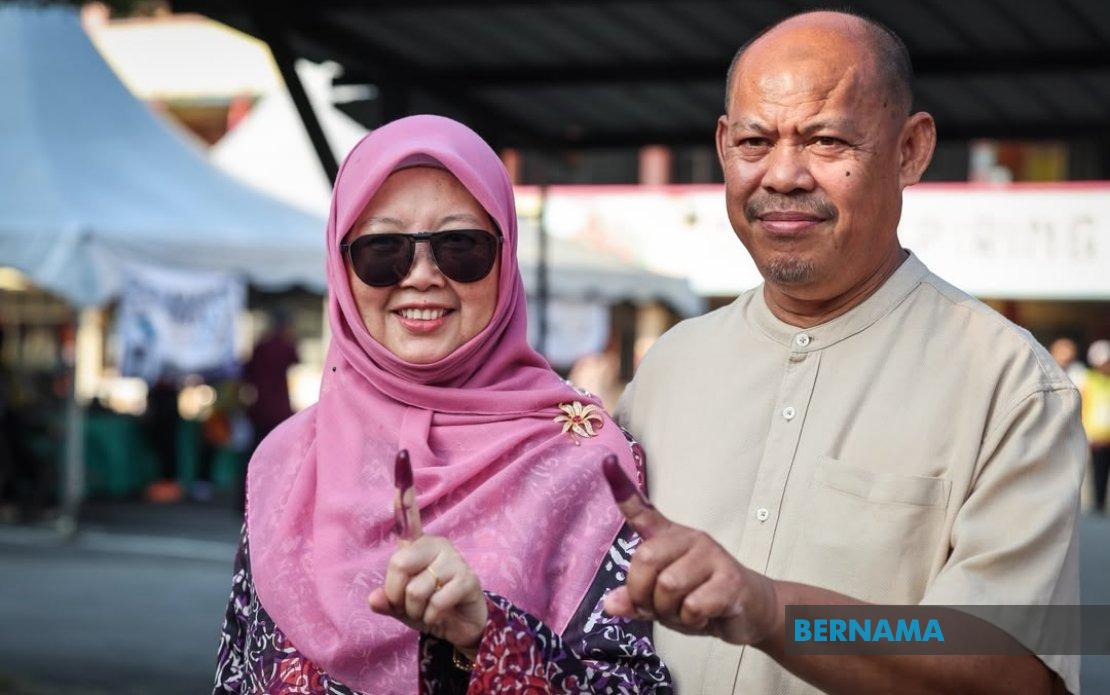
Johor's 16th state election saw prominent party leaders among the earliest voters to participate in the polling process on July 11, signalling the beginning of what officials hoped would be a strong turnout across the southern state. The early participation by senior figures from major coalition and opposition parties underscored the significance of the contest, with political heavyweights making deliberate efforts to cast their votes in the opening hours of polling.
Datuk Seri Dr Zaliha Mustafa, who chairs the Pakatan Rakyat coalition's PKR machinery in Johor, exercised her democratic right at 9 am at Sekolah Menengah Kebangsaan Bandar Baru Uda in Johor Bahru. The former Minister in the Prime Minister's Department (Federal Territories) and her spouse, Dr Ahmad Adzlan Musa, both submitted their votes in the Larkin parliamentary constituency, a bellwether seat that has traditionally received close attention from national political observers. Her presence at the polling station in the early morning hours reflected a calculated approach to demonstrate commitment to the electoral process among party members and supporters.
Upon completing her civic duty, Mustafa addressed the gathering media representatives with an explicit call to her constituents and voters across Johor to avoid anticipated weather disruptions. She highlighted meteorological forecasts predicting rainfall from midday through the afternoon, encouraging citizens to make the journey to their designated polling stations during the morning hours when conditions would be more favourable. This appeal represented a strategic communication moment, as party leaders typically use election day interactions with journalists to reinforce messaging about participation rates and civic engagement.
Democratic Action Party leadership in Johor also demonstrated its commitment to timely voting participation. Teo Nie Ching, who holds the position of DAP chairman for the state, cast her ballot approximately thirty minutes after Mustafa, arriving at Sekolah Jenis Kebangsaan Cina Kulai Besar in the Kulai area around 9.30 am. The opposition coalition's visible presence among early voters reflected broader strategies by competing political forces to frame the election as a matter of universal importance transcending partisan boundaries.
The phenomenon of senior political figures casting votes early in Malaysian elections carries multiple dimensions of significance. In the context of Johor, a state that has traditionally leaned toward the governing coalition but which has witnessed increasing political competition in recent electoral cycles, early participation by leadership from both major political groupings suggested confidence in respective party organisations and voter bases. The timing of these appearances—with photographers and journalists positioned to capture the moments—formed part of the broader election day narrative construction that would shape perceptions of momentum and enthusiasm.
Weather considerations frequently influence voting patterns in Malaysian elections, particularly during monsoon seasons when rainfall can deter voters from travelling to polling stations. Mustafa's specific mention of afternoon rain forecasts reflected pragmatic understanding of how environmental factors affect turnout, particularly among older voters and those with mobility constraints. By encouraging early voting, party leadership aimed to maximise participation among their supporters while framing weather challenges as manageable obstacles rather than excuses for non-participation.
The Larkin constituency represented Mustafa's electoral base, a seat within Johor Bahru that encompasses diverse urban communities with varying demographic and economic profiles. Similarly, the Kulai area where DAP's Teo cast her vote represents a region with significant Chinese Malaysian voter concentration, aligning with DAP's traditional organisational strength. These location choices were not incidental but rather reflected the strategic importance of these constituencies within the broader Johor electoral landscape.
Johor's state elections periodically serve as barometers for national political sentiment, given the state's population size and demographic diversity. The 16th iteration of these polls occurred within a specific national political context, where competition between Pakatan Rakyat and the governing Barisan Nasional coalition remained intense. The visibility of party leaders participating as ordinary voters, subject to the same procedures as their constituents, formed part of democratic legitimation rituals that Malaysian political culture emphasises during major electoral exercises.
The participation of Mustafa and Teo in morning voting hours also reflected disciplined party campaign management. By voting early and communicating this action through media channels, party leadership could demonstrate organisational efficiency and voter commitment without monopolising polling station access or creating bottlenecks that might discourage other voters. This represented the professional conduct expected of senior political figures during elections, where symbolic actions carry substantial communicative weight with broader publics observing the democratic process.
For Malaysian voters and observers monitoring Johor's electoral developments, the presence of recognisable party leaders at polling stations conveyed messages about campaign intensity and the stakes both major political coalitions perceived in this contest. The specific attention paid to weather-related encouragement by Mustafa also reflected persistent concerns within Malaysian electoral administration about ensuring that environmental conditions do not systematically disadvantage certain voter populations. Regional variations in rainfall patterns across Johor could create geographic disparities in turnout if voters did not actively plan around anticipated weather disruptions.

