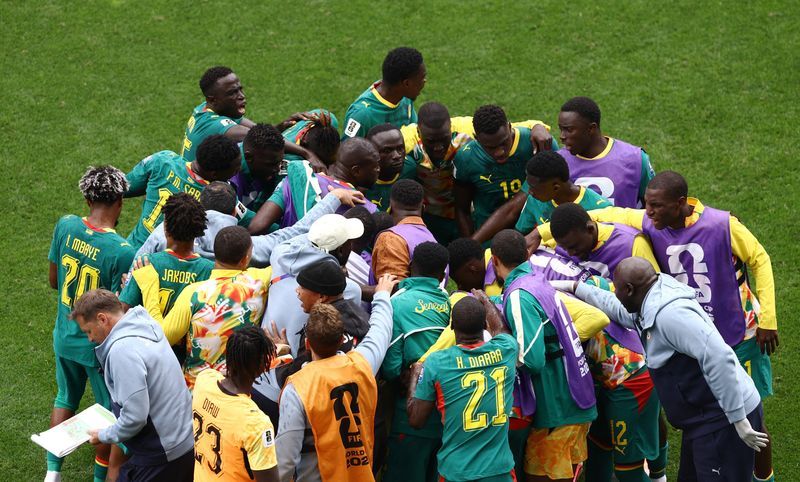
Senegal's football federation has cast doubt on its team doctor's specialist qualifications in the aftermath of a dismal World Cup showing in North America, with federation president Abdoulaye Fall suggesting the medical professional lacked the appropriate background to support the national squad at such a prestigious tournament. The issue, Fall indicated at a media briefing on Monday, was only identified late in the tournament preparation process but had already begun undermining player confidence in the quality of healthcare available to them during competition.
Fall's remarks at the press conference revealed a startling gap in the federation's vetting processes ahead of a major international competition. He disclosed that the team doctor had been trained as a gynaecologist rather than possessing the sports medicine specialisation expected for an elite football team. The revelation sparked fresh scrutiny of how Senegal had prepared for the tournament, with medical support emerging as an unexpected organisational weakness. The federation subsequently moved to bring in additional medical specialists in an effort to reassure the squad about the level of care they would receive, acknowledging that player morale and confidence in the medical team directly impacts on-field performance.
According to Fall, player feedback made clear that the available medical support had fallen short of acceptable standards. "Based on the feedback I received, the players were not sufficiently reassured about being supported by him," he stated during the briefing. The federation's response was to actively seek out what Fall described as "convincing expertise" to restore player confidence, recognising that medical security ranks as a fundamental requirement in elite sport. The president's candid acknowledgment that additional expertise had to be sourced mid-tournament raises questions about pre-competition preparation and whether proper due diligence had been conducted on the medical team's credentials beforehand.
The allegations have been robustly rejected by the Senegalese Association of Sports Medicine, which released a statement late Monday characterising the federation's claims as "unfounded and defamatory." According to the professional association, the team doctor in question, Abderahmane Fediore, holds a specialist diploma in sports medicine and sports biology from Cheikh Anta Diop University's faculty of medicine. This formal credential would appear to directly contradict the federation president's characterisation of his background. The dispute has therefore become a matter of conflicting claims regarding what constitutes appropriate specialist training.
Fediore's professional track record offers additional context to the credentials debate. He previously served as head of the physiotherapy department at Fann Hospital, one of Senegal's major medical institutions, and has held the position of national team doctor since 2017. This six-year tenure encompasses participation in three FIFA World Cups and five Africa Cup of Nations tournaments, suggesting considerable experience managing medical care for elite athletes at the highest competitive level. Such an extended record at the national level would normally confer considerable confidence in a medical professional's capabilities and suitability for the role.
The medical controversy forms part of a broader reckoning within Senegalese football following the team's underwhelming World Cup performance. The federation sacked head coach Pape Bouna Thiaw on Saturday, determining that the tournament results necessitated a complete change in leadership. This decision signalled the depth of disappointment with the campaign, as the coaching position typically represents the most visible and scrutinised role in national team management. The speed with which the federation moved to remove the coach underscores the pressure and expectation surrounding the Senegalese squad before the tournament commenced.
Senegal had entered North America as genuine contenders for the World Cup, buoyed by their triumphant victory over Morocco in January's Africa Cup of Nations final. That continental championship success had restored considerable optimism around the national programme and suggested the team possessed sufficient quality to compete effectively at the world tournament. However, the group stage proved deeply disappointing, with losses to France and Norway in the opening two matches effectively ending realistic qualification hopes before the knockout phase.
The team's exit in the round of 32 proved particularly galling given the manner of the defeat to Belgium. Senegal had established a commanding 2-0 lead with just five minutes of regular time remaining, a position that should have secured advancement to the quarter-finals. However, Belgium launched an unexpected comeback, equalising in those final moments and forcing extra time. The European side then scored a third goal during the additional 30 minutes, securing a 3-2 victory that must have felt especially painful given how close the Senegalese team had come to progressing. The collapse in the closing stages suggested lapses in mental resilience and game management that coaching and medical staff would normally be expected to address.
For Malaysian and Southeast Asian observers, the Senegal situation underscores broader challenges facing football federations in smaller footballing nations as they attempt to compete at elite international level. Recruitment and retention of qualified specialists—whether medical, coaching, or technical—represents a constant struggle for federations operating outside the resource-rich elite football countries. The public dispute between the federation and the professional medical association also illustrates how post-tournament recriminations can quickly escalate into institutional conflicts that potentially damage the sport's credibility. Whether the dispute reflects genuine medical inadequacy or represents scapegoating following disappointing results may ultimately prove less important than establishing clear professional standards and ensuring transparent appointment processes for future tournaments.
The broader implications for African football are noteworthy as well. Senegal had positioned itself among the continent's stronger programmes following their Africa Cup of Nations triumph, yet the World Cup performance has raised uncomfortable questions about whether such success translates reliably to the global stage. The willingness of federation leadership to publicly question medical staff credentials suggests a programme searching for explanations for underperformance, and the acrimonious nature of these recriminations may hinder efforts to rebuild player and staff confidence heading into future competitions and qualifying campaigns.

