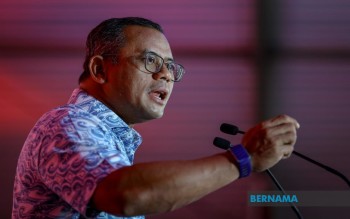
Selangor has solidified its position as Malaysia's undisputed economic centre, with its gross domestic product climbing to RM460.1 billion in 2025, representing an expansion of RM28 billion from the previous year. The achievement underscores the state's continued economic resilience and its outsized influence on the nation's overall prosperity. Menteri Besar Datuk Seri Amirudin Shari highlighted that the state's economic expansion is roughly double that of any other Malaysian state, a testament to both its scale and the effectiveness of targeted development strategies.
The performance has elevated Selangor's contribution to Malaysia's gross domestic product to 26.5 per cent, up from 26.2 per cent in the prior year. This growing share reflects not merely incremental gains but a deepening economic concentration in the state, which now accounts for a GDP more than 1.7 times larger than Kuala Lumpur and nearly 2.7 times that of Johor. The magnitude of Selangor's economy positions it as a regional economic entity worthy of comparison with smaller developing nations, highlighting the state's critical importance to Malaysia's standing in the wider regional economy.
The 6.3 per cent growth rate achieved by Selangor substantially outpaced Malaysia's national economic expansion of 5.2 per cent, demonstrating the state's capacity to drive national growth. This differential is significant for policymakers and investors alike, as it indicates that a substantial portion of Malaysia's economic momentum originates from developments within Selangor's borders. The gap between state and national growth rates also raises important questions about economic distribution and the need to foster comparable dynamism in other regions to ensure balanced development across the country.
Three sectors principally drove this expansion. The services sector contributed RM15.9 billion to growth, reflecting the state's dominance in finance, tourism, logistics, and professional services. Manufacturing added RM5.3 billion, maintaining Selangor's role as the nation's industrial hub, while construction expanded by RM3.7 billion, signalling robust infrastructure investment and development activity. Together, these sectors demonstrate the diversification that shields Selangor's economy from overreliance on any single industry, providing resilience against sectoral downturns.
Selangor's sectoral dominance extends across the entire national economy. The state commands 35.9 per cent of Malaysia's construction activity, a commanding share that reflects ongoing urbanization and infrastructure development. Its manufacturing sector accounts for 32.8 per cent of national output, cementing Selangor as the nation's factory floor. Perhaps most tellingly, Selangor contributes 27.1 per cent to the services sector nationally, despite not being the sole economic centre, underscoring the state's competitive advantages in attracting high-value service industries.
Menteri Besar Amirudin attributed much of this success to the First Selangor Plan, the state's five-year socioeconomic development framework spanning 2021 to 2025. Over this period, Selangor's economy expanded by an impressive 33.94 per cent, equivalent to RM116.6 billion in additional value. The state's GDP grew from RM343.5 billion at the plan's outset to RM460.1 billion by its conclusion, a trajectory that substantially exceeded earlier forecasts from Universiti Putra Malaysia and the Selangor Research Institute, which had projected growth to approximately RM455.3 billion. This outperformance suggests either exceptional policy execution, favourable external conditions, or both.
The results represent continuous momentum building on the state's 2023 performance of RM406.1 billion. Selangor's achievement of surpassing the RM400 billion threshold for two consecutive years marks a milestone that distinguishes it from other Malaysian states, reinforcing the concentration of economic activity in the state. For investors and multinational corporations, this track record of sustained high-growth performance offers compelling evidence of Selangor's capacity to support large-scale operations and complex supply chains.
Amirudin expressed gratitude to the civil service, private sector players, and residents of Selangor for driving these outcomes through their collective effort and commitment. Notably, he resisted the temptation for triumphalism, instead framing the achievement as a foundation for the next challenge: positioning Selangor as the first Malaysian state to achieve a RM500 billion economy. This ambitious target would require sustained growth of approximately 4.2 per cent annually, assuming no structural changes, and serves as both a motivational benchmark and a recognition of the state's remaining economic potential.
The administration's stated commitment to translating economic growth into improvements in living standards addresses a critical gap in development discourse. Economic expansion divorced from tangible improvements in household incomes, housing, healthcare, and education generates public frustration regardless of headline growth figures. By emphasizing quality-of-life metrics as the measure of success, rather than GDP alone, Selangor's leadership signals an understanding that sustainable political support depends on broad-based prosperity rather than aggregate economic measures.
For Southeast Asia and international observers, Selangor's performance illuminates both the opportunities and challenges of rapid urbanization and economic concentration. The state's success in attracting manufacturing, services, and investment capital demonstrates the regional competitiveness of Malaysian business environments. However, the extent to which one state dominates national economic output raises questions about imbalances in regional development and the long-term resilience of a structure where such a large share of national wealth originates from a single geographic area.
Looking ahead, policymakers must balance the imperative to maximize Selangor's growth potential with efforts to develop comparable economic dynamism in underperforming regions. The gap between Selangor's 6.3 per cent growth and the national average of 5.2 per cent, while impressive, also reflects concentration of investment capital and talent in the state. Whether Malaysia can sustain overall growth rates closer to Selangor's performance will depend partly on broadening economic opportunities beyond the central corridor and building human capital and infrastructure in lagging areas.
Invest Selangor's characterization of the state as the nation's largest contributor to the economy, accounting for 26.2 per cent of Malaysia's total GDP according to some measurements, underscores the consistency of these findings. The marginal increase from 25.9 per cent in the preceding year may seem modest in isolation, but it reflects the mathematical reality that as share values rise, incremental gains become harder to achieve. Maintaining momentum toward the RM500 billion target will require both continued sectoral dynamism and the identification of emerging growth clusters that can sustain expansion when traditional drivers mature or face headwinds.

