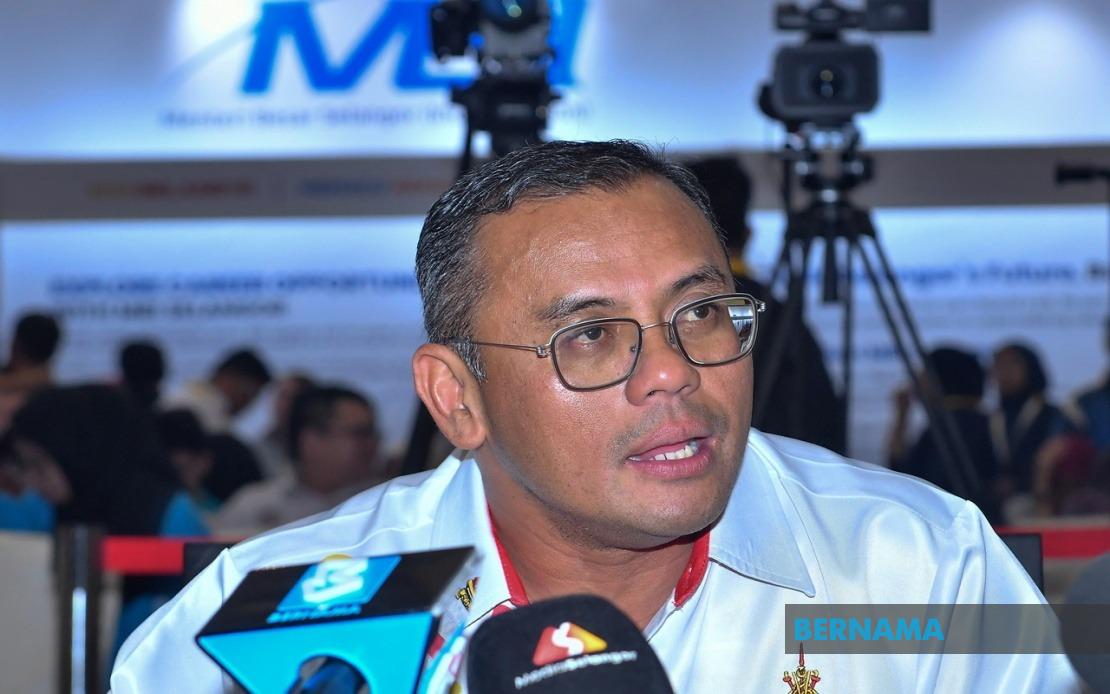
Selangor's state administration has committed to engaging directly with approximately 400 workers facing displacement following Panasonic AVC Networks Kuala Lumpur Malaysia Sdn Bhd's decision to halt television production operations, with substantive discussions scheduled to commence next week. Menteri Besar Datuk Seri Amirudin Shari disclosed that the state's Human Resources and Poverty Alleviation committee, chaired by V. Papparaidu, will coordinate the dialogue alongside representatives from the Social Security Organisation (PERKESO) to comprehensively assess the situation and identify viable support mechanisms.
The manufacturing facility's announced closure of two product lines by the conclusion of March 2025 represents a significant employment shock within Selangor's industrial base. Rather than adopting a reactive posture, the state government has signalled its intention to implement what Amirudin characterised as early intervention strategies, beginning with immediate humanitarian assistance such as food packages to stabilise household conditions during the transition period. This preventative approach reflects growing recognition among Malaysian policymakers that factory closures and mass retrenchments require coordinated multi-agency responses to mitigate social disruption.
The state's strategy extends considerably beyond emergency relief provisions. Officials have prioritised reconnecting displaced workers with alternative employment opportunities, underscoring a commitment to maintaining livelihood sustainability within Selangor's labour market. This emphasis on placement rather than mere income support acknowledges the psychological and social dimensions of employment loss and the importance of preserving workers' continued participation in the formal economy. The framing suggests acknowledgment that the affected workers have invested considerable effort in building stable lives within the state and warrant institutional support to sustain those investments.
Central to the government's intervention framework is PERKESO's involvement, which unlocks access to the social security body's recently established unemployment insurance mechanism. This initiative represents a structural innovation in Malaysia's social protection architecture, addressing a longstanding gap in coverage for retrenched workers. The scheme operates on a declining allowance schedule, commencing at eighty percent of salary during the initial month following job loss, transitioning to fifty percent in the second month, and settling at thirty percent thereafter. This graduated approach theoretically sustains household purchasing power during the critical early phases of job searching when psychological resilience and confidence prove particularly vulnerable to erosion.
The unemployment insurance design reflects evolving policy sophistication regarding the temporal dynamics of job displacement. Rather than providing a single fixed payment or duration-limited support, the declining allowance structure acknowledges that successful reintegration often requires extended search periods extending beyond initial expectations. By sustaining a meaningful income floor—even at thirty percent—throughout the transition, the scheme theoretically enables workers to avoid desperate employment decisions motivated purely by immediate financial necessity, potentially facilitating better job matching outcomes. Papparaidu emphasised that this protective mechanism represents a particularly valuable asset for Selangor residents, suggesting the state views social insurance innovation as an essential competitive advantage in retaining labour force stability.
The government's proactive stance unfolds simultaneously with Selangor's hosting of Mega Jobcare 2026, a significant employment mobilisation initiative operating through August 9 at Shah Alam Convention Centre. The career fair aggregates recruitment efforts across one hundred forty-seven employers advertising over eleven thousand vacancies, with approximately sixty-two percent of positions offering monthly compensation exceeding three thousand ringgit. This substantial labour absorption capacity provides a potential partial offset to the Panasonic employment loss, though the skill alignment between available vacancies and retrenched television manufacturing workers remains an open question requiring careful assessment.
The convergence of Panasonic's retrenchment announcement with Mega Jobcare's scheduling creates both challenges and opportunities for workforce transition management. From an optimistic perspective, the timing allows state officials to leverage the career fair's recruitment momentum toward facilitating displaced workers' reintegration, potentially shortening unemployment durations. Conversely, the influx of jobseekers during the fair could temporarily depress wage negotiations if employers perceive exceptional labour supply elasticity. The deliberate activation of government apparatus alongside the Mega Jobcare platform suggests policymakers recognise the need for targeted coordination to ensure Panasonic workers benefit maximally from available opportunities rather than merely competing passively within the broader job market.
The government's emphasis on cooperation between state administration and PERKESO underscores an important institutional reality within Malaysia's employment security framework. No single agency possesses complete capacity to address retrenchment comprehensively; instead, effective intervention requires orchestrating complementary functions across multiple institutions. PERKESO provides financial protection mechanisms and insurance products, while state government units facilitate job placement and coordinate employer engagement. This structural interdependence has occasionally created coordination gaps in previous retrenchment situations, making the pre-announced commitment to joint action a notable procedural advance.
For Selangor specifically, this retrenchment incident occurs within a broader context of industrial transition affecting Malaysia's manufacturing sector. Television production represents a labour-intensive, relatively lower-value-added manufacturing activity increasingly vulnerable to relocation toward lower-cost regional jurisdictions or automation within existing facilities. Rather than viewing such structural shifts as inevitable and unmanageable, Selangor's response model treats them as challenges requiring active government engagement to minimize social costs and facilitate worker adjustment. This intervention philosophy increasingly characterises progressive state administrations across Southeast Asia confronting deindustrialisation pressures.
The specific focus on workers' capacity to sustain livelihoods previously established in Selangor reflects recognition that employment provides psychological meaning and social integration beyond mere income generation. The government's framing positions workers as stakeholders with legitimate claims to institutional support rather than portraying retrenchment as purely a private commercial matter concerning only the employer and affected individuals. This philosophical stance carries important implications for how Malaysian governance approaches the distributional consequences of economic adjustment, signalling willingness to utilise public mechanisms to buffer vulnerable populations from market-driven displacement.
The PERKESO insurance mechanism itself warrants attention as an indicator of evolving policy sophistication within Malaysia's social protection system. The scheme's graduated allowance structure represents evidence-informed policy design acknowledging international research on unemployment insurance effectiveness. Declining payment schedules theoretically balance adequate income support with incentives for expeditious job search, avoiding the moral hazard concerns sometimes raised against flat-rate or indefinite benefits. Whether implementation matches design intentions will become clear as the scheme operates at scale, particularly once retrenchment waves test the system's actual delivery capacity and institutional coordination.
The Panasonic situation ultimately tests whether Selangor's institutional frameworks prove capable of translating commitments into effective worker support. The metric of success extends beyond meeting numbers to encompassing employment quality outcomes, wage replacement adequacy, and psychological resilience maintenance during transition periods. Close monitoring of implementation outcomes would provide valuable evidence regarding the effectiveness of Malaysia's evolving retrenchment response mechanisms, offering insights applicable to future industrial adjustment episodes as manufacturing sectors across Southeast Asia continue navigating structural transformation pressures.

