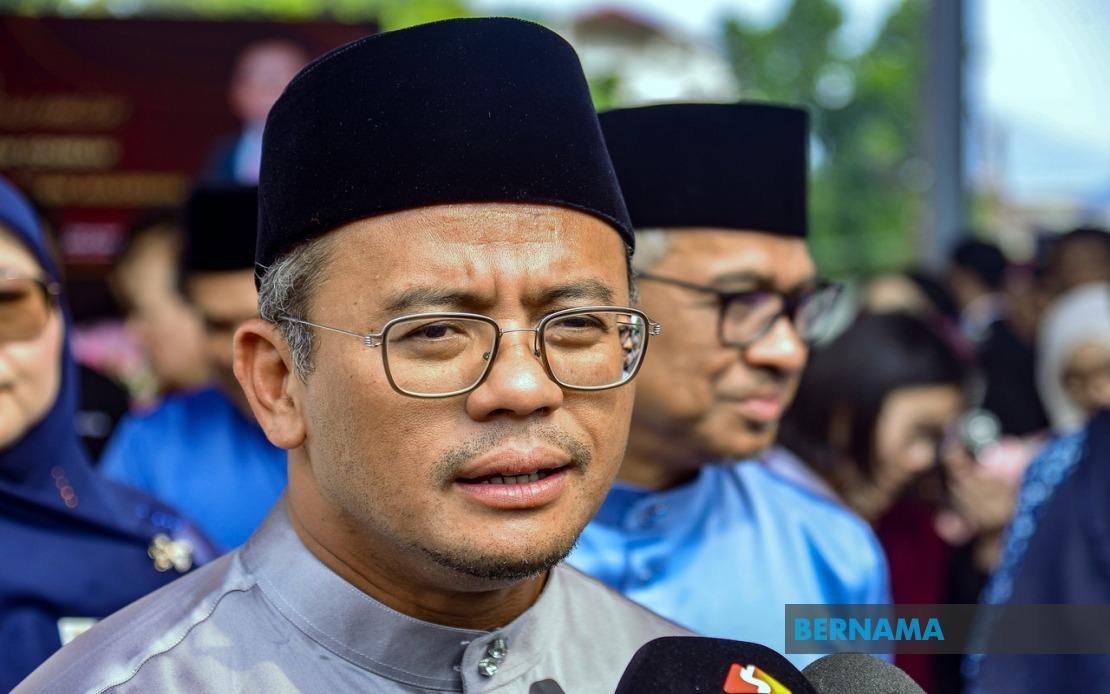
Selangor's administration is charting an ambitious course to reshape its education landscape by embedding STEM excellence and comprehensive student support mechanisms into the state's 2027 budget allocation. Menteri Besar Datuk Seri Amirudin Shari unveiled the strategy during his remarks at the Gombak Form Six College opening and 2026 Academic Excellence Awards ceremony, signalling the state government's commitment to transforming how it nurtures the intellectual development of its youth population.
With approximately one million students currently enrolled across Selangor's educational institutions, the state recognizes that strategic investments in learning infrastructure and subject specialization carry exponential implications for both regional and national competitiveness. The scale of this student cohort means that improvements in academic performance, particularly in technical and scientific disciplines, will have cascading effects across the economy and workforce pipeline. Amirudin emphasized that elevating achievement levels among this vast population translates into tangible benefits for society at large, positioning Selangor as a talent-generating hub for Malaysia's future innovation economy.
The budget framework will concentrate resources on three interconnected pillars: maintaining and elevating examination performance standards, broadening access to STEM learning pathways, and fostering civic responsibility through community contribution initiatives. By yoking academic success to practical engagement with society, policymakers aim to cultivate not merely high-achieving students but conscientious citizens equipped to address real-world challenges through scientific and technological problem-solving.
Physical infrastructure improvements remain foundational to this vision. The state government is currently undertaking comprehensive audits of school facilities to identify gaps and prioritize upgrades where they will yield maximum educational benefit. Rather than rushing allocations, officials are deliberately gathering granular data on infrastructure needs, with final budget decisions anticipated by September or October. This methodical approach reflects recognition that sustainable improvements in learning environments require careful assessment rather than ad hoc spending.
A particularly innovative element of Selangor's strategy is the Himpunan Pelajar Tingkatan Enam Selangor (HIPTERS) platform, which represents a departure from traditional student support models. Originally designed as a university-focused initiative, the programme has been recalibrated to serve Form Six students, a critical juncture where academic choices shape higher education trajectories. The inclusion of book vouchers and complimentary internet data acknowledges that digital access and learning materials remain practical barriers for many students, particularly those from economically disadvantaged backgrounds.
The programme's expansion reflects evolving understanding of support ecosystems. In 2026, approximately 10,000 Form Six students benefited from book voucher allocations, a significant increase from previous iterations that concentrated resources on tertiary-level learners. This downward extension of support recognizes that intervention at the secondary-to-tertiary transition point can be transformative, helping students build foundational knowledge and confidence before entering higher education institutions.
Selangor's emphasis on STEM participation addresses a persistent challenge across Southeast Asia: the relative underrepresentation of students in technical disciplines despite growing labour market demand. By embedding STEM opportunities within the education support framework and coupling them with practical applications and community engagement, the state attempts to demystify these subjects and position them as pathways to meaningful contribution rather than merely academic pursuits. This reframing may resonate particularly with students uncertain about the relevance of technical subjects to their futures.
The timing of this budgetary focus carries broader regional significance. As Southeast Asian economies increasingly compete on innovation metrics and advanced skills, Selangor's deliberate investment in STEM cultivation at the secondary level positions the state as a forward-thinking jurisdiction. Malaysian policymakers across other states may view Selangor's approach as a potential template, particularly given the state's economic prominence and population scale.
Amirudin's openness to expanding HIPTERS to additional Form Six schools based on demonstrated demand suggests flexibility in implementation, a pragmatic acknowledgment that educational needs vary across different communities and socioeconomic contexts. This adaptive posture may prove crucial in ensuring that support initiatives reach students who need them most rather than simply duplicating programmes across uniform settings.
The budget review also signals the state government's recognition that education quality correlates directly with long-term economic competitiveness and social cohesion. By channeling resources into examined academic outcomes, technical skill development, and character formation through community service, policymakers are essentially investing in Selangor's demographic dividend. The state's education system serves not merely local constituencies but functions as a talent incubator for national development, making these investments strategically sound beyond their immediate educational scope.
Moving forward, implementation fidelity will determine whether these budgetary commitments translate into measurable improvements in student outcomes and STEM participation rates. The success of infrastructure upgrades, expanded HIPTERS reach, and enhanced examination support will hinge on effective coordination between state education departments, schools, and community partners. For Malaysian education observers and policymakers elsewhere in the region, Selangor's 2027 budget represents a significant test case in whether targeted, integrated investment in learning ecosystems can meaningfully alter educational trajectories at scale.

