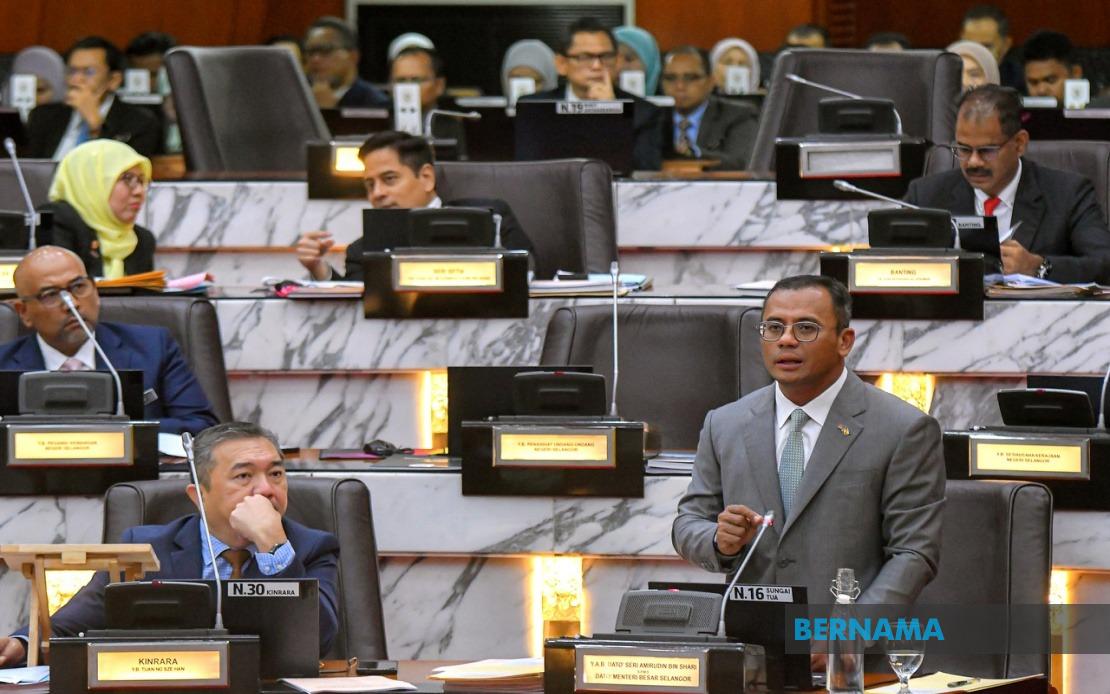
The Selangor state government has announced an ambitious expansion of its scholarship support system, with plans to nearly double the number of beneficiaries under the Higher Education Institution Study Incentive (HPIPT) programme. Menteri Besar Datuk Seri Amirudin Shari revealed that the state intends to increase recipients from the current 3,000 to 5,000 in the following year, subject to budgetary constraints and Selangor's financial position. The expansion represents a significant commitment to widening tertiary education accessibility for state residents at a time when costs associated with pursuing degree and diploma programmes continue to burden middle and lower-income families.
Demand for the HPIPT has far exceeded current allocation levels, with applications routinely surpassing the available slots. Both this year and 2025 saw more than 5,000 applications submitted by eligible Selangor students, indicating sustained interest in the financial assistance scheme. This persistent high demand prompted the state administration to conduct a comprehensive review of whether the current recipient cap remained appropriate given population growth and educational aspirations among the state's youth. The gap between applications received and recipients selected underscores the unmet need within communities that view state-sponsored education support as a crucial pathway to advancement.
Amirudin's statement during the recent Selangor State Legislative Assembly sitting acknowledged that the state had previously extended the incentive to 5,000 recipients, establishing precedent for the proposed expansion. The Menteri Besar expressed confidence that the administration would restore that threshold in the 2027 Budget cycle, contingent on the state's revenue trajectory and fiscal health. This cautious optimism reflects the balancing act state governments must perform between expanding social programmes and maintaining fiscal responsibility, particularly as economic conditions remain uncertain across Malaysia's various sectors.
Beyond simply increasing recipient numbers, the Selangor government is contemplating structural modifications to the HPIPT application framework itself. Officials are examining the current application timeline to ensure students receive adequate opportunity to submit documentation after receiving admission confirmations from their chosen institutions. This procedural adjustment recognises a practical bottleneck in the current system where students must navigate overlapping deadlines from both higher education institutions and the state scholarship body, potentially causing eligible applicants to miss submission windows through no fault of their own.
The state is also exploring a dual-cycle application approach, permitting students to apply for HPIPT assistance twice annually rather than at a single fixed point. Such flexibility would accommodate the varied admission schedules across Malaysia's tertiary sector, where different institutions and programmes begin intakes at different times throughout the year. This reform would particularly benefit students who receive late or unexpected admission offers, or those who discover HPIPT eligibility after missing an initial application deadline.
The HPIPT itself provides RM1,000 in financial aid to Selangor residents enrolled at accredited public and private higher education institutions. The assistance extends beyond traditional university degree programmes to encompass vocational pathways, including Level 4 Skills Certificates and diploma qualifications. This broad scope reflects growing recognition that tertiary education encompasses diverse educational channels, and that financial barriers to accessing any recognised post-secondary qualification merit removal.
For Malaysian policymakers and analysts, Selangor's expansion initiative carries wider implications about how state governments are responding to mounting demand for education subsidies. As federal higher education funding remains strained and student debt burdens grow nationally, state-level interventions become increasingly important safety nets. Selangor's approach signals that prosperous states with stronger revenue bases are stepping into gaps left by constrained federal resources, potentially creating disparities in scholarship availability between wealthier and less-wealthy states.
The timing of this announcement also reflects broader political considerations within Selangor's governance structure. As the nation's second-most populous state and economic engine, Selangor's social spending decisions influence expectations across other state administrations and establish benchmarks for what constitutes responsive governance on education. The HPIPT expansion can be understood partly as a competitive policy signal to voters that the current state administration prioritises youth welfare and educational access.
Implementation of the expanded HPIPT programme will require careful coordination between the Selangor Education Department, state treasury officials, and higher education institutions to process applications and distribute funds efficiently. The doubling of recipients will strain administrative capacity unless systems are upgraded simultaneously with the expansion, meaning the 2027 Budget must allocate resources not only to additional scholarship payments but also to processing infrastructure.
From the perspective of students and families, this expansion offers tangible relief from the financial pressures of tertiary education. A RM1,000 grant, while modest relative to total education costs, can represent a meaningful offset to living expenses, accommodation costs, or course fees for families operating with limited financial margins. For borderline cases where students were weighing whether to pursue higher education at all, scholarship availability often becomes the decisive factor.
The expansion also signals state recognition that economic inequality affects educational outcomes. By broadening HPIPT access, Selangor acknowledges that merit and capability exist across all income brackets, but financial obstacles prevent qualified students from actualising educational potential. This represents a values statement about the state's commitment to providing equal opportunity foundations, even if outcomes remain subject to individual effort and circumstance.
Moving forward, success of the expanded HPIPT will depend on programme implementation quality, timely fund disbursement, and administrative efficiency. The state government must also continue monitoring whether the RM1,000 assistance level remains appropriate as living costs and tuition fees evolve. Periodic reviews ensuring the grant amount maintains genuine purchasing power will be essential to preserving the programme's relevance and impact for future recipient cohorts.

