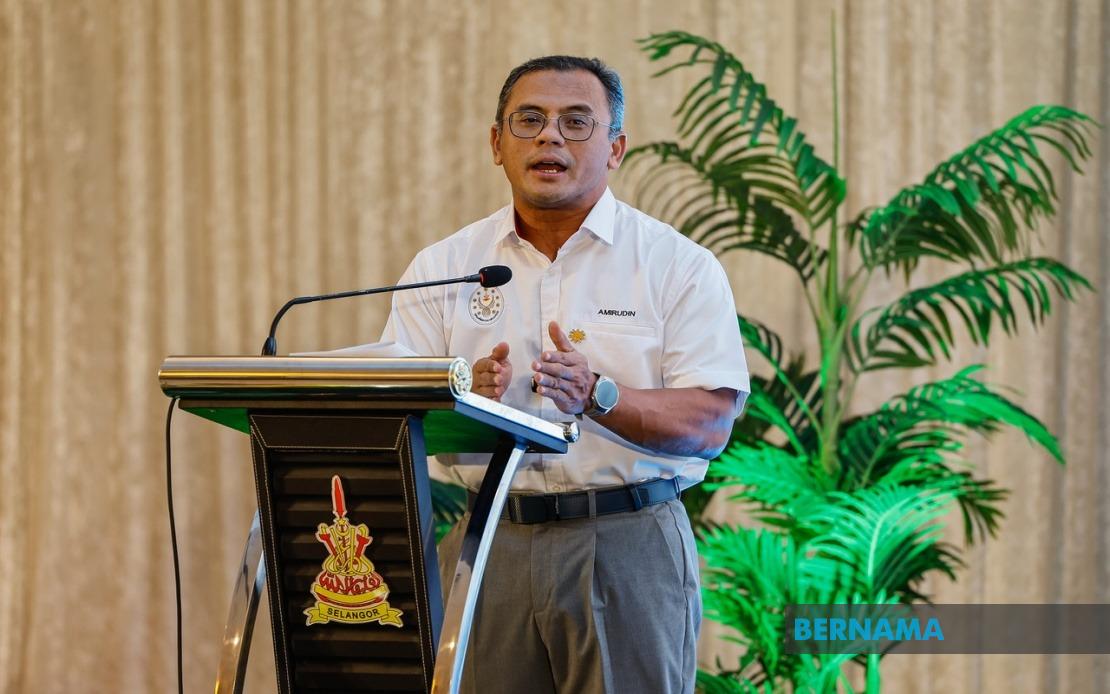
The Selangor state government has committed to building a new hospital at Taman Medan as part of its broader agenda to strengthen public healthcare infrastructure across the region. Menteri Besar Datuk Seri Amirudin Shari announced the decision during a press conference at the Sultan Salahuddin Abdul Aziz Shah Building in Shah Alam on July 15, signalling the administration's prioritisation of medical facilities in densely populated residential areas where healthcare demand continues to outpace existing capacity.
According to the Menteri Besar, the state government is actively engaged in securing the necessary land for the project, with negotiations currently underway to finalise the acquisition cost across two potential sites. The Taman Medan location emerged as the preferred option, partly due to its strategic positioning within a high-density residential corridor and its accessibility to surrounding communities. The decision reflects growing recognition that residents in areas such as Puchong, Jalan Klang Lama, and Subang require improved access to quality medical services, a challenge exacerbated by rapid urbanisation and population growth in these localities.
The Ministry of Health has formally endorsed Petaling Jaya Selatan as the most suitable location for the new hospital compared to an alternative site in SS8, Kelana Jaya. This validation from the federal health authority provides institutional backing to the state's initiative and streamlines the planning process. The Ministry of Health will assume full responsibility for managing the design and development phases of the hospital, drawing from existing budgetary allocations to ensure timely execution of the project. This arrangement transfers significant operational and financial burden away from the state, allowing resources to be redirected toward complementary healthcare initiatives.
The new hospital project forms a critical component of Selangor's strategic vision to align public health capacity with demographic pressures, particularly in urban concentrations where private healthcare facilities may be beyond the financial reach of lower and middle-income households. By establishing modern public hospital infrastructure in areas where residents currently face travel burdens to reach adequate medical care, the state aims to reduce healthcare inequities and improve health outcomes across vulnerable populations. The initiative also reflects broader federal-state collaboration in health infrastructure development, a necessity given the complexities of land acquisition and capital financing for major medical facilities.
Beyond the Petaling Jaya hospital, the state government has signalled heightened attention to mental health challenges, which have increasingly dominated discussions about public wellbeing across Malaysia. The Menteri Besar acknowledged that mental health disturbances directly correlate with escalating social problems and criminal activities, emphasising the need for integrated intervention strategies rather than siloed health responses. This recognition extends to concerns about bullying in educational settings and violent incidents, positioning mental health not merely as a clinical issue but as a fundamental determinant of social stability and community safety.
To address mental health comprehensively, Selangor is pursuing coordinated action among multiple government agencies, most notably the Ministry of Health and the Ministry of Education. Both entities are collaborating to develop intervention frameworks that extend beyond traditional healthcare delivery into schools and communities where early identification and prevention can significantly improve long-term outcomes. The state government is awaiting technical submissions from the education ministry while the health ministry stands ready to mobilise its existing clinic networks to facilitate public education campaigns and accessible mental health support services.
During the same announcement, the Menteri Besar launched Phase 2 of the Ambulans Kita Selangor programme, a public-private partnership initiative developed in collaboration with St. John Ambulance. This second phase represents a significant expansion of ambulance and medical transport services beyond the initial three pilot districts of Petaling, Kuala Langat, and Kuala Selangor, extending coverage to the entire state. The programme addresses a critical gap in healthcare accessibility by providing subsidised or free medical transport to individuals who cannot otherwise afford emergency or non-emergency ambulance services.
The AKS Phase 2 programme encompasses an integrated network spanning all government hospitals and 86 government health clinics distributed across Selangor's various districts, creating a comprehensive referral system that facilitates patient movement through the healthcare hierarchy. With a programme cost of approximately RM1 million, the initiative specifically targets low and middle-income groups who frequently defer seeking medical care due to transport costs, even when health conditions deteriorate and require urgent intervention. This targeted approach recognises that transport barriers represent genuine impediments to timely healthcare access, particularly for individuals managing chronic conditions or facing medical emergencies in areas with limited public transport connectivity.
The expansion of medical transport services carries particular significance for Selangor's diverse geography, where residents in peripheral areas or new suburban developments may be located considerable distances from secondary and tertiary care facilities. By subsidising ambulance services, the state removes one transaction cost from healthcare-seeking behaviour, potentially encouraging earlier intervention and preventing complications that would otherwise require more intensive and costly acute care. The programme also reduces pressure on overwhelmed emergency departments by facilitating better triage and routing of patients to appropriate levels of care.
The announcement reflects the Selangor government's pragmatic approach to addressing healthcare challenges through incremental improvements in infrastructure and service delivery while maintaining strategic focus on longer-term facility development. The Taman Medan hospital project represents a 5-10 year commitment to expanding physical capacity, whilst immediate programmes like AKS Phase 2 address contemporary accessibility barriers. Officials present at the announcement included Selangor State Secretary Datuk Dr Ahmad Fadzli Ahmad Tajuddin, State Assembly Speaker Lau Weng San, and Public Health and Environment Committee chairman Jamaliah Jamaluddin, indicating high-level coordination across state administration.
For Malaysian healthcare observers, particularly those in rapidly urbanising states, the Selangor initiatives offer instructive lessons about balancing infrastructure investment with service accessibility. The model of federal-state collaboration in hospital development, combined with public-private partnerships in ancillary services, represents an approach that other states grappling with healthcare capacity constraints may productively emulate. The emphasis on mental health integration across education and health systems also signals recognition that contemporary public health challenges require cross-sectoral responses rather than isolated clinical interventions, a principle with broad applicability across the region.

