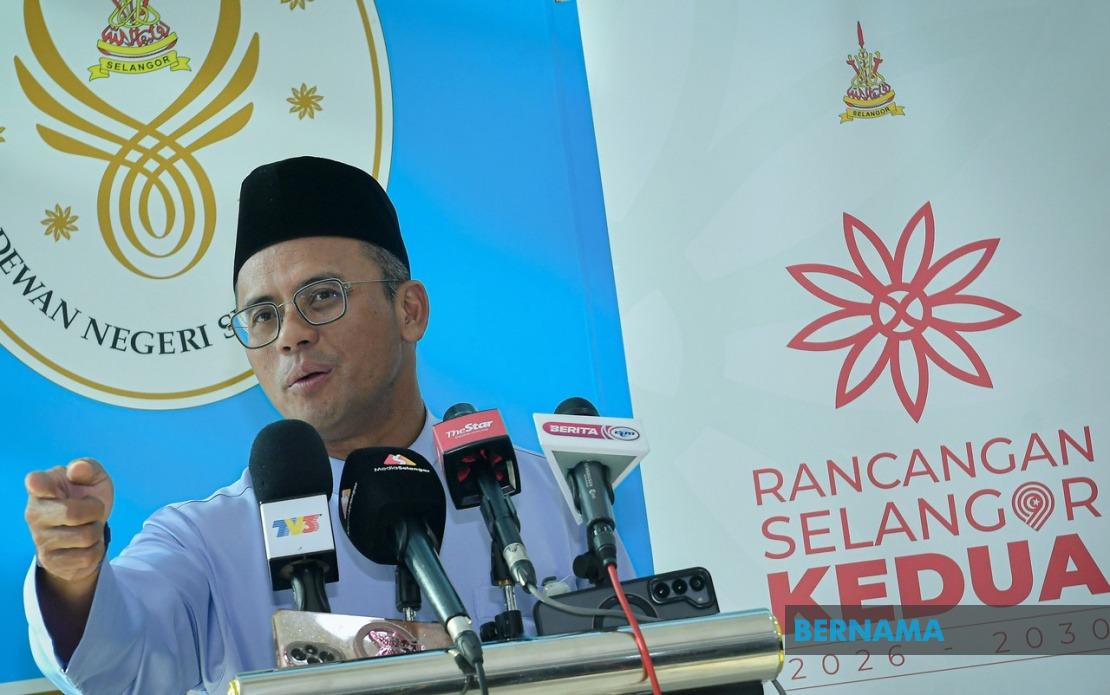
Selangor's government has set its sights on delivering 200,000 affordable residential units as part of a sweeping housing initiative intended to expand homeownership among the state's growing population. Menteri Besar Datuk Seri Amirudin Shari unveiled the ambitious scope of the RS-2 programme during a state legislative assembly session in Shah Alam, positioning affordable housing as a cornerstone of the state's economic and social development strategy.
The scale of progress to date demonstrates significant traction in delivering this vision. According to Amirudin, the Selangor government has already completed 64,188 housing units, while a further 69,014 remain under active construction. This brings the combined tally to 133,202 units, representing roughly two-thirds of the total 200,000-unit target. The completion of nearly 64,000 homes indicates that implementation has moved beyond the planning phase into tangible residential delivery, a critical milestone for any large-scale housing programme in Malaysia's most economically dynamic state.
Beyond conventional home purchase models, the state government is introducing innovative financing mechanisms to broaden access to property ownership among lower-income households. Under a rental-deposit scheme administered by the Selangor Housing and Property Board (LPHS), tenants will accumulate housing savings through a structured arrangement where 30 per cent of their monthly rental payments are retained and eventually returned as a down payment when they decide to purchase a property. This approach acknowledges the financial barriers many Malaysians face and creates a pathway from renting to ownership without requiring large upfront capital.
The rental-to-ownership model reflects pragmatic policy-making in a context where rapid urbanisation and rising property prices have outpaced wage growth in many demographic segments. By enabling renters to build equity through their monthly housing expenses, the scheme reduces the psychological and financial burden of home purchase while maintaining affordability throughout the rental period. For Southeast Asian policymakers watching Selangor's experiment, this hybrid approach offers lessons in addressing the region's chronic housing supply-demand imbalance without resorting to price controls that might discourage private investment.
A distinctive feature of the RS-2 programme is its emphasis on measuring programme effectiveness through a new household assistance index. Selangor intends to develop this metric using its state statistical framework, enabling policymakers to track outcomes systematically rather than relying on anecdotal evidence. The state will conduct evaluations at 12-month and 24-month intervals to monitor the progress of programme beneficiaries, thereby creating an evidence base for refining policies and justifying budget allocations. This data-driven approach addresses a persistent weakness in housing policy implementation across Malaysia—the absence of robust feedback mechanisms to assess whether programmes actually improve beneficiary circumstances.
Recognising that housing policy cannot exist in isolation, the Selangor government is integrating affordable housing with broader urban mobility objectives. The state plans to enhance public transport frequency, particularly services connecting residents to LRT and MRT stations, acknowledging that distance from transit hubs significantly affects residential desirability and household transport costs. For lower-income households, proximity to public transport can substantially reduce overall living expenses and improve economic participation by enabling easier commutes to employment centres.
The walkability agenda represents another layer of urban planning sophistication. Covered walkways at every LRT and MRT station will address a practical barrier to public transport usage in Malaysia's tropical climate, where afternoon rains and intense midday heat can discourage pedestrian movement between residential areas and stations. This climate-conscious design detail, easy to overlook, may meaningfully increase transit ridership among families with young children or elderly members who face weather-related obstacles.
Every Rumah Selangorku Harapan and Rumah Selangorku Idaman development will incorporate dedicated bus stops, embedding transit connectivity into the residential planning process rather than treating it as an afterthought. This requirement reflects understanding that affordable housing residents, typically dependent on public transport, require convenient local bus service to access schools, markets, clinics, and employment without lengthy commutes. The bus stop mandate ensures that the state's housing developments support inclusive urban mobility from inception.
Amirudin emphasised that effective transit planning demands technology-driven assessment of population concentrations and movement patterns. The state intends to use data analytics to identify high-traffic corridors, community gathering points, and residential clusters requiring small bus stop infrastructure. This analytical approach, increasingly common in advanced urban planning jurisdictions, ensures that transit resources are allocated based on demand patterns rather than intuition. For a state like Selangor, where sprawling suburban growth creates complex transit challenges, systematic demand mapping becomes essential to maximising the utility of public transport investments.
The RS-2 initiative sits within a broader Malaysian context of rising housing costs straining household finances. In most developed regions, housing costs should comprise no more than 30 per cent of household income; across Malaysia, many urban workers spend considerably more, particularly first-time buyers. Selangor's multi-pronged approach—combining new construction, innovative financing, transit integration, and livability investments—acknowledges that sustainable housing solutions require simultaneous intervention across multiple policy domains rather than focusing narrowly on unit numbers.
The programme's success will have implications extending beyond Selangor's boundaries. As Malaysia's most populous state and primary economic engine, Selangor's housing policies influence migration patterns and investment decisions across the Klang Valley region and beyond. If RS-2 successfully delivers 200,000 affordable homes while integrating transit and walkability improvements, the model could inspire emulation by other state governments and inform federal housing initiatives. Conversely, implementation challenges or delays would signal the difficulty of orchestrating large-scale integrated urban development in Malaysia's fragmented governance landscape.

