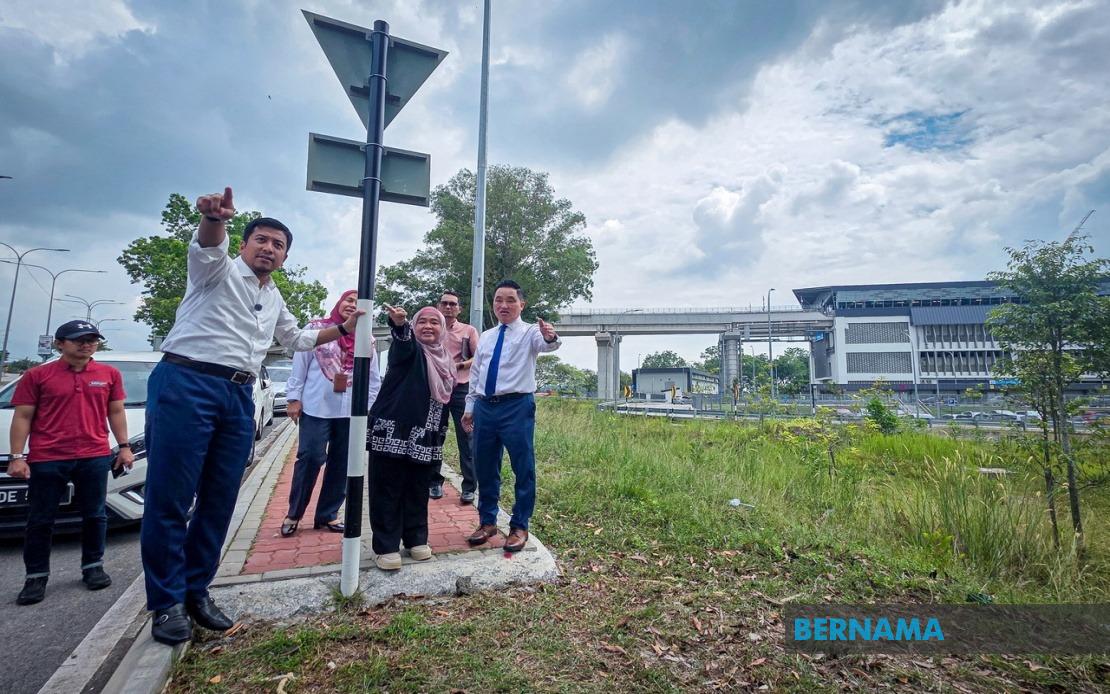
The Selangor State Government has moved to expedite the completion of accessibility infrastructure at Shah Alam Line LRT3 stations, acknowledging that newly operational transit facilities often require follow-up improvements to meet user expectations. State Local Government and Tourism Exco Datuk Ng Suee Lim announced the initiative following an inspection of public connectivity measures, signalling the administration's commitment to resolving shortcomings that have emerged since the rapid transit line began operations.
Two stations have become immediate focal points for the government's remedial efforts. Dato' Menteri Station requires completion of essential pedestrian amenities, with administrative processes and permitting currently delaying finalisation. Datuk Ng indicated that authorities have issued directives to Prasarana, the operator responsible for LRT infrastructure, to conclude these works within a two-month window. The work encompasses fundamental connectivity elements including pedestrian walkways and zebra crossings that facilitate safe passenger movement between the station and surrounding developments.
Shah Alam Stadium Station presents a distinct challenge, as its improvement timeline depends on tender processes initiated by adjacent property developers rather than direct government control. The Selangor administration, while acknowledging the complexity of coordinating with private sector stakeholders, has committed to active monitoring of development progress. This situation reflects broader urban transit challenges in Malaysia, where LRT expansion often intersects with mixed-use development projects that operate on separate timelines and decision-making structures.
The government's acknowledgement that infrastructure projects may contain "weaknesses" post-launch represents a pragmatic assessment of large-scale transport development. Rather than framing this as project failure, authorities framed their response as reactive problem-solving informed by actual operational experience. Once transit systems begin functioning, real-world usage patterns often reveal gaps between design intent and practical accessibility needs—issues that can only become apparent after thousands of commuters navigate the facilities daily.
Selangor's approach involves multi-layered coordination mechanisms to ensure comprehensive coverage of connectivity concerns. The Shah Alam City Council (MBSA) has been assigned monitoring responsibilities for infrastructure improvements, working alongside affected local authorities to track progress and verify completion timelines. This distributed oversight structure aims to prevent bottlenecks by distributing accountability across multiple government entities rather than concentrating responsibility in a single office.
Beyond the two priority stations, a broader review initiative extends to all local authorities maintaining LRT3 stations within their jurisdictions. Each municipal council has received instructions to conduct systematic assessments identifying any deficiencies in accessibility infrastructure—potentially uncovering additional gaps that require remediation. This comprehensive audit approach suggests the government views the initial inspection as a starting point for wider diagnostic work rather than a complete assessment.
Coordination meetings with relevant developers are scheduled to accelerate improvements at Shah Alam Stadium Station and potentially at other locations where private sector involvement complicates the completion process. By bringing developers into structured dialogue with government stakeholders, authorities aim to align project timelines and secure commitments to expedited work. Such coordination mechanisms have become increasingly important in Malaysian urban development, where public transport infrastructure frequently integrates with private commercial projects.
The role of local councillors and state assemblymen in gathering feedback represents an attempt to establish ground-level intelligence networks that capture commuter concerns before they escalate into broader public discontent. By tasking elected representatives with systematic feedback collection, the government creates direct channels for identifying emerging issues that centralised inspections might miss. This decentralised feedback approach can prove more responsive than formal complaint mechanisms, particularly for identifying patterns of user frustration across multiple locations.
For Malaysian transit users, particularly in the Klang Valley region where LRT3 serves growing residential and commercial corridors, these commitments carry practical significance. Reliable pedestrian infrastructure directly impacts the utility of rapid transit systems—commuters unable to safely access stations or uncertain about pedestrian pathways may shift to private transportation regardless of LRT frequency or reliability. The Selangor government's explicit two-month timeline for Dato' Menteri Station provides measurable benchmarks against which public scrutiny can track progress.
The situation also reflects wider trends in Malaysian infrastructure development, where rapid expansion of transit networks sometimes outpaces the completion of complementary facilities. LRT3's expansion represents significant investment in public transportation, yet its benefits remain constrained without comprehensive surrounding infrastructure. This case demonstrates how post-opening adjustments have become a normalised feature of major transport projects in the region, with phased completion becoming standard practice rather than exception.
From a governance perspective, the government's transparency about infrastructure gaps and its willingness to assign responsibility for remediation signals accountability expectations. By publicly committing to specific timelines and delegating monitoring authority to multiple agencies, Selangor has created mechanisms that permit public verification of progress. Whether these mechanisms translate into successful completion within stated timeframes will significantly influence public confidence in subsequent infrastructure initiatives across the state.

