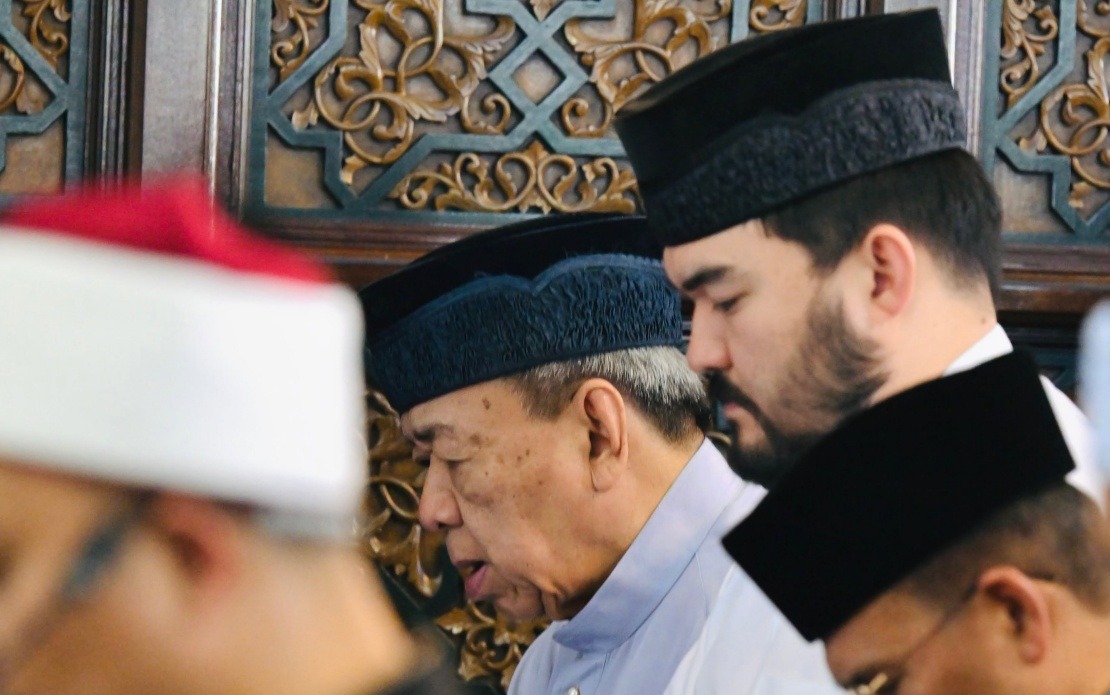
Sultan Sharafuddin Idris Shah has called upon Muslims across Selangor to embrace compassion as a fundamental principle in their treatment of animals, ranging from domestic strays to wildlife. The appeal came in conjunction with Friday sermons delivered at mosques throughout the state under the theme 'Ihsan Terhadap Mahkluk Allah SWT'—compassion towards Allah's creatures—urging congregants to internalise and reflect upon the spiritual dimensions of animal welfare.
Through a statement posted on the Selangor Royal Office's official Facebook page, the Sultan articulated a vision of human responsibility rooted in environmental stewardship. He emphasised that as custodians of the earth, people carry an inescapable duty to safeguard, nurture and administer their surroundings with integrity. This custodial obligation extends beyond human communities to encompass all sentient and non-sentient creation—animals, vegetation, mountains, oceans and waterways—each representing manifestations of divine majesty that demand protection and perpetuation.
The theological foundation for this call rests on the Prophet Muhammad's recorded emphasis on kindness towards animals. Islamic tradition, Sultan Sharafuddin noted, prescribes specific conduct toward living creatures: believers should furnish animals with sustenance and water as a baseline moral obligation, and at minimum, refrain from inflicting suffering on any creature fashioned by the Almighty. This teaching transcends mere sentimentality, positioning animal welfare as an integral component of Islamic praxis rather than an optional charitable endeavour.
Centrally, the Sultan framed the relationship between humans and other creatures as fundamentally underpinned by dual principles: compassion and accountability. Rather than treating animals as resources without moral weight, Islamic theology situates them within a relational framework where humans acknowledge their role in a divinely-ordered ecosystem. This perspective distinguishes Islamic animal ethics from purely utilitarian or exploitative approaches that have dominated much of modern resource management globally.
Yet the Sultan's address also navigated a critical tension within contemporary Islamic jurisprudence and public policy: the legitimate need to protect human safety and property when wildlife or animal behaviour threatens communities. He acknowledged that circumstances occasionally arise where Islamic law sanctions intervention to prevent demonstrable harm, grounding such action within the Maqasid Syariah—the overarching objectives of Islamic jurisprudence centred on preserving life and protecting material well-being. This caveat prevents the animal welfare principle from becoming absolutist or impractical.
The Sultan articulated a sophisticated position: compassion toward animals and the imperative to safeguard human communities need not exist in perpetual conflict. Rather, these represent complementary pillars of Islamic moral teaching that operate within distinct contextual boundaries. When animals pose genuine peril to public health or cause substantial economic damage, intervention becomes not merely permissible but potentially obligatory under Islamic law. Conversely, gratuitous cruelty or negligence in routine circumstances violates both compassion and responsibility.
This nuanced approach carries significant implications for animal welfare policy across Malaysia and Southeast Asia. For Selangor specifically, the royal endorsement of animal compassion provides principled justification for strengthening animal protection regulations, improving stray dog and cat management through adoption and neutering programmes, and enhancing wildlife rehabilitation facilities. The Sultan's framing suggests these initiatives align with rather than contradict Islamic values—a crucial reframing in a Muslim-majority nation where religious legitimacy often determines policy acceptance and public compliance.
The timing of this message through official state channels underscores the Selangor Palace's commitment to embedding animal welfare within governance frameworks. By channelling the message through congregational sermons and social media, the Sultan ensured reach across diverse demographics and age groups, creating cultural momentum for shifted attitudes toward animals in daily life. The approach models how religious authority can mobilise faith communities toward contemporary ethical challenges without compromising doctrinal integrity.
For Malaysian stakeholders, this royal pronouncement offers an authoritative religious counter-narrative to dismissive attitudes toward animal protection. In contexts where animal welfare initiatives sometimes encounter resistance grounded in claims of Western imposition or cultural irrelevance, the Sultan's intervention demonstrates that compassionate animal stewardship constitutes authentic Islamic practice. This distinction becomes particularly potent in Malaysia's pluralistic environment, where animal welfare advocacy often falters when perceived as threatening majority religious sentiment.
The broader Southeast Asian context amplifies the significance of this message. Rapid urbanisation across the region has produced surging stray animal populations, escalating human-wildlife conflict in agricultural zones, and growing concerns about animal welfare standards in industrial farming. These challenges transcend Malaysia but intersect sharply with religious and cultural frameworks that vary across the region. The Selangor Sultan's synthesis of compassion and practical necessity offers a template for how other Muslim-majority nations might approach animal ethics policy in culturally congruent rather than externally-imposed terms.
Implementing this vision will require coordination across multiple spheres: strengthening enforcement of existing animal cruelty statutes, training animal control personnel in humane methods, expanding veterinary services in underserved communities, and cultivating religious scholarship that elaborates Islamic animal ethics for contemporary contexts. The royal endorsement provides necessary political cover for such initiatives within constituencies that might otherwise perceive them as secular impositions on traditional practices.

