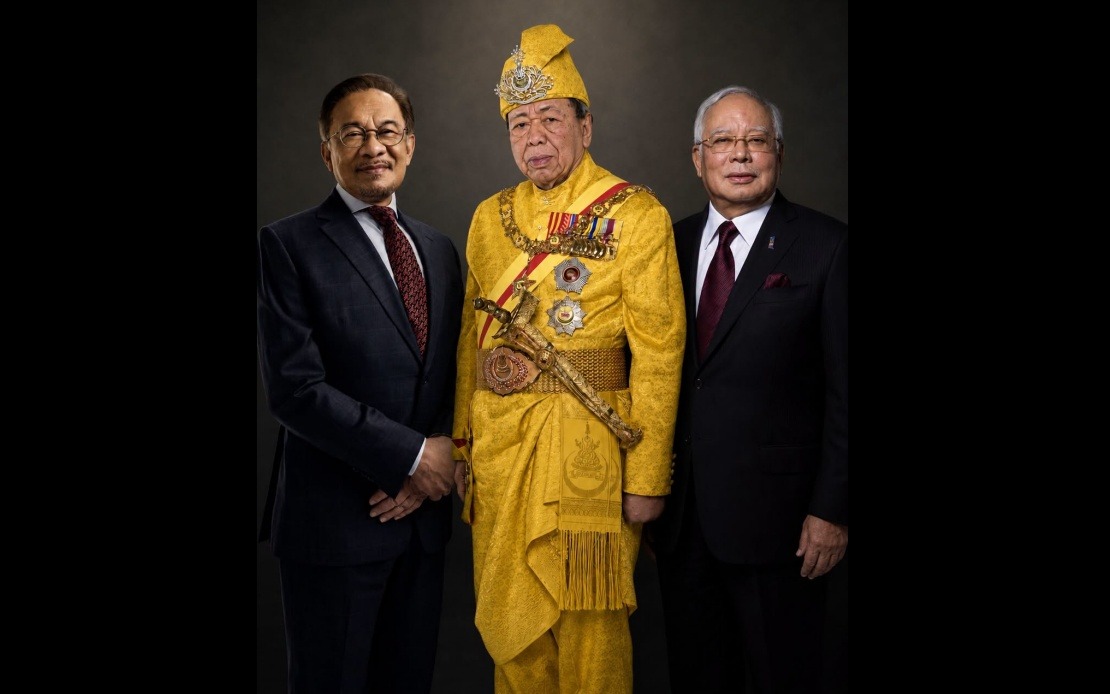
The Sultan of Selangor, Sultan Sharafuddin Idris Shah, has publicly acknowledged Prime Minister Datuk Seri Anwar Ibrahim's role in bringing the Shah Alam Line LRT3 project to completion, with the line commencing operations on Monday. In a statement released from Shah Alam, the Sultan expressed his gratitude for the project's realisation and highlighted specific interventions that proved instrumental in reviving a scheme that had faced multiple setbacks and reductions over the past six years.
Central to the Sultan's appreciation was Anwar's decision to restore five stations that had been struck from the original alignment following earlier cost-cutting exercises. Since taking office as Prime Minister and Finance Minister in 2022, Anwar's administration has worked to reverse some of the project's scaling-back, addressing concerns that the truncated version would diminish the scheme's utility for commuters across the Klang Valley. Beyond station restoration, the Sultan also noted that the government has proposed developing affordable housing near LRT3 stations, a measure designed to make the transport option more accessible and beneficial to lower-income residents in the corridor.
The Sultan's recognition extends further, with a directive that no additional obstacles should impede the project's smooth operation going forward. His characterisation of this instruction as a significant commitment underscores the political will required to ensure that implementation proceeds without further disruption. The statement demonstrates awareness that Malaysian infrastructure projects frequently encounter delays from multiple quarters, whether bureaucratic, technical, or political, and the Sultan's explicit call for removal of such barriers suggests his intention to shield the project from future complications.
The genesis of the LRT3 scheme reveals much about how major transport infrastructure emerges in Malaysia. Rather than originating from strategic urban planning documents, the project grew from sustained public complaints, particularly from residents and especially housewives in the Klang and Shah Alam areas who described husbands' struggles to return home punctually due to severe traffic congestion during peak hours. This grassroots origin story, emphasised by the Sultan, establishes the project as a genuine response to lived experience rather than a prestige-driven megaproject. The Sultan's framing serves to ground the LRT3 in practical necessity rather than grandiose ambition.
The transport challenges facing the Klang Valley at the time of the LRT3's conception were acute. With only two bridges spanning the Klang River and severe congestion particularly acute during peak hours, the corridor suffered from genuine infrastructure inadequacy. When former Prime Minister Datuk Seri Najib Tun Razak's administration responded to these conditions, it took two interim measures: abolishing the Batu Tiga and Sungai Rasau toll plazas in 2018 as an immediate relief measure while simultaneously initiating planning for the LRT3 rail link that would more comprehensively address the underlying problem. The Sultan's acknowledgement of Najib's role in heeding the call for a rail connection demonstrates that infrastructure development, at its best, transcends partisan divisions.
However, the project's trajectory since conception illustrates the vulnerabilities of long-term Malaysian infrastructure schemes to political transitions. Following the 2018 change of government, the LRT3 suffered a delay exceeding 18 months as the incoming administration reassessed the project. This hiatus, though lengthy, paled against the subsequent impact of the COVID-19 pandemic, which introduced a further 19-month setback stretching into 2021. During these extended interruptions, project specifications underwent significant compression: station sizes were reduced, the number of train coaches in each formation was cut, and five proposed stations along the original alignment were cancelled. These reductions fundamentally altered the project's scope and capacity, raising questions about whether the final product would adequately serve the corridor's transport needs.
The Sultan's statement carries a subtle but important message regarding infrastructure project ownership and credit. While expressing specific appreciation for Anwar's interventions, the Sultan explicitly rejected narratives attributing the LRT3's completion solely to any single individual or political administration. Instead, he characterised the project as the product of sustained planning, commitment and cooperation spanning multiple governments. This framing acknowledges that infrastructure of this scale necessarily involves overlapping administrations, each contributing planning phases, securing funding tranches, or managing implementation periods. The Sultan's insistence on this multi-administration continuity reflects sophisticated understanding that Malaysian political transitions, while sometimes acrimonious, need not represent complete ruptures in ongoing national projects.
The functional benefits anticipated from the LRT3's opening address genuine transport challenges across the Klang Valley corridor. The line promises faster, more comfortable and safer alternatives to private vehicles for commuters travelling between Klang, Shah Alam and Kuala Lumpur, three economically significant centres whose connectivity has long been constrained by road congestion. For residents across the corridor, particularly in lower-income areas where car ownership rates are lower, the availability of rapid transit represents genuine quality-of-life improvement. The Sultan's emphasis on the project's people-centred purpose rather than its prestige value aligns with his characterisation of its origins in public grievance.
Economic development potential also features prominently in the Sultan's expectations. Well-functioning transport corridors typically catalyse business formation, property development and employment concentration in surrounding areas. The Sultan expressed hope that the LRT3 would stimulate such economic benefits while strengthening Kuala Lumpur, Petaling Jaya, Shah Alam and Klang as integrated growth centres. This perspective reflects understanding that transport infrastructure functions not merely as passenger conveyance but as an economic development tool, particularly in metropolitan regions where productivity depends on efficient labour market integration across multiple nodes.
Operational sustainability has also featured in the Sultan's concerns. He expressed hope that Prasarana Malaysia Bhd, the agency responsible for operating the line, will maintain continuous and rigorous maintenance standards to ensure services remain smooth and efficient. This emphasis reflects awareness that infrastructure completion represents merely the beginning of the asset's useful life cycle. Malaysian transport systems have occasionally suffered from deteriorating service standards due to inadequate maintenance funding or commitment, and the Sultan's explicit invocation of this responsibility suggests vigilance regarding the LRT3's long-term performance.
The LRT3's opening this week represents a significant moment for the Klang Valley, though not without qualifications. The project that has finally commenced operations differs substantially from the original 2012 conception, scaled down in multiple dimensions through successive reductions. Nevertheless, the opening provides the corridor's residents with the rapid transit alternative that decades of traffic congestion had demanded. For Prime Minister Anwar and his administration, the LRT3's commencement provides a tangible infrastructure achievement to cite, while for the Sultan, it fulfils a long-standing commitment to address the transport grievances that first prompted the project's inception.
Looking forward, the LRT3's success will be measured not merely by its opening, but by its effectiveness in genuinely reducing congestion, enhancing commuter experience and catalysing the economic development benefits that the Sultan anticipates. The line's integration with existing rapid transit networks, the pricing structures adopted, and the frequency and reliability of service provision will all influence whether the project delivers on its promise to the Klang Valley's residents. The Sultan's statement, while honouring those responsible for the project's completion, ultimately rests the true test of success on the lived experience of the commuters it serves.

