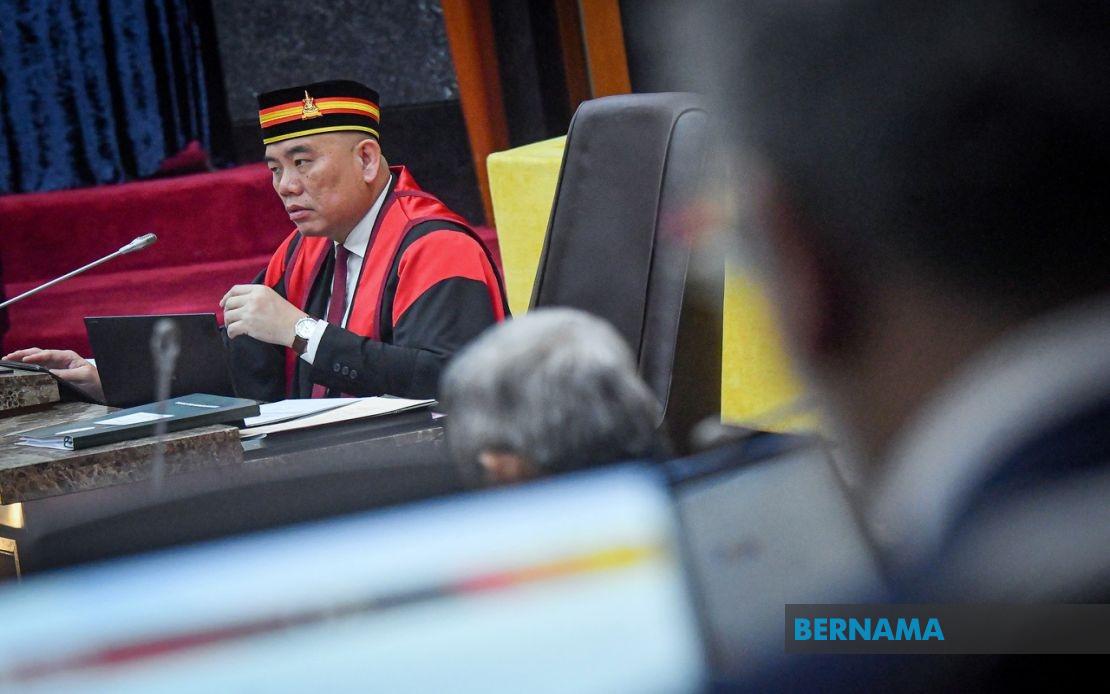
Selangor State Legislative Assembly Speaker Lau Weng San has initiated a comprehensive examination of all state assemblymen across party lines to determine whether any legislative seats should be formally declared vacant. The Speaker, addressing reporters at Wisma Dewan Negeri Selangor in Shah Alam on August 3, emphasised that his investigation encompasses every constituency and political affiliation, underpinned by constitutional requirements and factual verification rather than speculation or preliminary assumptions.
The ongoing review process represents a significant administrative undertaking within the state legislature, as Lau methodically assesses attendance records and documentation submitted by assemblymen. The Speaker acknowledged that while he cannot yet specify a completion timeline, further announcements will follow once all necessary verification procedures have concluded. This measured approach suggests the complexity involved in scrutinising the parliamentary status of dozens of elected representatives simultaneously across the diverse Selangor assembly.
Under the Selangor State Constitution, an assemblyman faces potential vacancy of his seat if he accumulates six consecutive months of absences from legislative sittings without either formal permission or official prior notification. This constitutional provision establishes a clear threshold for maintaining parliamentary membership, though its application requires careful examination of individual circumstances. The Speaker's current investigation appears designed to ensure that any vacancy declarations would withstand constitutional scrutiny and reflect genuine breaches rather than technical absences.
Lau specifically addressed media speculation regarding the absence of certain assemblymen from today's sitting, cautioning against premature linkage between individual absences and the ongoing status review. He noted that several assemblymen had previously submitted formal letters explaining their non-attendance, citing health-related difficulties and other legitimate grounds. The Speaker's reminder that each case requires individual assessment underscores the administrative rigour necessary before any seat declaration, preventing blanket assumptions about legislative status based on single or isolated absences.
Menteri Besar Datuk Seri Amirudin Shari provided complementary perspective on the timeline, indicating that a definitive determination regarding at least one state seat should materialise within the current week. The Menteri Besar's statement suggests coordination between the Speaker's office and the state government regarding the outcome, with the state legal adviser already preparing the necessary documentation for subsequent referral to appropriate authorities. This sequential process—from the Speaker's constitutional assessment through government review and potential Election Commission involvement—reflects the institutional checks embedded within Malaysia's state governance framework.
The potential declaration of vacant seats carries significant implications for Selangor's political composition, given the state's previous experience with shifting legislative majorities and coalition dynamics. Any reduction in assembly membership through vacancy declarations could materially alter voting calculations on key government initiatives and confidence measures. This broader political context renders the Speaker's meticulous review process consequential beyond purely administrative concerns, affecting the substantive balance of power within the state legislature.
The review process further illustrates the increasing scrutiny applied to assemblymen's attendance and commitment to their parliamentary duties across Malaysian state legislatures. Beyond mere administrative compliance, the Speaker's systematic examination reflects broader expectations that elected representatives maintain consistent engagement with their legislative responsibilities. This development aligns with growing public and institutional emphasis on accountability and duty of office throughout Malaysia's political system, where previous controversies regarding absent or inactive legislators have prompted systemic reviews in other state assemblies.
Lau's explicit statement that the investigation encompasses every party and constituency demonstrates institutional neutrality in the assessment process, suggesting that no single political grouping faces disproportionate scrutiny. This comprehensive scope may address concerns that vacancy determinations could be weaponised for partisan advantage, a consideration that assumes heightened importance given Selangor's history of politically-charged legislative episodes. The Speaker's emphasis on constitutional compliance and factual grounding attempts to position the review as a neutral administrative exercise rather than a politically-motivated action.
The involvement of the Election Commission in potential subsequent by-elections adds another institutional layer to the process. Should the Speaker's review result in seat vacancy declarations, the EC would then determine the timing and logistics of by-elections, introducing additional considerations regarding electoral administration and political opportunity costs. For any governing coalition, unexpected by-elections impose financial burdens and create temporary uncertainties regarding voting strength, while opposition parties view such contests as potential opportunities for legislative gains.
The staggered timeline described by both the Speaker and Menteri Besar—with this week marking an anticipated decision point—suggests that constituent assemblymen have been made aware of the review's trajectory. Some assemblymen may have proactively submitted attendance justifications or formal notifications, creating evidentiary records that the Speaker must evaluate individually. The opportunity for assemblymen to present their case before any vacancy determination reflects fair procedure principles increasingly expected within Malaysian state governance institutions.
For Malaysian political observers, this review encapsulates broader debates about legislative accountability, the balance between legitimate absences and parliamentary duty, and institutional mechanisms for addressing inactive representation. Selangor's experience may establish precedent for other state assemblies grappling with similar questions about assemblyman attendance and seat management. The Speaker's methodical approach, emphasising constitution compliance and comprehensive examination, represents an institutional response to ensuring that legislative chambers function with full participation from their elected members.

