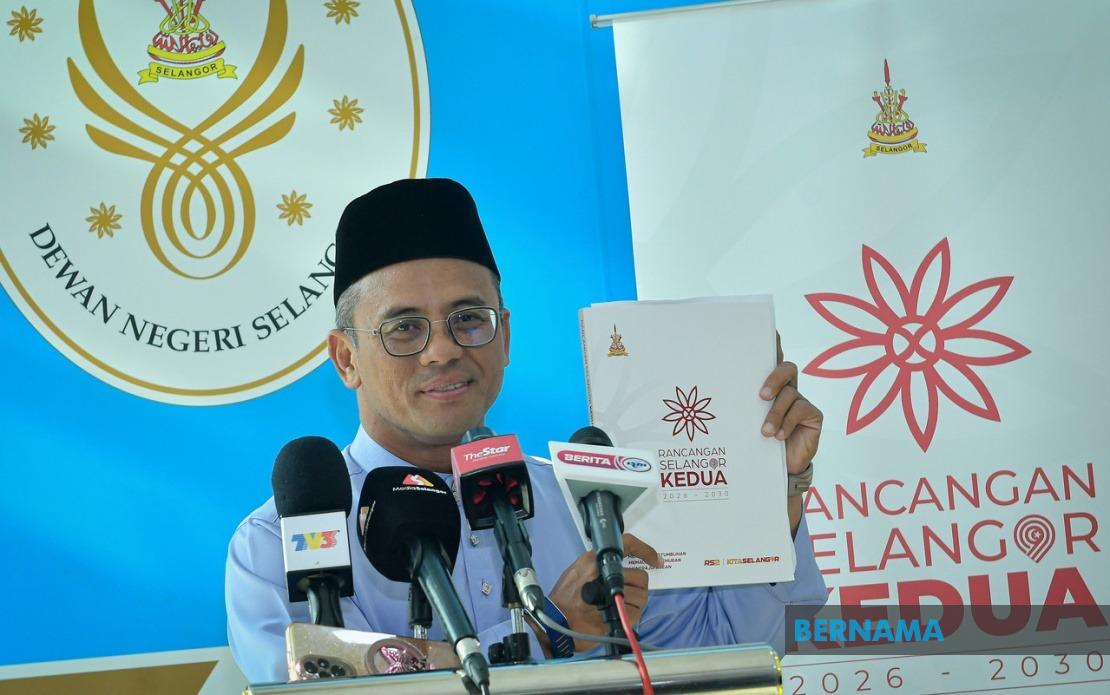
Menteri Besar Datuk Seri Amirudin Shari has set a comprehensive performance benchmark requiring every local authority in Selangor to reach a 95 per cent score on the PBT Star Rating System (SPB-PBT) within the next six years. The announcement, made during the tabling of the Second Selangor Plan (RS-2) at the state assembly, signals a significant shift towards uniform service quality standards across the state's municipal landscape. This unified target underscores the state government's determination to eliminate disparities in how residents across different districts experience public services, whether they live in affluent urban centres or developing suburbs.
The 95 per cent benchmark represents more than a numerical target—it embodies a philosophical commitment that quality governance should not remain concentrated in a handful of well-resourced municipalities. Currently, service delivery standards vary considerably across Selangor's local authorities, with some consistently outperforming others. By establishing a single mandatory threshold that applies equally to all 43 PBTs, the state government is essentially declaring that every resident, regardless of postal code, deserves access to the same calibre of administrative efficiency and customer responsiveness. This democratisation of service standards addresses a longstanding grievance among communities in less developed areas that have historically received lower priority in infrastructure and service investment.
Parallel to this operational target, the state intends to achieve 85 per cent coverage of End-to-End Digital Government Service Sharing by 2030. This digital transformation component reflects the growing recognition that modern governance cannot function effectively through traditional analogue processes. Digital integration promises faster processing times, reduced paperwork, improved transparency, and better data management across the entire PBT ecosystem. For Malaysian citizens accustomed to seamless digital transactions in the private sector, the push towards comprehensive government digitalisation addresses a significant pain point where bureaucratic inefficiency often persists. The target also facilitates cross-departmental information sharing, enabling residents to accomplish multiple administrative tasks through a single portal rather than shuttling between various offices.
Amirudin emphasised that PBTs must elevate their operational performance substantially to meet these expectations. The current state of many local authorities—characterised by slow response times, poor complaint resolution, and organisational silos—indicates considerable ground must be covered. The message to PBT leadership is unambiguous: service delivery excellence cannot remain optional or aspirational. Management teams must implement structural reforms, invest in staff training, adopt customer-centric practices, and establish accountability mechanisms that translate the 95 per cent target from rhetoric into measurable outcomes. This requires not merely incremental improvement but systemic overhaul in how these institutions prioritise citizen interactions.
The administration has signalled that feedback channels, whether social media platforms or direct complaints, must receive systematic attention and timely resolution. This represents a subtle but important acknowledgment that service failures documented on platforms like Twitter, Facebook, or TikTok now constitute legitimate governance issues that demand official response. The informal digital public square has become an extension of formal complaint mechanisms, and ignoring it exposes local authorities to reputational damage and legitimacy questions. By explicitly mandating that all complaints receive due attention, the state is formalising what many digitally-savvy residents already expect—that their grievances will be acknowledged and acted upon within reasonable timeframes.
Beyond the local authority framework, RS-2 addresses a critical structural vulnerability in Selangor's financial model. The state currently derives approximately 75 per cent of revenue from land-related sources—principally premiums and rental income from property transactions. This heavy concentration creates dangerous exposure to market fluctuations and limits fiscal flexibility. A downturn in the property market, regulatory changes affecting land transactions, or shifts in development patterns could severely constrain the state's ability to fund services and infrastructure. Diversifying revenue sources therefore becomes not merely prudent financial management but essential strategic survival for long-term governance sustainability.
The state government intends to address this revenue concentration through innovative financing mechanisms and enhanced private-sector participation in delivering public services. This might encompass public-private partnerships, performance-based contracts, alternative revenue streams from technology sectors, or creative financing instruments that reduce dependence on land transactions. The involvement of government-linked companies (GLCs) features prominently in this strategy, with the state seeking to leverage these entities' capital and expertise to fund and deliver services previously dependent on direct government funding.
The establishment of a fully integrated State Investment Holding company represents a particularly significant structural reform. Rather than allowing multiple GLCs to operate as semi-autonomous fiefdoms with overlapping mandates and duplicative functions, centralised strategic oversight promises to eliminate wasteful competition between state entities, reduce administrative overhead, and improve return on state investments. For citizens, this translates into better-resourced services and more efficient deployment of state assets. For the state government, it provides clarity regarding which entities are performing and which are drains on resources.
The alignment and rationalisation of GLCs also enables the state to pursue technology and service-based economic strategies without being hamstrung by outdated corporate structures. As Selangor seeks to position itself as a knowledge economy hub rather than merely an industrial manufacturing state, GLCs must similarly evolve their operations and focus. A subsidiary company duplicating functions of its parent organisation cannot simultaneously pursue innovation in emerging sectors. Streamlined governance structures allow these entities to take calculated risks, experiment with new business models, and compete effectively in technology-driven markets.
The RS-2 framework represents an attempt to simultaneously improve immediate service delivery while restructuring long-term fiscal sustainability. The ambitious 95 per cent service quality target and digital transformation goals provide short-term metrics by which residents can evaluate whether local governance is improving. The revenue diversification and GLC restructuring initiatives address medium-to-long-term sustainability concerns that, while less visible to ordinary citizens, fundamentally determine whether service improvements can be maintained across economic cycles.
For Malaysian observers beyond Selangor, this plan offers important lessons regarding governance modernisation. Many states struggle with similar challenges—service quality variations, inadequate digital infrastructure, revenue concentration, and inefficient state entities. Selangor's willingness to establish measurable, time-bound targets and acknowledge structural fiscal problems signals that progressive state administrations recognise modernisation requires both quick wins and structural change. Whether subsequent implementation meets these ambitious objectives will substantially influence Selangor's competitive position among Malaysian states and provide a template for governance improvement elsewhere in the nation.

