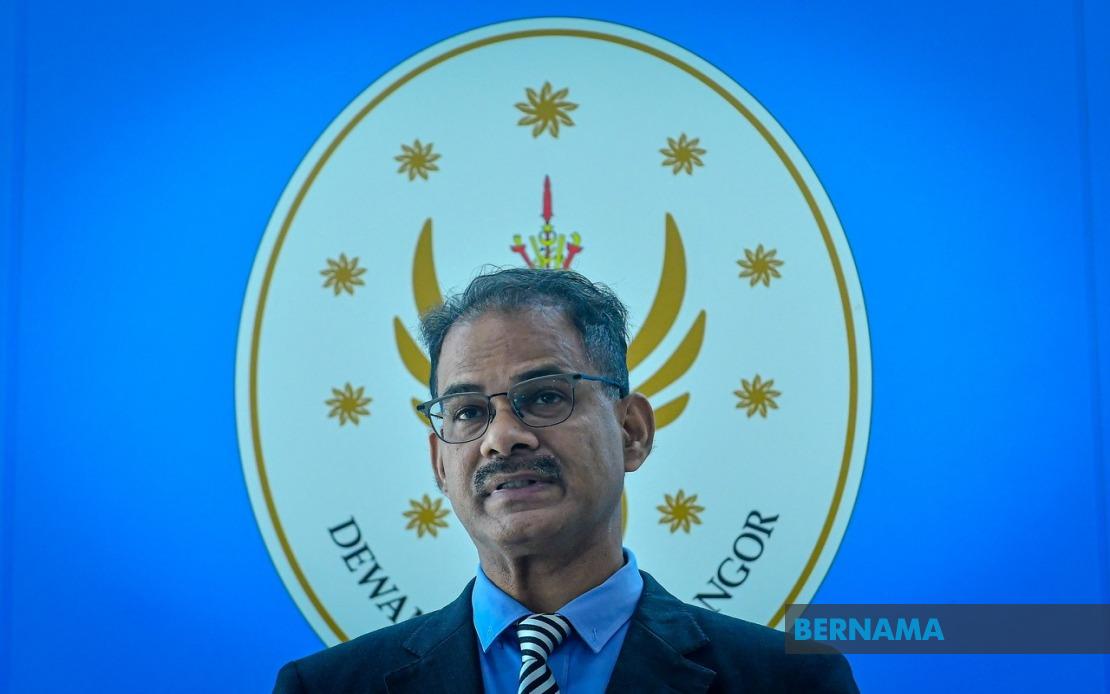
The Selangor government is making a final appeal to non-pensioned military and police veterans to secure their RM200 shopping vouchers under the 2026 Warriors' Day initiative, as the deadline approaches on August 31. Launched on July 29, the Jom Shopping programme has received disappointing uptake, with fewer than 500 individuals claiming their entitlements from a pool of 8,391 eligible veterans listed across the state. Officials worry that many beneficiaries remain unaware of the benefit or have not received notification due to outdated contact information.
V. Papparaidu, chairman of the Selangor government's Human Resources and Poverty Eradication Committee, highlighted the accessibility challenges facing the veteran community during a press briefing at the State Legislative Assembly in Shah Alam. He explained that outreach efforts had revealed significant communication barriers—numerous eligible recipients had changed telephone numbers, relocated to different addresses, or simply remained unreachable through conventional contact methods. Rather than allowing these administrative hurdles to prevent veterans from receiving support, the state government has adopted a pragmatic approach by permitting family members, representatives, or next-of-kin to collect vouchers on behalf of eligible individuals.
The voucher scheme, backed by an allocation of RM1.7 million, operates through a streamlined verification process that eliminates the need for formal applications. Officials at the Department of Veterans Affairs (JHEV) and the Royal Malaysia Police (PDRM) compiled the initial lists of qualified candidates, which the Selangor Economic Planning Unit (UPEN) then cross-checked and validated. Individual State Legislative Assembly service centres across the state now hold the vouchers and have been tasked with identifying and registering recipients, a distributed approach designed to improve accessibility for veterans living across the state's various constituencies.
The shopping vouchers themselves are restricted to approved daily necessities at participating supermarket chains, with explicit exclusions on tobacco products and alcoholic beverages. This targeting reflects the state government's intent to ensure welfare spending benefits household essentials rather than discretionary or vice products. The RM200 per veteran allocation, while modest, carries symbolic weight as recognition of military and police service. For many non-pensioned veterans—those who left service without qualifying for full retirement benefits—such assistance can meaningfully offset regular household costs.
Papparaidu emphasised that the state government views this initiative as an expression of gratitude to former service members who contributed to national security and stability. The framing of the programme goes beyond simple welfare provision, positioning it instead as a manifestation of the state's commitment to honouring those who sacrificed for the country. This messaging resonates within the Malaysian context, where military and police service carries considerable cultural and social significance, and veteran welfare remains a sensitive policy area affecting public perception of government priorities.
The low claim rate—approximately six percent of eligible veterans—raises questions about the effectiveness of outreach mechanisms in reaching dispersed populations with changing contact details. Urban migration, retirement relocations, and the ageing of the veteran demographic may all contribute to communication breakdowns. The decision to allow third-party collection attempts to mitigate this problem, though it potentially introduces administrative complexity and requires careful handling to prevent fraud or misappropriation of benefits.
For Malaysian policymakers, the Selangor experience offers practical lessons about veteran engagement. The state's flexibility in accepting representatives demonstrates adaptive governance, yet it also highlights persistent gaps in maintaining current registries of eligible citizens. Digital verification systems and proactive outreach campaigns might have accelerated uptake had they been deployed alongside the programme launch. The August 31 deadline now creates artificial urgency, potentially leaving some deserving veterans unaware of their entitlements until the window closes.
Regionally, Selangor's veteran support initiatives reflect broader Southeast Asian patterns of balancing fiscal constraints with social obligations to military and police personnel. As regional economies face competing spending demands and populations age, governments must develop efficient systems for identifying and assisting non-pensioned veterans—those most vulnerable to poverty and least connected to formal institutional support networks. Selangor's RM1.7 million allocation, while significant in absolute terms, remains modest relative to the state's total expenditure, yet it signals political commitment to this constituency.
The state government's public appeal suggests awareness that unclaimed vouchers represent both wasted resources and missed opportunities to demonstrate tangible appreciation for veterans. Officials are essentially using media attention to reach veterans through alternative channels—family members, community networks, and word-of-mouth referrals—since direct contact has proven unreliable. This indirect approach, while less efficient than targeted digital notifications, may actually prove more effective within communities that rely on personal relationships and informal information networks.
Veterans and their families seeking to claim vouchers must visit their respective State Legislative Assembly service centres before August 31. Those unable to attend in person should bring a representative armed with identification documentation establishing their relationship to the eligible veteran. The straightforward process reflects bureaucratic efficiency, requiring no formal applications or complex procedures—merely verification against the pre-compiled list and collection of the physical voucher.
The initiative ultimately represents a modest but meaningful intervention in veteran welfare, though its impact remains constrained by communication challenges and administrative reach limitations. As Selangor approaches the August deadline, the final claim numbers will provide data on the effectiveness of late-stage outreach efforts and may inform how future programmes target dispersed and difficult-to-reach beneficiary populations.

