Selangor is placing substantial strategic emphasis on rail transportation as a cornerstone industry for its economic future, recognising that between 63 and 67 percent of Malaysia's rail operations and corporate headquarters are already concentrated within its borders. This concentration of assets and expertise positions the state uniquely to develop a comprehensive ecosystem around modern mobility systems, but only if accompanied by deliberate investment in workforce development and institutional capacity building.
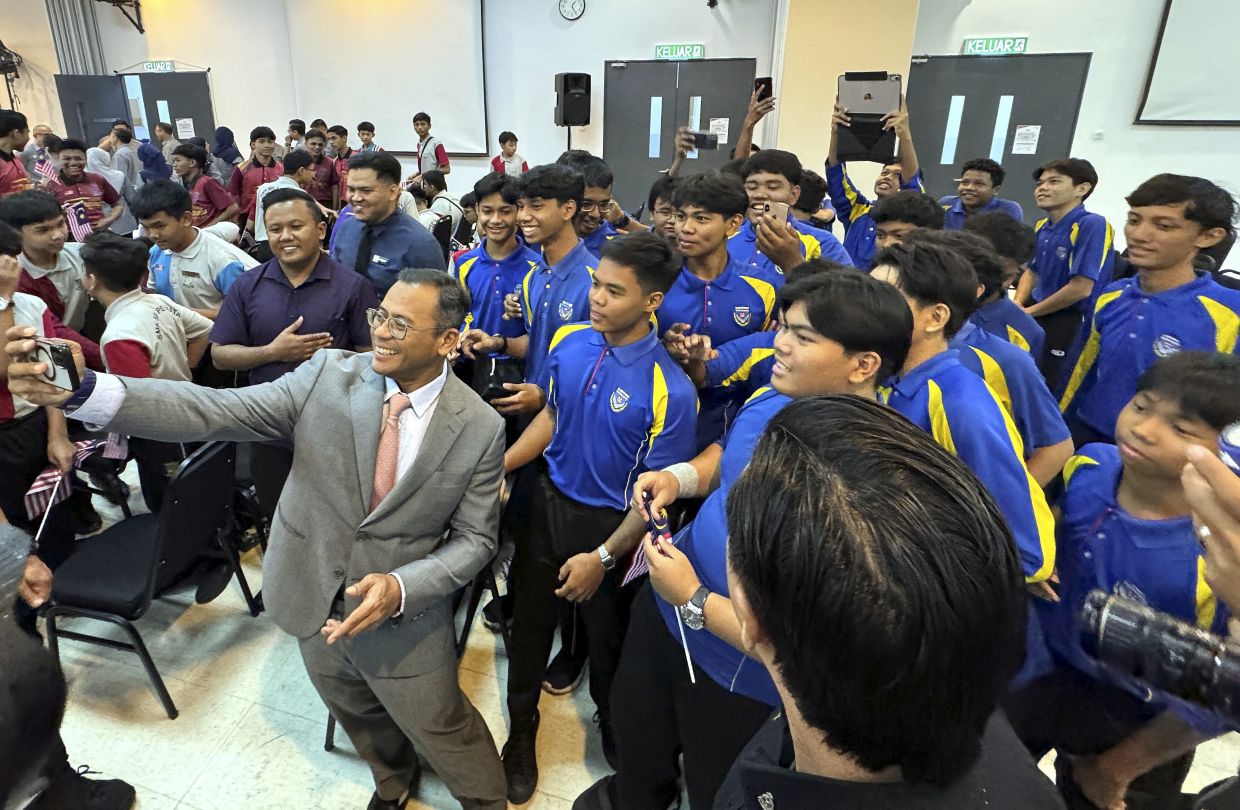
Mentri Besar Datuk Seri Amirudin Shari articulated this vision during his appearance at Universiti Tun Hussein Onn Malaysia (UTHM) in Sungai Buloh on Wednesday, August 19, emphasising that the state government intends to continue channelling resources into rail-related fields with particular attention to training and educational pathways. The underlying rationale is straightforward yet important: an industry as technically complex as modern rail transport requires not just infrastructure investment but a steady pipeline of domestically trained professionals capable of operating, maintaining, and innovating across the sector.
Central to this strategy is the establishment of the Selangor State Rail Council, a coordinating body designed to map the rail industry's evolving structure and identify skills gaps before they become bottlenecks to expansion. By bringing government, educational institutions, and industry players into structured dialogue, the council provides early warning signals about labour market needs and enables more nimble responses than traditional planning cycles allow. This reflects a growing recognition among Malaysian policymakers that infrastructure alone cannot deliver sustainable competitive advantage; the human capital dimension is equally critical.
A visible manifestation of this commitment emerged during the week when UTHM rebranded its Metro System Academy (MSA UTHM) to RailX, signalling an evolution in scope from railways alone to the broader ecosystem of modern public transport and mobility systems. The timing is strategic, as Selangor enters an era of transport network expansion with multiple major projects advancing simultaneously—the LRT3 extension, the East Coast Rail Link (ECRL), and ongoing MRT development. Each project requires hundreds of skilled technicians, engineers, and operational staff over coming years.
To engage younger audiences and demystify career pathways in rail, RailX has launched an interactive treasure hunt programme drawing secondary school students from ten districts across Selangor, including Gombak, Petaling, Hulu Langat, Sepang, Klang, Sabak Bernam, and Kuala Selangor. Students will navigate selected MRT stations as part of structured educational experiences, exposing them early to the sector's career possibilities and working environment. This downstream approach to talent recruitment—beginning at secondary school level rather than university—aligns with international best practice in sectors facing skilled labour shortages.
The treasure hunt fits within Malaysia's broader educational reform agenda under the Malaysia Education Plan 2026–2035, which emphasises practical exposure and industry collaboration in preparing young people for the job market. By positioning rail exposure as part of mainstream school activities rather than a niche specialisation, state authorities hope to normalise the sector as a desirable career destination among demographics historically drawn to white-collar professions. This cultural reframing may prove as important as the training programmes themselves.
MSA UTHM itself represents a multi-stakeholder model, operating as a partnership between UTHM and Mass Rapid Transit Corporation (MRT Corp) to train workers and students in rail operations, public transport management, and broader mobility systems. This institutional arrangement embeds industry requirements directly into curriculum design, reducing the lag time between changing job specifications and educational adaptation. Graduates emerge with credentials aligned to actual employer needs rather than theoretical frameworks that may have drifted from operational reality.
Amirudin highlighted what policymakers term the "triple helix" synergy—collaboration between government, universities, and private industry partners including MRT Corp and Rapid Rail—as essential to ensuring that Selangor's expanding physical rail infrastructure receives adequate human resource support. This framing acknowledges that government alone cannot supply all training capacity, nor should universities operate in isolation from industry feedback. The model distributes responsibility and aligns incentives across sectors.
Critically, the state has also established the Selangor Technical Skill Development Centre (STDC) to function as a feeder institution directing students into vocational and technical education pathways. Rather than creating a binary choice between academic and technical routes, STDC embeds articulation agreements allowing graduates to progress from basic or intermediate training through to diploma and bachelor's degree programmes at UTHM. This vertical integration within the technical education ecosystem means that entry barriers are lower for students without strong academic credentials, yet clear progression routes exist for those seeking advanced qualifications.
For Malaysia more broadly, Selangor's rail sector investment holds significance beyond state boundaries. As the nation's most economically developed and densely populated state, Selangor's success or failure in building rail-related human capital will influence whether the country can execute major transport infrastructure projects efficiently and cost-effectively. Labour shortages have already extended timelines and inflated costs on some Malaysian infrastructure projects; deliberate workforce planning in Selangor may provide lessons applicable elsewhere. Additionally, as Southeast Asia's logistics and manufacturing sectors increasingly depend on modern rail connectivity, Selangor's skilled workforce could become a regional asset, potentially positioning Malaysia as a training hub for the wider region.
The initiatives announced also reflect implicit recognition that rail transport is experiencing renaissance in emerging Asia as solutions to congestion, pollution, and last-mile connectivity challenges grow more urgent. Countries across the region are investing heavily in metro systems, commuter railways, and freight networks. Selangor's investment in training and institutional capacity building positions it to capture opportunities as regional demand for technical expertise and management consulting around rail projects expands. The state is not simply servicing its own infrastructure needs but potentially positioning itself as a source of expertise for a growing regional market.

