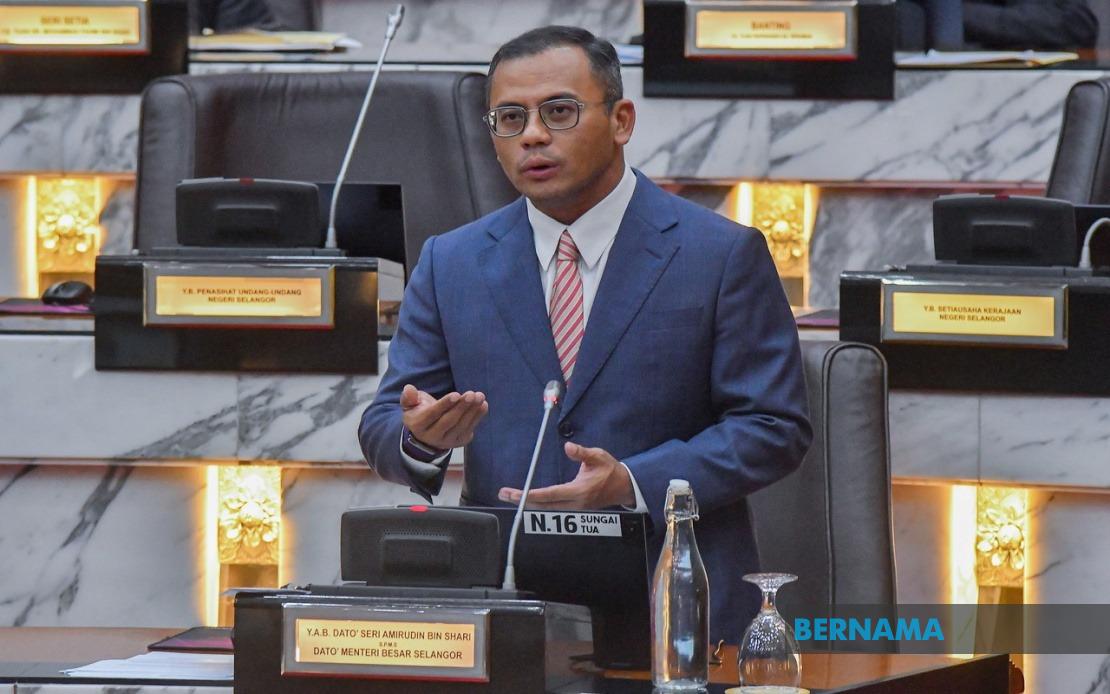
Selangor's top administrator has ordered all local authorities across the state to undertake a thorough assessment of public transport connectivity infrastructure, responding to mounting complaints about gaps in the first-mile and last-mile travel networks that have captured attention on social media platforms. Menteri Besar Datuk Seri Amirudin Shari made the directive during a debate at the State Legislative Assembly on June 23, signalling that the state government intends to treat this matter with urgency and allocated resources. The announcement comes as frustration grows among residents who struggle with inconvenient transfers between mass rapid transit systems like LRT3 and residential areas, a problem that has been repeatedly flagged online but historically slow to resolve through conventional channels.
The state government is prepared to inject additional financial resources to improve the physical infrastructure supporting public transportation networks, with particular emphasis on enhancing pedestrian safety and comfort. Amirudin stressed that these enhancements must be implemented efficiently and cost-effectively, avoiding wasteful spending while simultaneously advancing Selangor's strategic objective to shift commuters away from private vehicles and towards public transport. The approach signals recognition that infrastructure alone is insufficient; the quality and safety of the journey between home or workplace and transit stations fundamentally determines whether residents will choose public options over personal cars. This philosophy aligns with broader Malaysian urbanisation goals, where reducing traffic congestion and emissions hinges on making transit networks genuinely accessible and convenient.
A key frustration highlighted by the state government is the reactive rather than proactive posture many local authorities have adopted. Amirudin criticised public transport boards for waiting until complaints accumulate on social media platforms such as X and Threads before taking action, rather than proactively engaging with council members and community stakeholders to identify problems early. This observation reflects a wider pattern across Malaysian local government, where digital activism has become necessary to prompt official response. The Menteri Besar's comments underscore an expectation that municipal authorities should be conducting regular consultations and field assessments rather than allowing service deficiencies to fester until they become social media controversies that damage the state government's credibility. Such an institutional shift would represent meaningful progress towards genuine responsive governance at the local level.
The specific catalyst for this directive was raised by Danial Al-Rashid Haron Aminar Rashid, assemblyman for Batu Tiga (Pakatan Harapan), who drew attention to connectivity problems at the Light Rapid Transit Line 3 and surrounding districts during legislative proceedings. His intervention demonstrates how elected representatives can leverage parliamentary forums to escalate local grievances into formal policy directives, a mechanism that works when government leadership is sufficiently attentive. The LRT3 connectivity issue is particularly significant because that line serves expanding suburban areas, making seamless transfers crucial for residents who depend on public transport. Poor connections at these junctions effectively undermine the entire transport system's utility, turning potential commuters back towards motorcycles and cars despite personal preference for convenient transit.
State Investment, Trade and Mobility Committee chairman Ng Sze Han has been tasked with coordinating a comprehensive service mapping exercise involving all public transport operators across Selangor. This mapping will systematically identify geographic and temporal gaps in coverage, revealing precisely where and when transport chains break down. Such data-driven analysis provides the foundation for targeted interventions, whether through infrastructure investment, operational adjustments, or subsidy mechanisms. The service mapping approach reflects best practice in transport planning, moving beyond anecdotal complaints towards empirical understanding of network deficiencies. For Malaysian authorities attempting to build world-class transit systems, this analytical groundwork is essential—particularly given the complexity of coordinating multiple operators with different routes, frequencies, and fare structures.
The state government indicated willingness to provide operator subsidies to help bridge identified gaps, acknowledging that commercial viability sometimes conflicts with public welfare objectives. However, Amirudin made clear that subsidies alone cannot solve connectivity problems if operators fail to align their service patterns with actual travel demand. The Menteri Besar specifically highlighted the importance of managing operating hours strategically; if subsidised services run at inconvenient times or insufficient frequency, they will not attract passengers away from private vehicles, rendering the public investment ineffective. This observation reveals sophisticated understanding of transport economics: money spent subsidising poorly-timed services represents waste rather than investment. Operators must respond to subsidy provisions by restructuring their schedules and coverage patterns to genuinely serve commuter needs, creating a virtuous cycle where improved accessibility drives ridership growth.
The underlying tension Amirudin identified—that passengers will abandon public transport and revert to private vehicles when first-mile and last-mile connections fail—represents a core challenge for Malaysian urban planners. Selangor's experience reflects patterns seen across rapidly urbanising regions in Southeast Asia, where mass transit infrastructure expansion has often outpaced the feeder networks that make those systems accessible. A gleaming new MRT station means little to residents living two kilometres away with no convenient bus connection; they will simply drive instead. This connectivity gap particularly affects lower-income households and peripheral suburban areas that cannot sustain expensive taxi or ride-hailing services but lack adequate bus coverage. Addressing these gaps therefore carries equity dimensions alongside environmental and congestion-reduction benefits.
For Malaysian observers watching transport policy at state level, Amirudin's directive represents a test case in whether government can systematically address infrastructure deficiencies once they gain political attention. The state's willingness to allocate additional funds and coordinate across multiple transport operators suggests genuine commitment, yet implementation remains the critical variable. Local authorities must actually conduct meaningful reviews; Ng Sze Han must achieve genuine cooperation from operators; subsidies must be structured to incentivise desired behaviours rather than simply subsidising the status quo. The timeline for these changes remains unspecified, and historical experience suggests that even well-intentioned transport initiatives can face delays and partial implementation. Nonetheless, the public acknowledgement that connectivity matters and the allocation of responsibility for systematic improvement represents meaningful progress in Selangor's transport governance.
Looking forward, this initiative should catalyse similar reviews in other Malaysian states where transport connectivity gaps similarly frustrate commuters. Penang, Johor, and the federal territories all struggle with first-mile and last-mile challenges that reduce the attractiveness of otherwise impressive transit infrastructure. The Selangor approach—combining infrastructure investment with operational restructuring and targeted subsidies—offers a replicable framework that other state governments might adapt to their specific contexts. Success in Selangor would demonstrate that these problems, while stubborn, are solvable through coordinated action and adequate funding. Failure would reinforce the depressing pattern where Malaysian transit systems remain underutilised despite substantial capital investment, because the linkages between people's homes and mass transit stations remain inconvenient and unreliable.