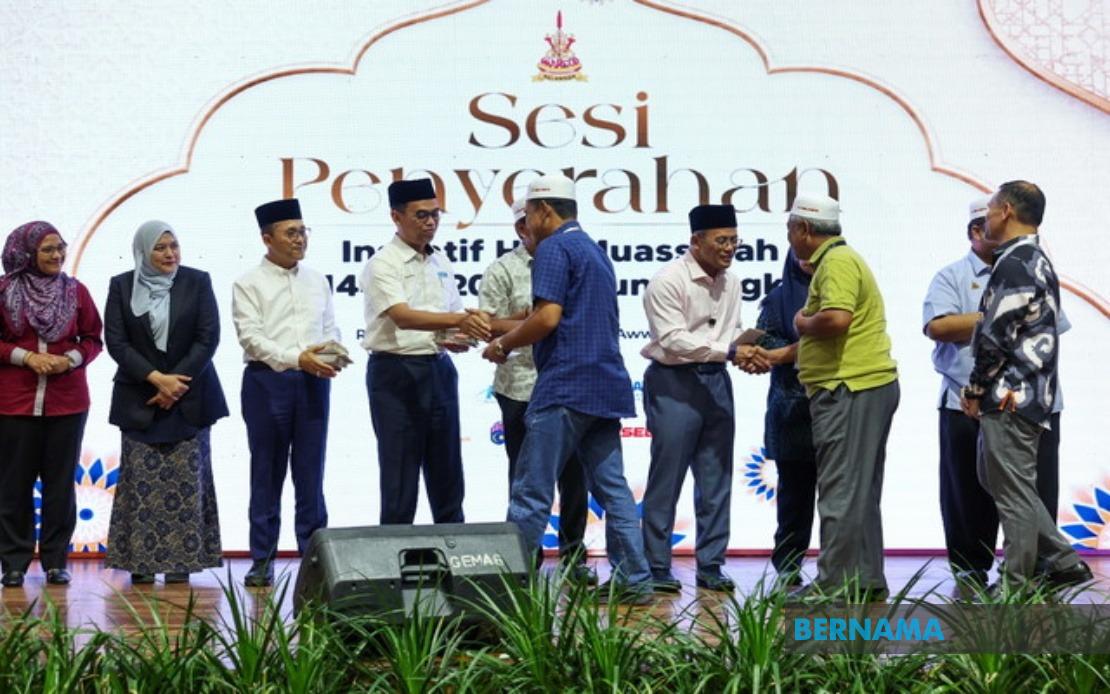
The Selangor state government is racing to complete its distribution of financial assistance to intending Haj pilgrims, with Menteri Besar Datuk Seri Amirudin Shari confirming that 4,800 of the 6,000 eligible recipients have already received their allocations as of late August. The remaining beneficiaries are expected to collect their funds before the end of September, marking the conclusion of a comprehensive support initiative designed to ease the financial burden on Muslim pilgrims preparing for the sacred journey to Mecca.
Through the Selangor Menteri Besar Incorporated Foundation, commonly known as Yayasan MBI, the state has earmarked RM9 million for the 2026 Muassasah Haj Incentive Programme. This substantial commitment reflects the state government's recognition that preparing for Haj involves considerable expenses, from acquiring appropriate religious garments and essential medications to purchasing necessary equipment and other items required during the pilgrimage. By providing targeted financial support, Selangor seeks to remove one layer of economic anxiety from lower and middle-income Muslim households.
Each recipient qualifies for RM1,500 in direct assistance, a figure calibrated to cover the most pressing preparatory expenses without duplicating support available from other federal or religious programmes. Amirudin disclosed during a contribution ceremony at the Putra Perdana Community Hall in Puchong that the initiative encompasses all of Selangor's parliamentary constituencies, with the Dengkil area representing just one node in a statewide distribution network. The involvement of Deputy Housing and Local Government Minister Datuk Aiman Athirah Sabu, the Member of Parliament for Sepang, underscored the cross-party significance of Haj preparation support as a social welfare priority.
For Malaysian states, the Haj incentive programme occupies an important space in domestic social policy. While the federal government administers the universal Haj allowance through its own mechanisms, state-level supplements like Selangor's initiative demonstrate how regional administrations are supplementing national provisions to address genuine gaps in pilgrim preparation. The programme's scope—encompassing 6,000 individuals—suggests that state-level data reveals substantial populations of Haj-intending pilgrims who face genuine financial constraints in accumulating the necessary kit and supplies.
The phased approach to distribution, with handover ceremonies occurring across multiple constituencies, also serves important symbolic and administrative functions. These events allow state officials to engage directly with recipients, gather feedback on implementation, and underscore the government's commitment to religious observance support. The Dengkil ceremony involving 259 recipients illustrates how a state-wide initiative cascades through multiple local touchpoints, ensuring visibility and community awareness rather than processing all payments through centralised bureaucratic channels.
Amirudin signalled ambitions to enhance the scheme's generosity in coming years, indicating that the state government intends to increase individual allocations to RM2,000 per recipient by either 2027 or 2028, provided that fiscal circumstances permit. This cautious optimism reflects the inherent tension facing state budgets: the genuine desire to expand social support programmes runs against the constraints imposed by revenue limitations and competing budgetary priorities. By framing the increase as conditional and time-bound, the Menteri Besar manages expectations while preserving the political advantage of having announced an upgrade pathway.
The timeline for the enhancement also aligns with Selangor's medium-term fiscal planning horizon. A two-year delay allows the state to assess programme outcomes, measure actual costs of distribution infrastructure, and project revenue growth under various economic scenarios. For pilgrims and religious organisations, the announced intention to scale up assistance signals that the state views Haj support as a continuing priority rather than a one-off initiative, though the caveats about financial capacity reflect the realities of state finance in Malaysia.
From a Southeast Asian perspective, Selangor's approach mirrors broader trends in which Muslim-majority regional governments are leveraging state budgets to facilitate religious observance. Indonesia, with its considerably larger Muslim population, operates its own government-funded Haj pilgrimage system. Brunei similarly provides state support for intending pilgrims. Selangor's programme, while necessarily scaled to a smaller eligible population within the state, reflects similar policy logic: enabling religious practice through targeted fiscal intervention strengthens social cohesion and reinforces state legitimacy among Muslim constituencies.
The RM9 million investment must be evaluated within Selangor's broader revenue base and expenditure priorities. As Malaysia's wealthiest state, Selangor commands substantially higher tax revenues than most other states, providing fiscal room for such initiatives that might prove impossible for economically weaker states to sustain. The programme's feasibility here contrasts with resource constraints facing states like Kelantan or Terengganu, where pilgrim populations may be proportionally larger but state revenues more limited.
Administratively, the reported pace of distribution—roughly 80 percent completion by late August with full disbursement expected by September—suggests competent implementation. Identifying and contacting the remaining 1,200-plus recipients, many of whom may have outdated contact details or address changes, represents a non-trivial logistical challenge. The timeline indicates that Yayasan MBI has deployed sufficiently resourced outreach mechanisms to locate recipients within a compressed window.
Looking forward, the programme's scalability and sustainability merit monitoring. If economic conditions permit and the RM2,000 target is reached, Selangor could face pressure to expand eligibility or increase recipient numbers. Religious organisations and civil society groups serving Muslim communities will likely advocate for programme expansion, particularly if other states adopt similar initiatives. The state government's careful language about future enhancements suggests awareness of this political dynamic.
For Malaysian pilgrims preparing for 2026, the Selangor assistance represents meaningful relief during the expensive preparation phase. Combined with federal Haj allowances and any personal savings, the RM1,500 per household can materially ease the transition from domestic life to pilgrimage. As more recipients collect their allocations over coming weeks, the programme's full impact will become apparent in community-level economic activity and religious institution engagement around Haj preparation across the state.

