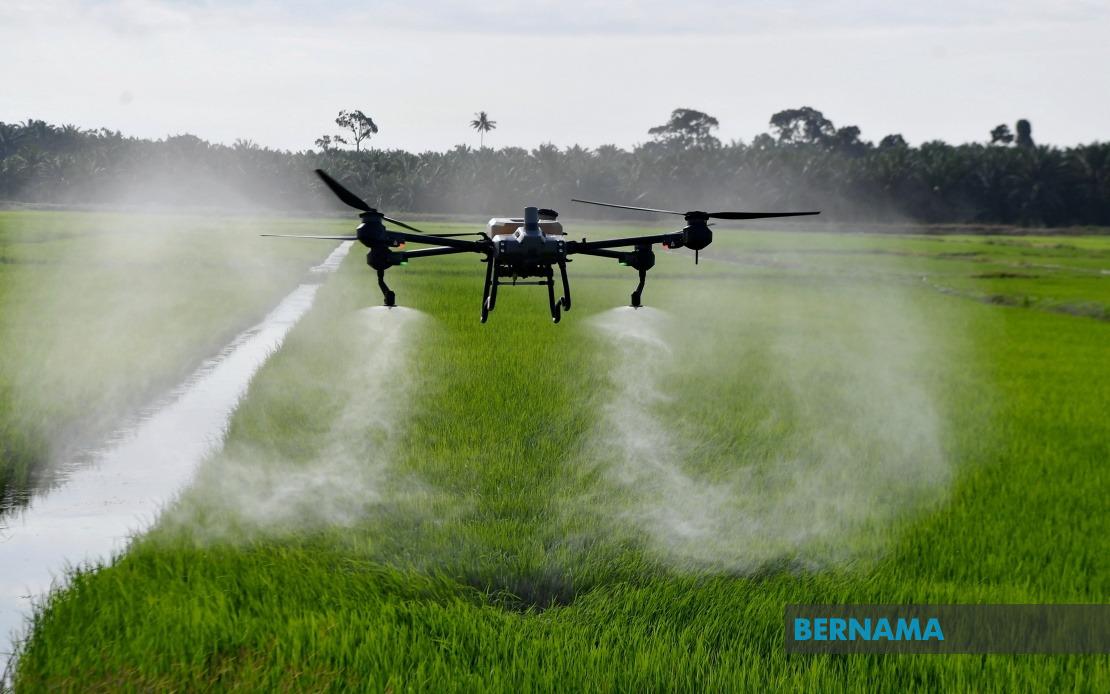
Selangor's state government is channeling RM500,000 into transforming the state into a regional hub for unmanned aircraft technology, recognising the sector's potential to generate significant economic returns across multiple industries. The financial commitment, announced at the pre-launch ceremony of Droneport-1000 at Universiti Selangor (Unisel) in Bestari Jaya, represents an increase from previous allocations and signals the administration's determination to position the state competitively within Southeast Asia's emerging aerospace and technology landscape.
Dr Mohammad Fahmi Ngah, chairman of the Selangor State Islamic Affairs and Innovation Culture Committee, explained that the funding will support infrastructure upgrades at existing facilities whilst simultaneously establishing strategic partnerships with both domestic and international companies seeking to participate in drone development. The dual approach reflects a deliberate strategy to build capability whilst attracting foreign direct investment, mirroring successful economic diversification models seen across the region. The allocation demonstrates confidence that the drone sector represents a genuine wealth-creation opportunity rather than a speculative technology bet.
The centrepiece of this initiative is Droneport-1000, a facility managed through collaboration between a state government subsidiary and Geospatial SmartSel (SELGEM). This designated airspace spans 24 square kilometres with operational altitude clearance up to 1,000 metres, currently pursuing full certification from the Civil Aviation Authority of Malaysia (CAAM). The scale is remarkable: the approved testing area is approximately ten times larger than Singapore's entire territory, providing Selangor with an unparalleled testing and development environment for autonomous systems.
The state government plans to deploy matching grant incentives to encourage participation from both local enterprises and multinational technology firms. Such mechanisms have proven effective elsewhere in attracting competitive sectors; the grants function as a bridge between government ambition and private sector risk appetite, allowing companies to explore applications without bearing prohibitive capital costs. This approach positions Selangor as a more attractive destination than neighbouring jurisdictions for companies evaluating Southeast Asian expansion.
Dr Mohammad Fahmi outlined the drone sector's broader economic scope, extending far beyond hardware manufacturing into software engineering, artificial intelligence integration, and semiconductor chip production. Puchong's emerging semiconductor supply chain represents a crucial complementary industry, creating potential ecosystem benefits where downstream chip designers and manufacturers can collaborate with drone system integrators. This vertical integration within the state creates stickiness for investment and employment, unlike purely manufacturing-focused strategies vulnerable to relocation pressures.
Practical applications driving state interest include environmental monitoring and resource management challenges endemic to the Malaysian landscape. Drones equipped with AI-powered analytics can detect forest reserve encroachment, measure coastal erosion progression, and identify bund breaches far more efficiently than traditional ground-based surveys. For a state managing significant biodiversity areas, coastal zones, and agricultural land, this technological capability offers tangible governance advantages whilst reducing reliance on manual field operations—a significant cost consideration for cash-strapped state administrations.
The Droneport-1000 initiative explicitly bridges the frequently problematic gap between university research and commercial product development. Zannifa Azura Ahmad, chief executive of Selangor Aviation & Technology Innovation (SELATI), characterised the project as deliberately positioning academic institutions as development partners rather than isolated research facilities. This architecture enables early-stage commercialisation of innovations emerging from university labs, reducing the traditional time lag between discovery and market application whilst creating employment pathways for graduate researchers.
The involvement of established technology companies such as Aerodyne strengthens credibility and provides proof points for smaller enterprises considering sector participation. Aerodyne's presence signals that viable commercial opportunities exist beyond theoretical potential, addressing investor scepticism about nascent technology sectors. Industry participation also accelerates knowledge transfer and establishes quality standards that prevent the sector from fragmenting into low-value subsegments.
For Malaysian policymakers monitoring this development, Selangor's approach offers a replicable template for technology sector development in other states. The combination of physical infrastructure investment, financial incentives, regulatory streamlining, and institutional partnership addresses the multiple constraints that typically inhibit emerging technology adoption. The emphasis on certification from CAAM indicates recognition that premature commercialisation without regulatory clarity creates liability exposure that deters institutional investors.
The drone industry's timing within Selangor's broader economic diversification strategy appears deliberate. As traditional manufacturing faces structural headwinds from automation and supply chain restructuring, technological sectors offering higher value-added production and employment density become increasingly attractive. Selangor's substantial existing technology workforce and educational infrastructure provide foundation advantages that newer industrial states lack, justifying confidence in sector scalability.
The RM500,000 allocation, whilst modest in absolute terms, functions as a demonstration of commitment and catalyst rather than complete funding. The matching grant structure implicitly signals that state investment will be leveraged through private sector matching capital, amplifying the effective funding available. This capital efficiency approach acknowledges fiscal constraints whilst maintaining developmental momentum in a sector requiring sustained investment over several years.
Regionally, Selangor's drone initiative competes implicitly with similar efforts across Southeast Asia, where Singapore, Vietnam, and Thailand have launched comparable programmes. Malaysia's geographic scale, lower operational costs, and substantial airspace availability provide competitive advantages, provided regulatory frameworks remain predictable and supportive. The CAAM certification process will determine whether Selangor's regulatory environment accelerates or constrains commercial deployment relative to neighbouring jurisdictions.
The success of Droneport-1000 will ultimately depend on translating infrastructure and incentives into sustained commercial activity. Early adoption by Malaysian companies seeking to develop domestic market applications—particularly in agriculture, logistics, and infrastructure inspection—would validate the model and attract subsequent waves of investment. The coming years will reveal whether Selangor's strategic positioning and financial commitment establish the state as Malaysia's drone technology centre or whether implementation challenges limit the sector's development trajectory.

