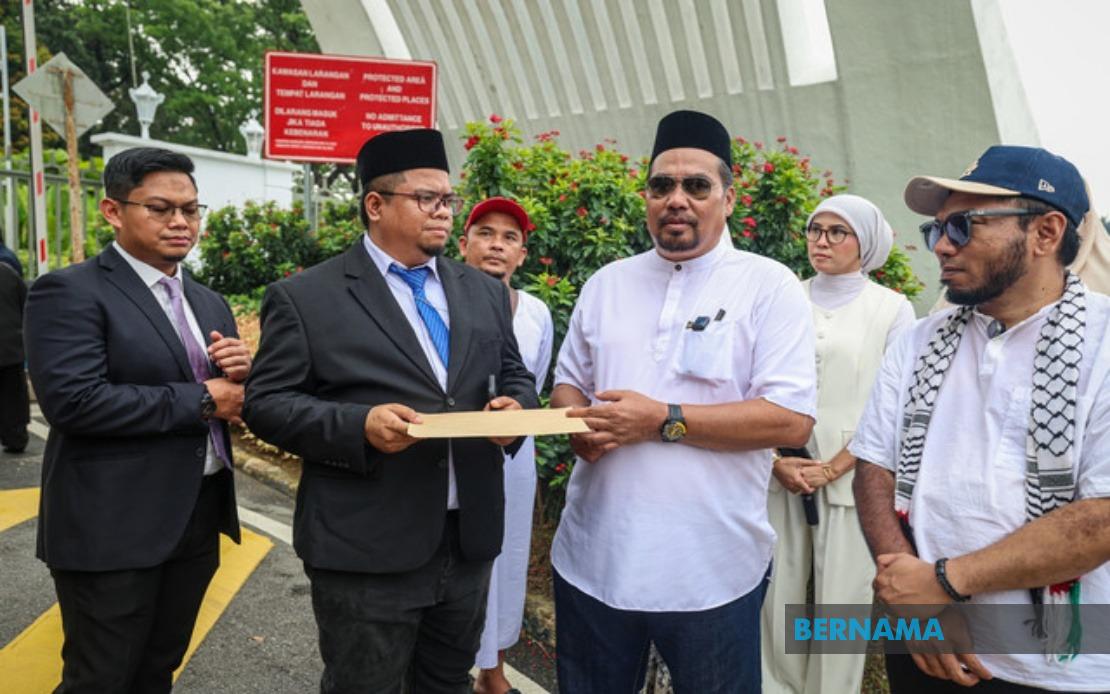
The social media activist collective SEKPUR has stepped up pressure on Malaysia's government to pursue those accountable for financial and operational failings at Tabung Haji (TH), the Islamic pilgrimage fund, intensifying calls for accountability that have resonated across the country since the Royal Commission of Inquiry made its findings public. The group's appeal comes at a moment of heightened public interest in TH's governance, with lawmakers and civil society equally focused on implementing systemic reforms at the troubled institution that manages hajj savings for millions of Malaysian Muslim depositors.
During a demonstration at Parliament's main entrance, SEKPUR submitted a formal memorandum to government officials outlining demands for prosecution and remedial action. The document was received by Zairudin Hashim, press secretary to the Minister in the Prime Minister's Department overseeing religious affairs, at 12.35 pm, with instructions to forward the submission to Minister Senator Dr Zulkifli Hasan. The timing of SEKPUR's intervention coincided with a special parliamentary session in which the minister briefed lawmakers on the contents and implications of the RCI findings, providing a platform for renewed scrutiny of institutional governance.
Mohd Yani Alias, SEKPUR's secretary, articulated the group's uncompromising stance on accountability, emphasising that personal political affiliations or institutional connections should not shield individuals from investigation and prosecution. He stressed that mismanagement, should it be substantiated, warrants stern legal consequences regardless of the perpetrator's background or party membership. This position reflects growing public impatience with the notion that establishment figures might escape meaningful consequences for administrative or financial transgressions, a sentiment particularly acute given TH's custodial role over deposits belonging to ordinary working Muslims planning their religious obligations.
The activist group has also flagged structural vulnerabilities in TH's long-term financial viability, signalling concerns that surface-level reforms may prove inadequate if the institution's underlying operational model remains unchanged. SEKPUR's advocacy encompasses not merely punishment of past wrongdoing but prospective safeguards ensuring TH's sustainability as a stable depository for depositors' funds and a reliable facilitator of pilgrimage arrangements. This forward-looking dimension distinguishes the group's intervention from purely accountability-focused campaigns and suggests recognition that institutional trust requires both reckoning and preventive restructuring.
Another key grievance articulated in SEKPUR's memorandum relates to the hibah distribution system, whereby TH returns surplus funds to depositors. The group contends that current hibah allocations lack competitiveness compared to alternative investment vehicles and savings mechanisms available to Malaysian Muslims, potentially eroding TH's appeal as a savings destination. This concern becomes increasingly material as digital financial services expand across Southeast Asia and international Islamic banking products gain accessibility to retail customers, creating competitive pressure on a domestically focused institution.
The memorandum additionally highlights escalating costs associated with performing hajj pilgrimage, which SEKPUR characterises as imposing mounting burdens on ordinary Malaysians seeking to fulfil one of Islam's five pillars. Rising hajj expenses encompass not merely state-controlled fee structures but also ancillary costs including travel, accommodation, and services, collectively representing a substantial financial commitment for middle and lower-income households. SEKPUR's emphasis on this dimension connects governance failures to tangible hardship experienced by TH's constituents, transforming an institutional accountability argument into a socioeconomic justice platform.
Transparency deficits in hajj quota allocation emerged as an additional concern in SEKPUR's submission. The mechanism by which TH distributes limited hajj seats among competing applicants lacks sufficient public clarity, creating space for allegations of favouritism, improper prioritisation, or administrative irregularity. Enhanced disclosure of quota-allocation criteria and decision-making processes would ostensibly bolster public confidence in the fairness and objectivity of arrangements affecting religious obligations considered central to Muslim identity and practice across Malaysia.
The RCI report, released publicly on July 29 following months of investigation, encompasses 211 pages documenting weaknesses in TH's administrative and operational frameworks spanning the 2014 to 2020 period. This six-year window coincides with significant domestic political transitions and structural challenges confronting Malaysian financial institutions broadly, providing contextual backdrop for understanding how vulnerabilities in TH's governance architecture developed and persisted. The temporal scope of the inquiry allows the commission to document both antecedent conditions enabling mismanagement and subsequent consequences affecting depositors' financial positions.
The report's 25 recommendations for institutional improvement represent a comprehensive agenda for reform, addressing governance structures, risk management protocols, operational transparency, and financial reporting standards. As of July 30, TH had implemented 75 per cent of the proposed recommendations, suggesting reasonably expeditious administrative responsiveness to the commission's findings. This implementation rate, while encouraging, leaves approximately one-quarter of recommendations either pending or requiring further advancement, indicating that the reform process remains incomplete and subject to ongoing scrutiny.
For Malaysian depositors and the broader Muslim community, the RCI process and SEKPUR's advocacy represent overlapping mechanisms for demanding institutional accountability and systemic improvement at an organisation whose failures carry not merely financial but also spiritual and social ramifications. As TH navigates implementation of remaining reforms whilst confronting potential prosecutorial action against individuals identified with mismanagement, the institution faces a critical juncture determining whether restored public confidence becomes achievable or whether deeper structural interventions prove necessary to revitalise its legitimacy and effectiveness as custodian of Muslim Malaysians' pilgrimage and savings objectives.

