The Sejahtera MADANI initiative operating in Perak has already channelled RM2.3 million to approximately 2,000 beneficiaries since its launch, and the government has now committed a further RM3 million to strengthen and widen the programme's reach across the state. The fresh allocation underscores the administration's intention to deepen its safety-net provisions for vulnerable populations whilst simultaneously fostering economic activity among small business operators and rewarding academic excellence.
Muhammad Kamil Abdul Munim, the Finance Minister's political secretary, outlined the expanded scope during an event held in Lubok Merbau on June 30. He explained that the additional resources would enable the initiative to serve considerably more households, with particular focus on micro-entrepreneurs attempting to establish or grow informal businesses, wage earners struggling with living costs, and students pursuing tertiary qualifications. By combining monetary support with material and educational incentives, the scheme attempts to address poverty and inequality across multiple demographic segments simultaneously.
Crucially, the aid mechanism extends beyond simple cash transfers. The programme equips small-scale business operators with practical tools and equipment designed to enhance operational efficiency and revenue generation. Simultaneously, high-performing secondary school graduates advancing to university receive laptop computers, acknowledging both the digital divide faced by many lower-income families and the importance of technology access in contemporary education. This multifaceted approach reflects a broader policy philosophy that views poverty alleviation not merely as income support but as capability enhancement.
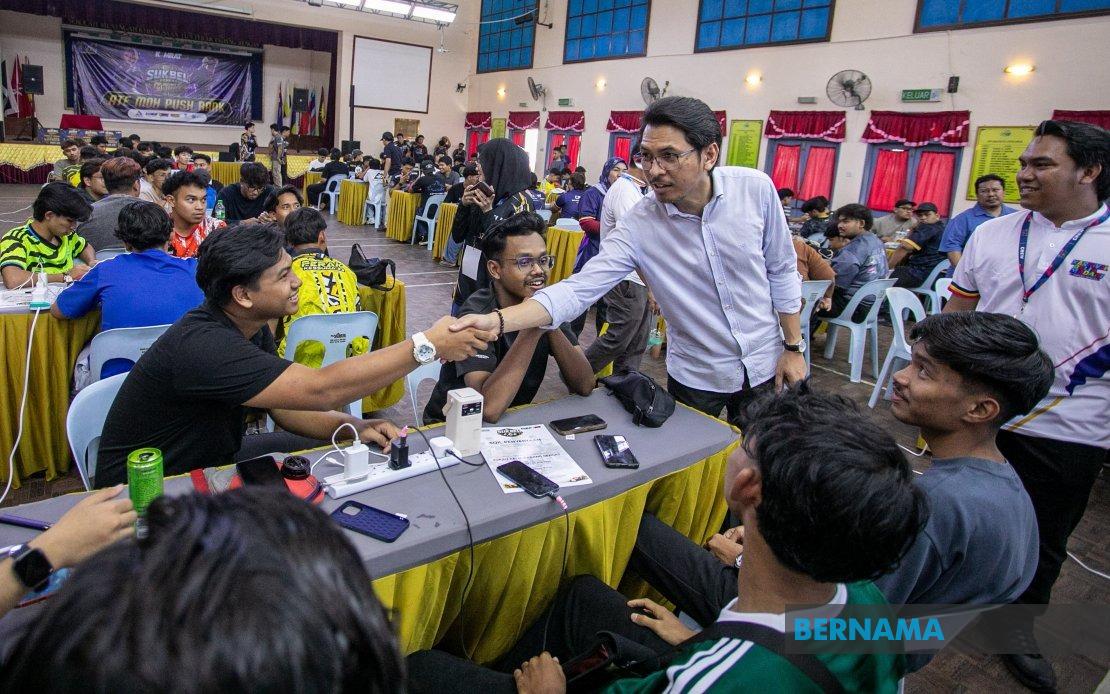
During the Sejahtera MADANI roadshow at the Millennium Hall, 13 outstanding SPM students received computing devices to support their higher education pursuits, while five small-scale entrepreneurs were handed business equipment packages. These symbolic distributions, though modest in number, represent the tangible delivery mechanism through which the initiative converts policy intentions into lived improvements for selected beneficiaries. The visibility of such handovers also serves to communicate government commitment to constituents in the Padang Rengas parliamentary division and neighbouring areas.
Yet the expansion comes amid acknowledged implementation challenges that have undermined public confidence in similar government programmes. Muhammad Kamil candidly addressed this weakness, noting that the original design permitted local communities substantial autonomy in identifying and prioritising their own development projects. Whilst participatory governance sounds democratically appealing, the approach apparently produced execution failures, cost overruns, and incomplete deliverables that eroded programme credibility and wasted resources. Such project breakdown illustrates the gulf between good intentions and effective implementation that frequently plagues domestic development schemes across Southeast Asia.
In response, the ministry has resolved to strengthen supervisory mechanisms and monitoring frameworks. Officials will conduct more frequent reviews of project progress and financial flows, aiming to curtail fraud, prevent fund leakage, and ensure that allocated monies translate into completed, beneficial activities rather than stalled or abandoned ventures. The acknowledgement that flaws remain inevitable represents pragmatic realism, though such candour may also reflect lingering doubts about whether tighter controls can fully eliminate the systemic bottlenecks—bureaucratic capacity, coordination failures, and accountability gaps—that compromise many Malaysian social programmes.
For Perak residents, particularly those in lower-income and semi-rural constituencies, the expanded Sejahtera MADANI allocation offers material, if limited, relief. The state has experienced uneven development, with certain districts lagging in infrastructure, employment opportunities, and educational resources. Microcredit and business equipment support may facilitate informal-sector job creation, whilst laptop provision to excellent students helps narrow digital inequality and enhances their competitive standing in university coursework and eventual labour-market entry. These interventions, though individually modest, address real constraints faced by economically marginalised households.
However, the RM3 million supplementary funding, spread across a state population exceeding 1.8 million, averages modest per-capita assistance—likely sufficient for targeted support to several hundred additional households but insufficient to address systemic poverty comprehensively. The initiative operates therefore as a selective relief mechanism rather than a transformative anti-poverty strategy. This reflects budgetary realities and political prioritisation, yet it also means that many qualifying low-income residents will remain outside the programme's reach, dependent on alternative safety nets, family networks, or self-reliance.
The distinction between grant-based versus loan-based support also matters significantly. If the business equipment and student support represent outright grants rather than repayable advances, they constitute genuine wealth transfers; if structured as loans, they impose obligations that lower-income beneficiaries may struggle to meet, potentially creating debt burdens that undermine intended benefits. The source materials do not specify loan versus grant structures, but this ambiguity underscores how implementation details determine actual programme impact.
From a broader Southeast Asian perspective, Malaysia's Sejahtera MADANI initiative mirrors social protection trends across the region, where governments increasingly attempt targeted, multi-instrument approaches combining cash assistance, material provision, and educational support. Countries including Thailand, Indonesia, and Vietnam have similarly experimented with community-driven development models, though results have proven mixed. The Perak experience thus offers lessons about the challenges of translating participatory ideals into effective delivery, particularly in contexts where administrative capacity, coordination mechanisms, and accountability systems remain underdeveloped.
The stated commitment to preventing fraud and leakage also addresses a recurrent concern across Malaysian development spending, where investigative journalism and audit reports periodically document misappropriation, political patronage, and wastage in government programmes. Rebuilding public trust requires demonstrable transparency, swift corrective action when irregularities emerge, and institutional mechanisms that make officials accountable for outcomes rather than merely process compliance. The Finance Ministry's public acknowledgement of previous weakness suggests receptiveness to scrutiny, though sustained implementation will ultimately determine whether rhetorical commitment translates to genuine practice change.
Moving forward, the Sejahtera MADANI initiative's success in Perak will depend on whether enhanced monitoring genuinely reduces implementation failures, whether beneficiary selection processes remain fair and transparent, and whether delivered resources—financial and material—meaningfully improve economic and educational outcomes for target households. Regular, independent evaluation will be essential to determine whether the programme represents effective poverty reduction policy or primarily constitutes symbolic gesture politics that offers comfort without substantive transformation.

