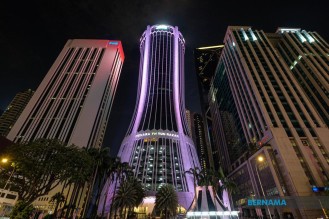
The Securities Commission Malaysia will assume supervisory responsibility for Tabung Haji's investment portfolio as part of sweeping governance reforms announced in August, a move that Islamic finance specialists argue is indispensable for safeguarding the retirement savings of millions of Malaysian Muslims planning their hajj pilgrimage. The institutional restructuring, approved at a special Cabinet sitting on August 11, represents a significant shift in how the nation's largest Islamic savings institution manages its funds, introducing external regulatory oversight to complement internal decision-making processes.
Dr Mohd Faisol Ibrahim, a senior lecturer in Islamic Economics and Banking at Universiti Sains Islam Malaysia, underscores the necessity of the SC's expanded role in ensuring TH balances three often-competing objectives: delivering competitive investment returns, preserving capital safety, and maintaining sufficient liquidity to process hajj pilgrimage bookings. These parameters create inherent tensions within TH's mandate—aggressive portfolio growth can jeopardise capital preservation, while conservative positioning may fail to meet depositors' return expectations. The SC's involvement aims to navigate these tensions through professional risk assessment and adherence to institutional investment standards.
The governance overhaul emerges from findings detailed in the 211-page Royal Commission of Inquiry report released publicly in July, which documented extensive management failures and operational weaknesses spanning 2014 to 2020. The RCI identified 25 specific areas requiring remediation, several addressing structural vulnerabilities that permitted non-commercial considerations to influence investment decisions during the period examined. The crisis exposed how inadequate checks and oversight mechanisms allowed fund stewardship to deteriorate, ultimately harming hundreds of thousands of depositors whose long-term savings were subjected to undue risk.
Minister in the Prime Minister's Department (Religious Affairs) Dr Zulkifli Hasan clarified that the SC's supervisory mandate would focus exclusively on fund and investment management, while hajj operations would remain under the Religious Affairs ministry's purview, and TH would continue operating as a unified institution rather than being fragmented into separate entities. This delineation attempts to separate fiduciary investment responsibilities from religious and administrative functions, reducing conflict between commercial prudence and ministerial directives.
Dr Mohd Faisol advocates for the SC to hold direct representation on TH's investment committee, where officials can interrogate proposed allocations before approval and challenge decisions carrying excessive risk profiles or insufficient transparency. This proactive engagement would prevent investment committees from operating as closed bodies insulated from external professional critique. Integration with the SC's broader investment supervision framework would also expose TH's portfolio management to the same governance, disclosure, and risk management standards applied to other major Malaysian institutional investors, eliminating any perception of preferential or lenient oversight.
The academic expert recommends establishing dual specialised committees operating as complementary checking mechanisms—an investment committee and a risk management committee—to ensure no major allocation proceeds without multidisciplinary scrutiny. Involvement from the Securities Commission, Bank Negara Malaysia, and the Ministry of Finance would distribute decision-making authority across institutions with distinct professional perspectives, reducing vulnerability to capture by any single party or ideology. This distributed governance model mirrors contemporary best practices among sovereign wealth funds and large pension schemes globally, which rely on layered approvals to prevent catastrophic errors.
Bank Negara Malaysia's role deserves strengthening as TH's principal financial adviser, particularly regarding macroeconomic risk assessment and currency exposure management. Given TH's international investments and hajj expenses denominated in Saudi riyals and other foreign currencies, BNM's expertise in foreign exchange dynamics and balance-of-payments considerations becomes essential for protecting depositors against exchange rate shocks. The central bank's involvement would ensure strategic risk management incorporates systemic financial risks rather than focusing narrowly on individual asset performance.
Dr Mohd Faisol emphasises that investment policy must be insulated from competing government objectives or political considerations bleeding into commercial decision-making. TH's primary obligation remains protecting and growing depositor savings for hajj purposes, not supporting government industrial policy, supporting strategic sectors, or advancing political patronage networks. A formal investment charter delineating acceptable asset classes and risk parameters would constrain discretionary authority and establish publicly transparent boundaries within which management operates.
Long-term financial sustainability requires structural measures beyond governance reforms alone. The academic proposes raising minimum savings requirements for hajj qualifiers, calibrated to account for ringgit strength and global economic conditions, thereby bolstering TH's capital reserves against volatility. Current contributions may prove insufficient to support both growing pilgrimage demand and investment returns necessary to maintain purchasing power as global hajj costs escalate. Adequately capitalised reserves create buffers absorbing market downturns without compromising depositors' accumulated entitlements.
The RCI's broader recommendations address structural impediments to sound governance that supervisory frameworks alone cannot remedy. Its proposal to prohibit active politicians from serving on TH's board directly tackles conflicts of interest that characterised the 2014-2020 period, when board composition reflected political appointment rather than professional credentials. Simultaneously, establishing an independent body to oversee board appointments rather than granting ministerial discretion would reduce political capture and prioritise governance expertise over factional loyalty.
For Malaysian depositors and the broader Muslim community, these reforms represent acknowledgment that past institutional failure exacted genuine harm deserving comprehensive remediation. TH's historical crisis—exposing inadequate risk management, opaque decision-making, and governance structures vulnerable to political interference—fundamentally undermined public trust in a nationally significant religious institution. The SC's expanded oversight, combined with structural governance measures, signals commitment to rebuilding institutional credibility through verifiable professional standards and transparent accountability mechanisms.
The implementation of Securities Commission supervision carries implications extending beyond TH itself. It establishes precedent for regulatory oversight of Islamic financial institutions previously operating under lighter-touch frameworks, potentially raising governance standards across Malaysia's Islamic finance sector. Enhanced scrutiny may prompt other institutions to voluntarily strengthen risk management and disclosure practices, recognising that regulatory intervention becomes unavoidable when governance failures accumulate. For depositors and stakeholders across Islamic finance, clearer professional standards and stricter institutional oversight offer greater protection than arrangements relying on ministerial goodwill or political circumstance.

