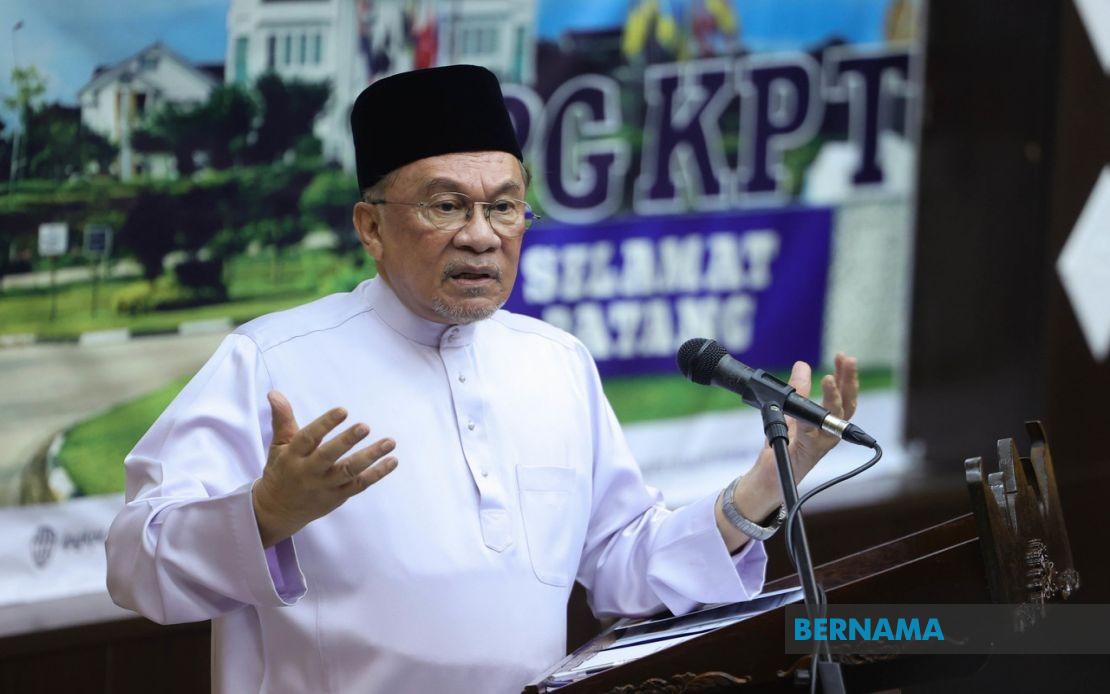
Prime Minister Datuk Seri Anwar Ibrahim has issued a direct warning to Malaysian schools that concealing bullying incidents to preserve their public image is unacceptable, insisting instead that transparent reporting and prompt action must take precedence over reputation management. Speaking in Nilai on July 17, he underlined that victims of bullying suffer profound consequences, making it imperative for educational leaders to prioritise student welfare over institutional standing. His remarks, delivered alongside Education Minister Fadhlina Sidek, reflect growing concern about how schools handle disciplinary matters and underscore the government's push for greater accountability in the education sector.
Anwar's intervention directly addresses a widespread practice in which schools have historically downplayed or hidden bullying incidents, fearing that public disclosure might damage enrolment numbers, donor confidence, or official performance ratings. He drew a distinction between reporting and responsibility, arguing that a principal who reports two bullying cases in a school of 1,000 students should not face criticism for the mere fact of disclosure. However, he stressed that deliberately suppressing such cases to maintain a veneer of order constitutes a serious failure of duty. This clarification is significant because it removes a potential excuse that school administrators might use to justify concealment—the fear of personal or institutional blame.
The Prime Minister's concerns reflect broader patterns observed across Southeast Asia, where school bullying remains endemic but frequently unrecorded due to cultural stigma and institutional self-protection. In Malaysia, cases involving physical assault, verbal harassment, and cyberbullying have escalated in recent years, yet many incidents go unreported to parents or authorities. By publicly distinguishing between transparency and accountability, Anwar is attempting to shift the cultural narrative around reporting, positioning it as a sign of institutional strength rather than weakness. This approach aligns with international best practices in child protection, which emphasise that robust reporting mechanisms and swift intervention actually enhance a school's credibility and safeguarding record.
Anwar also connected the persistence of bullying to what he identified as deeper deficiencies in character education and moral development within schools. Despite expanded access to religious instruction in Malaysian schools, he observed that bullying continues unchecked, suggesting that knowledge of faith and ethics alone does not automatically translate into respectful interpersonal behaviour. This observation points to a gap between curriculum content and lived values—students may be taught about compassion and respect in lessons but fail to internalise these principles in their daily interactions. The Prime Minister's critique implies that schools must move beyond textbook approaches to moral education and instead cultivate an institutional culture where values are modelled, reinforced, and enforced through consistent disciplinary action and peer accountability.
His remarks on education's broader purpose also carry implications for how Malaysian schools define success and measure their performance. Anwar explicitly rejected the notion that schools should gauge their effectiveness primarily by academic achievement or technical skill acquisition. Instead, he argued that educational institutions must balance intellectual development with the cultivation of empathy, humility, and respect for human dignity. This repositioning of educational goals is particularly relevant in Malaysia's competitive school environment, where pressure to achieve top exam grades and university placements often overshadows attention to social-emotional learning and character formation. By elevating moral development to parity with academic excellence, the Prime Minister is encouraging a recalibration of institutional priorities.
The rhetorical question posed by Anwar—what value do technological expertise, advanced degrees, and professional qualifications hold if those who possess them lack respect for others—serves as a pointed critique of a meritocratic framework that measures human worth primarily through credentials. In the Malaysian context, where premium is placed on examination success and professional advancement, his intervention challenges the assumption that these achievements alone constitute educated and civilised citizens. This critique resonates particularly with parents and educators who have observed high-achieving students engage in bullying behaviour, demonstrating that academic prowess and moral maturity are not automatically linked. His comment implicitly advocates for a more holistic education system that addresses character alongside cognition.
Anwar acknowledged the significant responsibilities that teachers bear in fostering institutional cultures that prioritise both learning and ethical development. He recognised that the teaching profession in Malaysia generally operates at a high standard, offering praise for educators' collective efforts while urging continued improvement. However, his framing of teachers as stewards of character and moral values places considerable onus on individual educators to model good behaviour, intervene in bullying incidents, and reinforce institutional values consistently. This expectation comes at a time when Malaysian teachers already report high workloads, insufficient training in pastoral care and mental health support, and limited resources for managing complex behavioural issues. Any genuine effort to reduce bullying through teacher-led cultural change would require corresponding investment in professional development, reduced class sizes, and institutional support systems.
The government's push for transparency in bullying cases also raises questions about how schools will report incidents and to whom. Currently, Malaysia lacks a centralised, mandated reporting system that requires schools to submit bullying data to the Education Ministry or an independent oversight body. Without such a framework, schools may interpret encouragement to report more openly as merely an advisory suggestion rather than a binding obligation. International experience suggests that transparent reporting systems work most effectively when accompanied by legal requirements, clear definitions of what constitutes reportable bullying, standardised investigation procedures, and safeguards against retaliation against those who report incidents. Malaysia may need to develop more granular policy guidance and regulatory mechanisms to operationalise the Prime Minister's call for openness.
The broader institutional context in which bullying occurs also deserves attention alongside the emphasis on reporting and character education. Research consistently demonstrates that bullying flourishes in schools characterised by overcrowding, inadequate supervision, insufficient mental health resources, and weak grievance mechanisms. Malaysian schools vary considerably in their physical infrastructure, staffing ratios, and support services, creating an unequal landscape in which prevention and intervention capacity differ markedly between well-resourced institutions and under-resourced ones. Addressing bullying effectively therefore requires not only cultural change and better reporting but also equitable investment in school environments that allow teachers to monitor student interactions closely, provide counselling to affected students, and respond swiftly when problems emerge.
Anwar's comments also carry implications for how parents and communities engage with schools around discipline and safety issues. If institutions are to report bullying more openly without facing reputational damage, there must be a corresponding shift in how parents and the public interpret such disclosures. Parents must come to understand that a school's willingness to acknowledge and address bullying reflects commitment to student welfare rather than institutional failure. This cultural shift requires sustained public messaging from government, education authorities, school leaders, and media outlets that reframe transparency as a marker of excellence. In Malaysia's competitive education market, where parents often choose schools based partly on perceived safety and discipline records, schools remain inherently incentivised to minimise reported bullying regardless of actual prevalence. Overcoming this structural incentive will require deliberate policy interventions, such as ensuring that transparent reporting does not penalise schools in performance evaluations or school choice rankings.
The Prime Minister's intervention signals that bullying is now firmly on the agenda as a matter of national governance concern. His emphasis on swift action, victim protection, and institutional transparency represents a departure from previous approaches that often left bullying as a matter for individual schools to manage with minimal oversight. However, translating this commitment into systemic change will require coordination across multiple government agencies, substantial investment in school infrastructure and staffing, clear regulatory frameworks, and sustained monitoring of implementation. Malaysian educators and parents will be watching closely to see whether this rhetorical commitment to changing school culture translates into concrete resources, policy reforms, and accountability mechanisms that empower schools to prevent bullying rather than merely report it.

