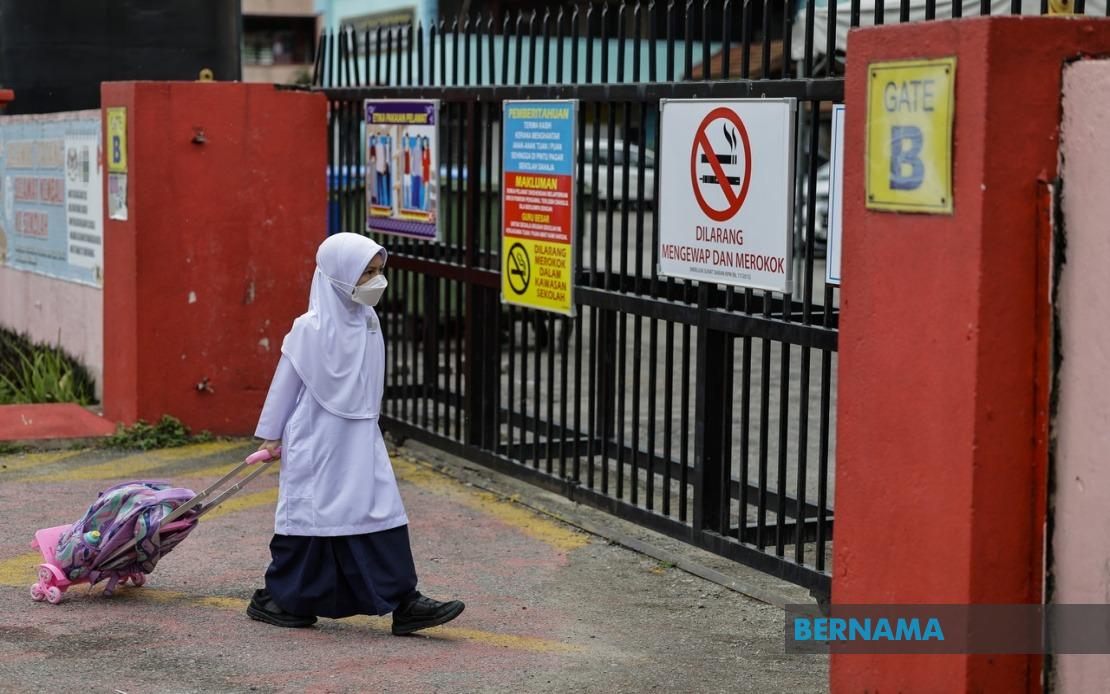
Deputy Education Minister Wong Kah Woh has clarified that Malaysian schools retain the authority to close their doors when Air Pollutant Index readings breach the 200 threshold, provided such decisions align with recommendations from State Education Departments and District Education Offices. Speaking in Taiping during the signing of a Memorandum of Understanding between Toyo Tyre Malaysia and UniMAP, Wong outlined the ministry's established framework for managing air quality crises that affect the nation's student population.
The Ministry of Education has maintained standing circulars addressing haze management protocols spanning multiple years, with formal guidance issued in 2016, 2019, and 2023. These documents form the backbone of institutional responses to transboundary air pollution that periodically affects Southeast Asia, particularly during the dry season when agricultural burning and industrial activities intensify across the region. The circulars represent the accumulated experience of handling air quality emergencies that have periodically disrupted schooling in affected regions.
While school closures are permitted at the discretion of principals when API readings exceed 200, the threshold for mandatory action begins at lower pollution levels. Once API readings reach 100 or above, schools must immediately suspend all outdoor activities and gatherings, eliminating physical education classes, recess activities, and outdoor assembly events that typically characterise the school day. Sports competitions and field days involving outdoor events must be postponed until air quality improves, restricting schools' extracurricular programming during hazardous conditions.
Responsibility for implementation rests fundamentally with school administrators, who must evaluate real-time haze conditions and make closure decisions appropriate to their specific geographic and demographic contexts. This decentralised approach acknowledges that air quality varies significantly across regions and can change rapidly within districts, meaning that a blanket national closure policy would be impractical. Principals are expected to consult guidance from education authorities while retaining flexibility to respond to local circumstances that may warrant protective measures.
The ministry's monitoring apparatus operates through layered structures connecting the Education Ministry's central office with State Education Departments and District Education Offices, creating channels through which air quality information flows to school administrators. This network enables rapid dissemination of API data and recommendations, allowing schools to make informed decisions within hours of hazardous conditions developing. Regular monitoring ensures that education authorities maintain situational awareness of evolving atmospheric conditions across different regions.
Protecting student health and safety forms the explicit rationale underlying these protocols. Children represent a vulnerable population particularly susceptible to air pollution's respiratory effects, making schools' responsibility to shield them from prolonged exposure to hazardous air a public health imperative. The API-based thresholds provide objective measurement standards that remove subjective judgment about when conditions become dangerous, establishing clear triggers for protective action.
Wong's remarks came during a period when several areas across Malaysia had recently recorded API readings classified as unhealthy, prompting questions about the ministry's readiness to respond. These periodic air quality episodes reflect Malaysia's geographic position in Southeast Asia, where transboundary haze originating from land-clearing activities in neighbouring countries affects air quality across the region. The recurring nature of these incidents has necessitated the development of institutional mechanisms for managing educational disruption during atmospheric crises.
The distinction between different API threshold levels demonstrates the ministry's graduated approach to air quality management. Readings between 100 and 200 trigger restrictions on outdoor activities while schools remain open for regular instruction conducted indoors. Only when readings exceed 200 do principals gain authority to close schools entirely, reflecting the principle that educational continuity should be maintained unless air quality poses severe health risks. This tiered system balances legitimate concerns about student exposure against the importance of maintaining academic progress.
School administrators implementing these protocols must navigate practical challenges including notifying parents, arranging alternative learning delivery methods, and managing childcare implications of unexpected closures. The discretionary nature of closure decisions at the 200 API threshold recognises that principals understand their school communities' circumstances better than centralised authorities. A principal may decide closure is unnecessary if students can remain indoors throughout the day, or conversely may choose closure if facilities lack adequate air filtration systems.
For Malaysian parents and education stakeholders, these protocols establish a framework for understanding when their children's schooling may be disrupted by air quality events. The API thresholds provide measurable criteria rather than vague references to air quality conditions, enabling families to anticipate potential school closures by monitoring publicly available API data. This transparency helps parents plan childcare arrangements and understand the rationale for decisions affecting their children's education.
The ministry's standing circulars reflect accumulated learning from previous air quality crises that have periodically affected Malaysian schools. Each revision incorporates experiences from recent haze events, refining protocols based on practical implementation challenges identified during actual operations. The succession of updated circulars in 2016, 2019, and 2023 suggests ongoing refinement of institutional responses to environmental challenges beyond the education sector's direct control.
Moving forward, the effectiveness of these protocols will depend on consistent communication between the Ministry of Education, state and district education offices, and individual schools, ensuring that all stakeholders understand their roles and responsibilities during air quality emergencies. Regional cooperation remains essential for addressing transboundary haze, though schools must simultaneously prepare for inevitable periods when external air quality factors will necessitate protective measures. Wong's clarification provides Malaysian schools with explicit guidance for navigating these environmental challenges while maintaining their primary commitment to student wellbeing and educational delivery.

