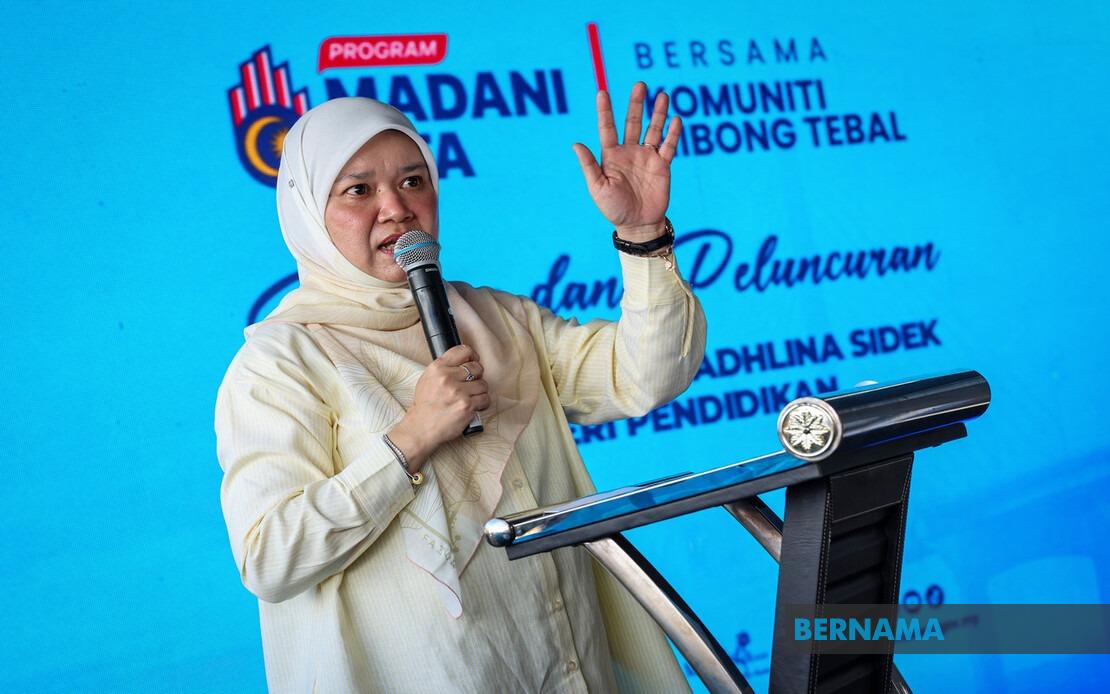
Education Minister Fadhlina Sidek has praised the NADI Mahir school uniform initiative as a meaningful intervention designed to reduce the financial pressures facing Malaysian families when purchasing essential school supplies. Speaking in Nibong Tebal on August 8, Fadhlina highlighted how the instalment-based purchasing system addresses a longstanding concern among parents struggling with the upfront costs of uniforms at the start of each academic year. The scheme represents a practical approach to making school readiness more accessible across different income levels, particularly benefiting lower-income households that often face difficult choices between education expenses and other essential needs.
Beyond providing immediate relief to parents, the NADI Mahir initiative demonstrates how government programmes can simultaneously address social challenges while fostering economic empowerment. The scheme generates sustainable income opportunities for local entrepreneurs operating under the National Information Dissemination Centre's framework and guidance. This dual-purpose approach reflects Malaysia's broader development philosophy of creating interconnected solutions that lift multiple segments of society rather than treating poverty alleviation and entrepreneurship as separate policy domains. By channelling purchasing power towards local producers, the programme keeps money circulating within communities rather than concentrating benefits in distant corporate supply chains.
The operational backbone of NADI Mahir Jahit comprises 120 skilled alumni who completed comprehensive training through the programme's Pintar Services module. These individuals represent successful graduation from skills-based education into self-employment and business ownership, demonstrating the feasibility of Malaysia's vocational training pathway. Their transformation from programme participants to successful entrepreneurs underscores a fundamental shift in how government support can be structured—not as temporary assistance but as investment in human capital that generates long-term economic independence. The employment of 120 local sewers ensures quality control, fair labour practices, and reinvestment of profits within the local economy.
Fadhlina's emphasis on NADI's broader portfolio reveals how integrated social programming can maximize impact across multiple development objectives. The National Information Dissemination Centre operates across education, digital skills, youth engagement, and entrepreneurship, creating touchpoints that address interconnected challenges facing Malaysian communities. The NADI Tuisyen Rakyat tutoring initiative has enrolled more than 42,000 students nationwide, with over 73 participants in Nibong Tebal alone. The programme's tangible results—including 65 outstanding performers in the 2025 Sijil Pelajaran Malaysia examination—demonstrate measurable educational improvement among participants, suggesting that removing financial barriers to supplementary education produces quantifiable academic gains.
The digital dimension of NADI's work through e-sports programming addresses youth engagement through contemporary channels that resonate with younger generations. NADI E-Sukan functions as more than entertainment; it serves as a talent identification mechanism while developing soft skills such as strategic thinking, teamwork, and pressure management. Nibong Tebal's achievements in the national NADI E-Sukan MADANI Mobile Legends tournament and secondary placements in state-level Cooking Star competitions indicate that structured youth engagement programmes can produce competitive excellence while building community pride. This integration of modern gaming culture with formal skills development represents Malaysia's adaptation to how contemporary youth participate in learning and personal development.
The 1 NADI 1 Prompt Engineer initiative represents Malaysia's strategic positioning within the artificial intelligence economy. With eleven participants already engaged in Nibong Tebal, the programme democratizes access to AI literacy and technical skills that will define employment prospects in the coming decades. By introducing AI competencies through local NADI centres rather than centralizing such training in major cities, the programme prevents digital skills from becoming a privilege of urban populations. This approach addresses a critical equity concern: as sectors across Malaysia automate and integrate AI capabilities, communities that lack exposure to these technologies risk permanent marginalization in the emerging knowledge economy.
The instalment purchasing mechanism itself merits examination as a financial inclusion tool. By fragmenting upfront costs into manageable monthly payments, the scheme reduces the cash flow constraints that often force households into informal lending arrangements with punitive terms. Parents benefit from structured, transparent payment schedules integrated with formal commerce rather than resorting to informal credit networks. This formalization of previously ad-hoc borrowing represents incremental progress toward financial inclusion, though it also reflects the reality that significant segments of Malaysian society still lack sufficient monthly disposable income to absorb school expenses without support.
The presence of Communications Ministry and Malaysian Communications and Multimedia Commission representatives at the event signals cross-agency coordination essential for comprehensive programme delivery. Educational initiatives increasingly require synchronization across multiple government portfolios, acknowledging that schooling outcomes depend not only on pedagogical quality but also on digital infrastructure, communications access, and technology skills. This ministerial alignment suggests an institutional infrastructure capable of implementing integrated policy across traditional bureaucratic boundaries that often compartmentalize social programmes.
For Malaysian parents navigating rising education costs and uncertain economic prospects, schemes like NADI Mahir Jahit address immediate financial stress while signalling government acknowledgment of household budget constraints. The programme's existence implicitly recognizes that school uniform costs represent a genuine barrier to educational access for significant portions of the population. Rather than dismissing such concerns as minor inconveniences, the government has invested institutional resources and entrepreneurial support to remove these access barriers. As inflation continues pressuring household budgets and educational expenses climb, such initiatives become increasingly critical to maintaining equitable access to schooling across income levels and geographical regions throughout Malaysia.

