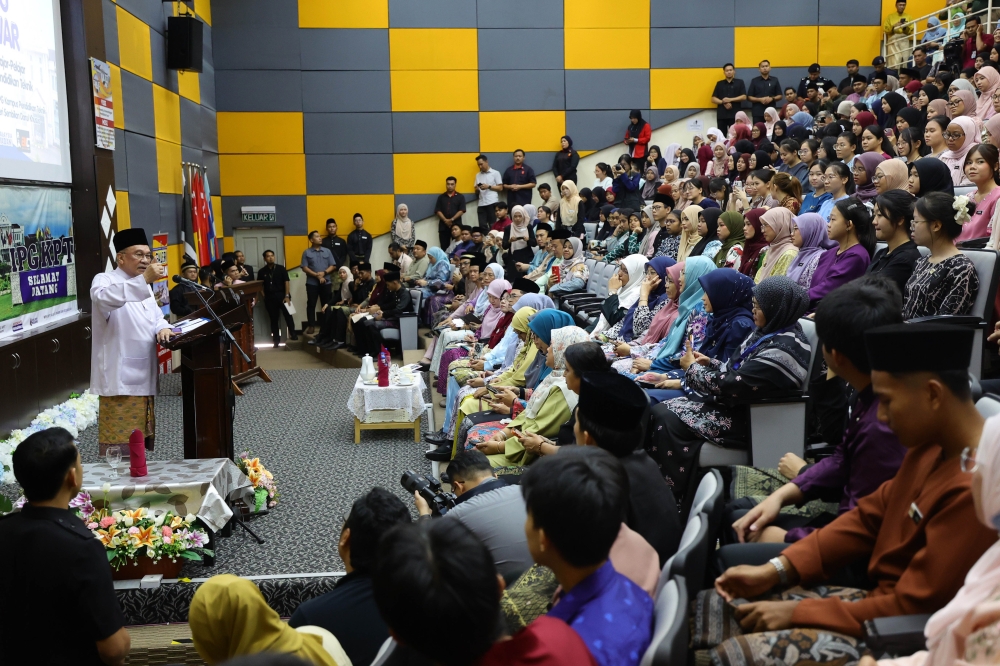
Prime Minister Datuk Seri Anwar Ibrahim has delivered a forceful message to Malaysian schools that institutional reputation cannot be allowed to obscure bullying cases, speaking in Nilai on July 17 in remarks that underscore growing concern about how schools handle misconduct affecting young people. His intervention reflects mounting pressure on the education sector to adopt greater transparency and accountability when addressing harassment and violence within school premises.
Anwar's statement addresses a persistent challenge in the Malaysian education system: the tendency for some schools to downplay or conceal bullying incidents rather than confront them openly. When institutional prestige becomes the priority, affected students are left without proper support and perpetrators face minimal consequences, creating environments where harmful behaviour perpetuates unchecked. The Prime Minister's intervention signals that this approach is no longer acceptable at the highest level of government, and schools must fundamentally recalibrate their priorities toward child welfare.
The context for Anwar's remarks is significant. Malaysia has experienced several high-profile bullying cases in recent years that attracted public attention precisely because they were initially handled poorly by schools or downplayed by administrators. These incidents galvanised parents and civil society groups to demand systemic reform, leading to calls for stronger policies, clearer reporting mechanisms, and consequences for institutions that fail to protect students. The Prime Minister's statement reflects responsiveness to these concerns, signalling that the government takes the issue seriously.
At the heart of Anwar's message lies a fundamental ethical principle: schools exist to safeguard children's physical and psychological wellbeing, not merely to project an unblemished public image. When administrators prioritise reputation management over child safety, they betray the trust parents place in them. This misalignment of priorities has real consequences. Students who experience bullying in environments where incidents are covered up suffer compounded trauma, having their suffering validated neither by institutional acknowledgment nor by corrective action.
The Prime Minister's intervention carries particular weight in the Malaysian context because it establishes a top-level expectation that filtering downward through the Education Ministry should reshape how schools approach governance and transparency. When bullying occurs—as it inevitably will in any large institution bringing young people together—the appropriate response is swift investigation, support for affected students, and proportionate disciplinary action against perpetrators. Concealment only postpones reckoning while allowing damage to accumulate.
For Malaysian parents and educators, Anwar's statement provides both reassurance and a measuring stick. Parents can now reasonably expect that their complaints about bullying will not be dismissed to protect school reputations. Educators committed to positive school cultures have clear top-level support for implementing zero-tolerance approaches toward harassment. Simultaneously, school administrators receive notice that concealment will attract scrutiny rather than preserve standing.
The practical implications extend across multiple dimensions of school operation. Reporting mechanisms must be accessible and free from institutional obstruction, allowing students and parents to raise concerns without fear of retaliation or dismissal. Investigation protocols should be transparent enough that affected parties understand how their cases are being handled. Training for staff must emphasize identifying and intervening in bullying situations rather than hoping problems resolve themselves or disappear from public view. These systemic changes require genuine commitment from school leadership, not merely rhetorical acknowledgment.
Anwar's message also addresses an asymmetry in how institutional reputation is often understood. Schools that genuinely protect their students and respond to incidents transparently actually strengthen their reputation in the long term, building trust with parents and communities. Conversely, schools that conceal bullying cases may experience short-term avoidance of negative headlines but ultimately face greater reputational damage when incidents inevitably emerge—as they always do—and become public scandals compounded by evidence of institutional cover-up. Thus, transparency serves institutional interests alongside ethical obligations.
The challenge now lies in translating the Prime Minister's statement into concrete policy changes and accountability mechanisms. The Education Ministry must ensure that schools understand this is not merely aspirational messaging but rather an expectation supported by enforceable standards. Inspectorates and oversight bodies need capacity to investigate complaints of bullying and institutional concealment. Teachers and administrators require training and support to implement new approaches. Parents need accessible channels to report concerns and track outcomes.
Regionally, Malaysia's approach to this issue carries significance. As Southeast Asian societies increasingly grapple with bullying, cyberbullying, and student mental health, government-level commitment to prioritizing child welfare over institutional image can influence educational practices across the region. Other countries observe whether Malaysia follows through on such statements with resources and structural reform, or whether they fade into rhetoric without implementation.
For Malaysian students currently experiencing bullying, Anwar's statement signals that their concerns are finally receiving attention at the highest level. This empowers them to speak up and seek help, knowing that officials at the national level have publicly declared that their safety matters more than any school's reputation. For administrators genuinely committed to positive school environments, it provides clear authority to implement the protective measures they may have advocated for internally without facing resistance based on reputation concerns.
The road ahead requires sustained attention and resources. Translating principle into practice demands coordination between the Education Ministry, schools, parents, and community organizations. It requires funding for mental health support and counselling services. It demands accountability when schools fail to protect students or attempt concealment. Anwar's intervention establishes the ethical framework and political will; implementation depends on commitment throughout the education system.

