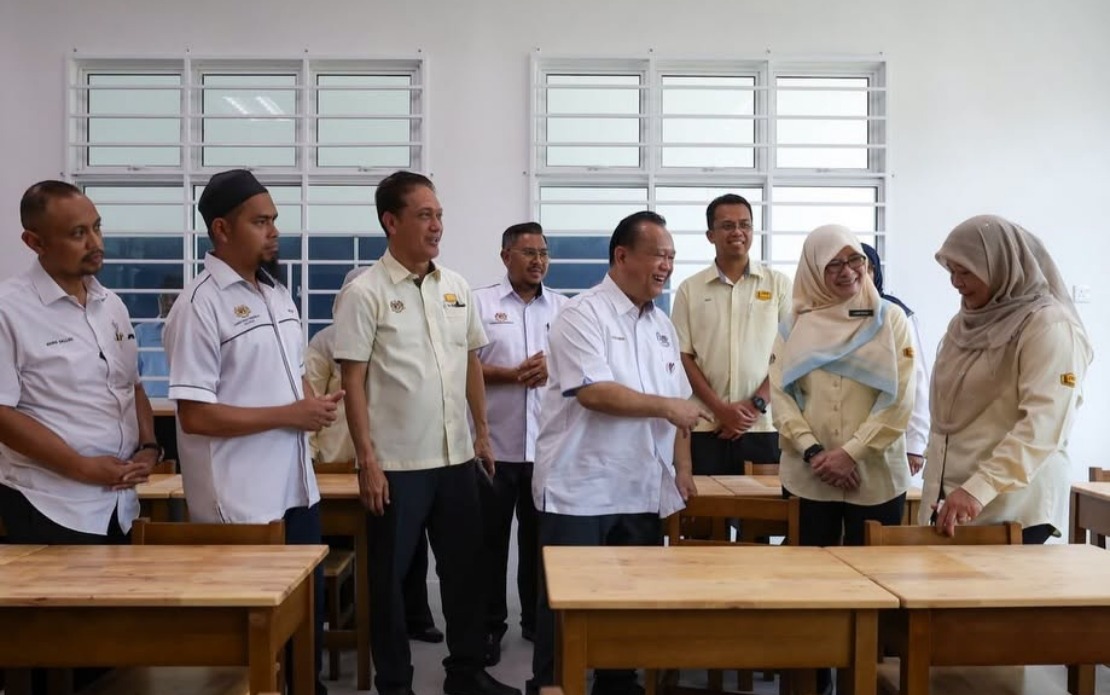
A significant government infrastructure initiative in Pahang has concluded substantially ahead of its scheduled deadline, signalling improved delivery standards in Malaysia's public works sector. The reconstruction of SK FELDA Kota Gelanggi 1 in Jerantut was officially handed over on June 26, having begun on January 13 of the previous year—a completion that arrived 310 days before the originally projected May 2027 date. Works Minister Datuk Seri Alexander Nanta Linggi highlighted the achievement at the formal handover ceremony, emphasizing that the RM7.998 million project demonstrated effective execution without any extensions to the contractual timeline.
The accelerated completion carries particular significance for educational infrastructure in Malaysia, where delays and cost overruns have historically plagued public building projects. Nanta stressed that delivering major government works ahead of schedule without extension of time represents a meaningful benchmark for project management quality. The minister's remarks suggest a deliberate policy push to improve implementation across the construction and upgrading portfolio affecting schools nationwide, particularly those serving disadvantaged communities in rural areas.
Physically, the reconstructed facility comprises two distinct operational blocks designed to serve complementary educational functions. The primary academic block incorporates three conventional classrooms alongside specialized facilities including a dedicated science laboratory and a health room equipped for student wellness services. These components address fundamental infrastructure deficits that constrain teaching quality in many Malaysian public schools, particularly in Pahang's more remote administrative divisions where capital investment has lagged urban centres.
The second structural element—the Blok Pendidikan Khas Integrasi Keseluruhan, or Special Education Integration Programme facility—represents a focused accessibility initiative. This dedicated block provides tailored infrastructure for pupils with special educational needs, equipped with amenities specifically designed to accommodate diverse physical and cognitive requirements. Currently, seventeen students with varying special needs are expected to benefit directly from the new facilities, expanding the inclusive education capacity at this institution.
The Jerantut project sits within a broader provincial reconstruction agenda. Nanta indicated that several additional dilapidated school buildings across Pahang are currently under construction or undergoing systematic upgrades. This statewide approach suggests a coordinated strategy to address accumulated infrastructure backlogs affecting rural educational provision. The minister expressed optimism that these parallel initiatives might similarly achieve early completion, though he refrained from naming specific schools or providing timelines for other projects currently in progress.
Management accountability formed a key secondary theme in Nanta's remarks at the ceremony. He explicitly directed contractors to address all defect complaints transparently and expeditiously throughout the statutory defect liability period—typically spanning twelve months following handover. This emphasis reflects growing ministerial attention to post-completion quality assurance, an area where Malaysian public infrastructure has occasionally exhibited shortcomings as contractor involvement diminishes following formal handover.
Equally significant was Nanta's charge to the Public Works Department to maintain rigorous ongoing monitoring after project completion. He mandated continuous surveillance to verify that all facilities remain structurally safe, operationally functional, and aligned with relevant construction standards. This supervisory directive addresses a historical gap in Malaysian public works delivery, where schools and public buildings have sometimes deteriorated rapidly following handover due to insufficient maintenance planning or resource allocation.
For Malaysian educators and parents in Pahang's rural constituencies, the completion signals tangible improvement in learning environments. The availability of dedicated science facilities and specialized health provision enhances curriculum delivery capacity, while the special education block represents meaningful progress toward inclusive education objectives outlined in Malaysia's education policy framework. The facility upgrades address long-standing spatial constraints that have limited pedagogical options in smaller rural schools.
The project's successful early delivery also carries broader sectoral implications. In Southeast Asia's competitive infrastructure landscape, timely and efficient public works execution influences government credibility and investor confidence. Malaysia's demonstrated capacity to accelerate project completion without compromising quality or incurring cost escalations strengthens the ministry's standing within public administration circles and supports future capital project approvals.
Nanta's performance metrics—completing a project 310 days early with zero contractual extensions—establish a benchmarking standard that procurement agencies and supervising engineers may reference in evaluating future contractor bids and performance incentive structures. This outcome potentially influences bidding strategies and implementation methodologies across Malaysia's construction sector, particularly for government contracts exceeding RM5 million in value.
The timing of completion, occurring in mid-2024, enables the school to implement the new facilities during academic year planning cycles, allowing administrators to integrate specialized programmes and timetabling adjustments while the school operates at normal capacity. This alignment minimizes pedagogical disruption compared to mid-year facility transitions.
Moving forward, the sustained functionality and maintenance standards at SK FELDA Kota Gelanggi 1 will determine whether this project's apparent success translates into durable educational improvement or merely represents completion excellence without operational durability. Consistent Public Works Department oversight, as mandated by Nanta, becomes essential to validating both the investment's effectiveness and the department's institutional capacity for sustained infrastructure stewardship.

