Education Minister Fadhlina Sidek has moved to reassure the teaching profession that the new School Pupil Protection Policy represents a comprehensive, multi-stakeholder approach to student safety rather than an attempt to place the entire burden of child protection on educators' shoulders. Speaking on August 14, Fadhlina emphasised that the policy's primary aim is to establish transparent guidelines outlining what each party—from individual teachers through school administrators to national agencies—should do when pupil welfare concerns arise. This clarification comes as an important response to concerns within the education sector about potential liability and workload implications.
The minister articulated a crucial distinction in her communication strategy: the policy does not expect teachers to independently solve child protection issues or accumulate irrefutable evidence before escalating concerns. Instead, it asks educators to act as alert observers within a larger ecosystem, initiating the reporting process as soon as they notice something amiss. This threshold—reasonable suspicion rather than proof—is designed to lower barriers to reporting and accelerate intervention. Fadhlina stressed that teachers need only identify a potential problem and communicate it to school leadership, after which the responsibility for investigation and coordination shifts to trained administrators and specialist agencies. This division of labour theoretically protects both children and educators from prolonged exposure to complex safeguarding situations they are not equipped to handle.
The broader ecosystem Fadhlina described extends well beyond school gates. She identified the Ministry of Education, State Education Departments, and District Education Offices as internal stakeholders, while also highlighting the critical roles of external partners including the Royal Malaysia Police and the Social Welfare Department. This layered structure reflects international best practice in child protection, which recognises that no single institution possesses all the expertise needed to assess and respond to the diverse challenges facing vulnerable pupils. By integrating law enforcement, social services, and educational authorities, Malaysia's framework aims to create coordinated pathways that prevent children from being re-traumatised through disjointed or repetitive questioning by multiple unaligned agencies.
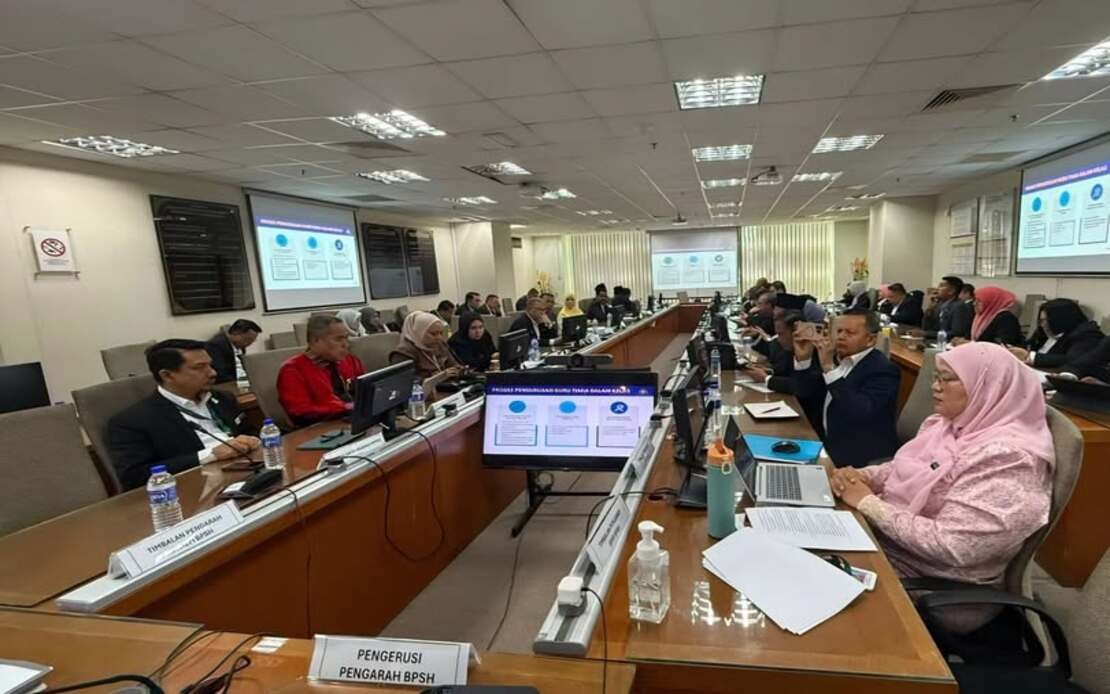
One of the most significant elements of Fadhlina's statement is her explicit acknowledgment that the policy will require sustained explanation and engagement. She recognised that a single policy document cannot address every scenario teachers might encounter or resolve all anxieties about professional responsibility and personal liability. To address this gap, the Ministry of Education has initiated a series of briefing sessions and stakeholder engagements with key organisations including the National Union of the Teaching Profession, the Human Rights Commission of Malaysia, the United Nations Children's Fund, and various non-governmental organisations. These sessions serve a dual purpose: educating teachers about their specific obligations while gathering feedback about remaining concerns and implementation challenges.
The emphasis on continued dialogue reflects a sophisticated understanding of institutional change management. Teachers in Malaysia have historically expressed concern about policy rollouts that appear to increase their legal exposure without providing corresponding support infrastructure. By committing to ongoing engagement, Fadhlina signalled that the ministry recognises the policy will evolve based on real-world experience and educator feedback. This iterative approach stands in contrast to top-down implementations that often generate resistance precisely because they fail to build understanding and buy-in among those tasked with implementation. The minister's commitment to briefings until teachers feel genuinely confident—rather than merely compliant—suggests a recognition that policies backed only by compliance rather than understanding tend to produce less effective outcomes.
A critical undertaking embedded in Fadhlina's statement concerns legal protection for educators. She explicitly assured teachers that the Ministry of Education would provide legal assistance where necessary and appropriate, recognising that child protection work inevitably carries some legal risk. This guarantee attempts to address what may be the deepest source of anxiety among Malaysian educators: the possibility of being scapegoated or held personally liable for systemic failures beyond their control. By extending a promise of institutional backing, the ministry positions itself as sharing responsibility rather than deflecting it downward. Such assurance is particularly important given that teachers operate within school systems where they may lack decision-making authority over budgets, staffing, and facility maintenance—factors that can affect student safety but lie beyond individual teacher control.
The policy itself represents a shift in Malaysia's approach to student welfare, moving from an implicit assumption that safety is primarily a matter of discipline and infrastructure toward a more holistic understanding encompassing emotional, psychological, and physical well-being. This evolution aligns with regional and global trends driven partly by increased reporting of abuse within educational settings and partly by growing awareness of how early intervention can prevent escalation of harm. For Malaysian schools, this represents a significant cultural shift that requires not just new procedures but new mindsets about the relationship between academic institutions and student protection.
Implementation challenges, however, remain substantial. The coordination between multiple agencies—Ministry of Education, Police, Social Welfare Department, and others—requires seamless information-sharing protocols, common terminology, and aligned understanding of respective jurisdictions. Different agencies may have conflicting priorities or established workflows that resist integration. Teachers, meanwhile, must navigate the tension between confidentiality obligations to students and the requirement to report concerns to authorities, a tension that varies depending on the nature of the disclosure and the jurisdiction involved. Moreover, detecting genuine safety concerns versus normal childhood difficulties or misunderstandings remains challenging; teachers with insufficient training in child psychology or trauma awareness may either over-report minor incidents or fail to recognise serious problems.
For Malaysian parents, the policy's implementation carries both promise and uncertainty. The promise lies in the commitment to coordinate across agencies to prevent children from falling through bureaucratic gaps. The uncertainty emerges from questions about whether these coordination mechanisms will function smoothly in practice, particularly in under-resourced districts where agencies may lack capacity to respond swiftly. The policy's success will ultimately depend on whether teachers feel genuinely supported in their role as early warning systems, whether school administrators have resources and training to manage escalated reports appropriately, and whether external agencies can respond with sufficient speed and sophistication to prevent further harm.
Fadhlina's carefully calibrated messaging attempts to navigate a political and professional minefield. Teachers must be reassured that they are not being held solely accountable for structural issues in child protection systems. Parents and civil society must be convinced that schools are taking safety seriously rather than minimising or ignoring concerns. Government agencies must clarify their respective roles to avoid either duplication of effort or critical gaps in coverage. The success of the School Pupil Protection Policy will not be determined solely by the quality of the written policy, but by whether the engagement and briefing process genuinely builds shared understanding across these diverse stakeholders about what safety looks like in Malaysian schools and how each player contributes to achieving it.

