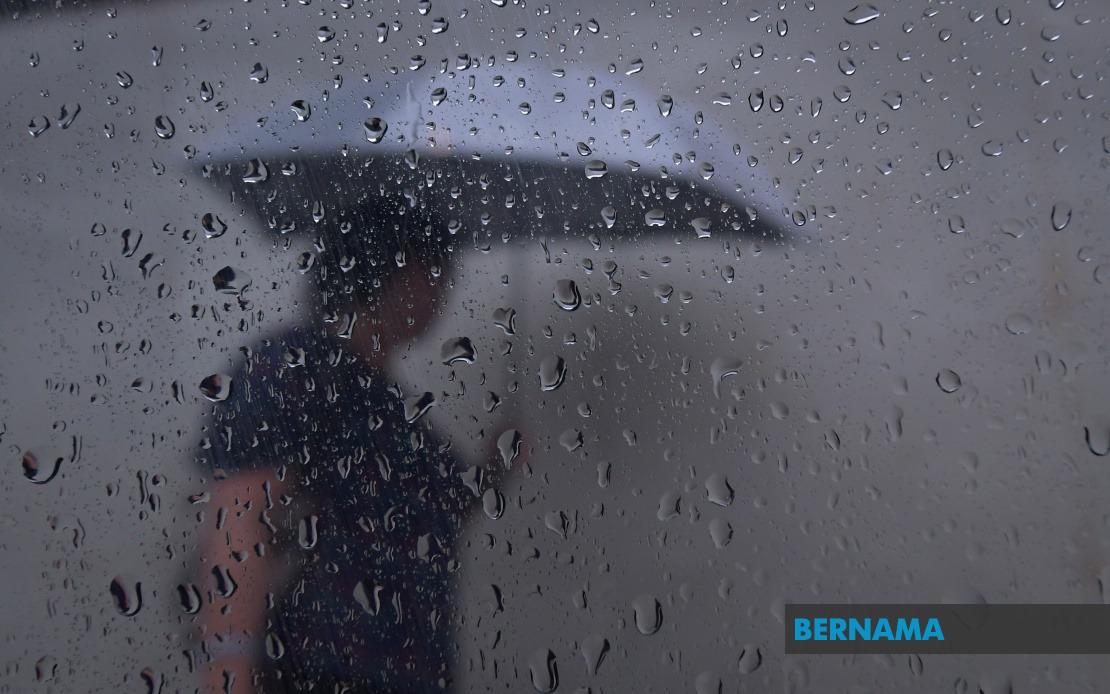
Almost 25,000 early voters will head to polling stations across Johor on the eve of the state's 16th general election, but weather disruptions could affect the voting experience in several districts. The Johor Meteorological Department has issued an advisory warning of scattered morning showers in four key districts, prompting election officials and voters alike to prepare for potentially challenging conditions at the ballot box.
The four districts expected to face morning precipitation are Batu Pahat, Muar, Pontian, and Tangkak, according to Azlai Ta'at, director of the Johor Meteorological Department. This meteorological forecast comes at a critical juncture, as early voting represents a crucial component of the state electoral process and ensures that military and police personnel can participate alongside their civilian counterparts. The advisory underscores the practical challenges that Malaysia's diverse climate can pose to logistical operations, particularly those involving large-scale public participation.
In contrast, other districts within the state are projected to enjoy more favourable morning conditions. Johor Bahru, Segamat, Kluang, Kota Tinggi, Mersing, and Kulai are all expected to experience fine and sunny weather during the morning hours, potentially making voting more convenient for early voters in those areas. However, this regional variation in weather patterns across Johor highlights the importance of targeted planning and communication to ensure equitable access to voting facilities regardless of location.
The meteorological outlook becomes increasingly concerning as the day progresses. Azlai cautioned that afternoon conditions will deteriorate significantly, with thunderstorms forecast to sweep across all districts statewide by midday onwards. This deterioration creates a compressed window of opportunity for early voters to cast their ballots under manageable conditions, particularly in the four districts already facing morning precipitation. The prospect of sustained thunderstorm activity raises questions about voter turnout, accessibility for elderly and disabled voters, and the operational capacity of polling station staff to manage queues and maintain voting materials in wet conditions.
Given these meteorological challenges, the Johor Meteorological Department has issued an explicit recommendation that voters should prioritise casting their ballots during the morning hours before conditions worsen. This advisory essentially creates an informal incentive structure encouraging early participation, as voters who delay their visit until afternoon risk encountering both rain and larger crowds simultaneously. The guidance reflects a pragmatic approach to managing electoral logistics in the face of environmental constraints, though it may inadvertently disadvantage those with inflexible work schedules or transportation limitations during morning hours.
The early voting contingent comprises two distinct groups within Malaysia's security establishment. A total of 12,041 personnel from the Malaysian Armed Forces and their spouses are eligible to vote early, while an additional 12,710 members of the Royal Malaysia Police and General Operations Force, together with their spouses, can participate in early voting. These two cohorts together account for the nearly 25,000 early voters expected to visit the 64 designated early voting stations that will operate statewide beginning at 8 am. The inclusion of these two groups reflects a deliberate electoral policy recognising the scheduling constraints faced by uniformed personnel who may be deployed or on duty during the scheduled election day.
The operational structure of early voting centres reflects practical considerations about voter flow and accessibility. Rather than implementing a uniform closing time across all facilities, organisers have deliberately staggered closing times between noon and 6 pm depending on the specific location and the total number of registered early voters at each centre. This approach allows stations serving larger early voter populations to remain open longer, reducing bottlenecks and ensuring that eligible personnel can complete their civic duty even if they cannot arrive during the peak morning period. The flexibility built into the system suggests that election administrators anticipate variable demand across different polling stations and have sought to accommodate this variation.
The broader electoral landscape of Johor's 16th state election encompasses a substantially larger universe of voters beyond the early voting cohort. Across the state, 2,727,926 eligible voters are registered to participate, with 1,140 polling centres established to facilitate voting on election day. The sheer scale of this logistical undertaking underscores why early voting mechanisms exist, dispersing demand across multiple days and allowing military and police voters to participate without disrupting their operational commitments. The statewide distribution of over 2.7 million eligible voters across more than 1,100 polling centres indicates the complexity of managing democratic participation in a jurisdiction of Johor's size and population density.
The electoral competition itself reflects Johor's political significance within the Malaysian federation. A total of 172 candidates are contesting for 56 state assembly seats, creating an average of approximately three candidates per seat. This competitive intensity suggests that multiple political parties are mounting serious campaigns across most constituencies, indicating high stakes for control of the state government. The prevalence of multi-candidate contests raises questions about vote splitting and whether voters in individual constituencies will face genuine choices between ideologically distinct platforms or whether the field will fragment into numerous marginal candidates with limited realistic prospects of election.
For Malaysian political observers and electoral analysts, the Johor 16th state election carries particular significance given the state's historical role as a political bellwether and its strategic importance within the broader national political configuration. Johor's voting patterns have frequently foreshadowed shifts in national sentiment, making the outcome of this election a potential indicator of broader trends in Malaysian electoral politics. The inclusion of 172 candidates across 56 seats also provides researchers with a rich dataset for analysing candidate selection strategies, intra-party competition dynamics, and the evolving nature of political contestation at the state level.
The weather advisory and early voting arrangements also carry implications for Southeast Asian democratic practice more broadly. Malaysia's approach to accommodating military and police voters through early voting mechanisms demonstrates one model for managing the participation of uniformed personnel without compromising either electoral integrity or operational security. Neighbouring democracies grappling with similar questions about how to include security force members in electoral processes might examine Johor's approach as a case study in practical electoral administration. The staggered closing times and location-specific arrangements further illustrate how election commissions can adapt standardised procedures to accommodate local conditions and demands.
Looking ahead to Saturday's general voting, the weather forecast and early voting participation will establish important benchmarks for assessing overall electoral engagement in Johor. Early voter turnout figures, once released, will provide insight into the level of enthusiasm among military and police personnel for participating in this election compared with previous contests. Higher early voting participation might suggest stronger political engagement or heightened interest in the outcome among these constituencies, while lower participation could indicate either satisfaction with the status quo or reduced confidence in electoral competition. The combination of weather challenges and the specific timing of early voting will also generate operational data about how Malaysian electoral administration responds to environmental constraints, information that may inform improvements in future electoral cycles.

