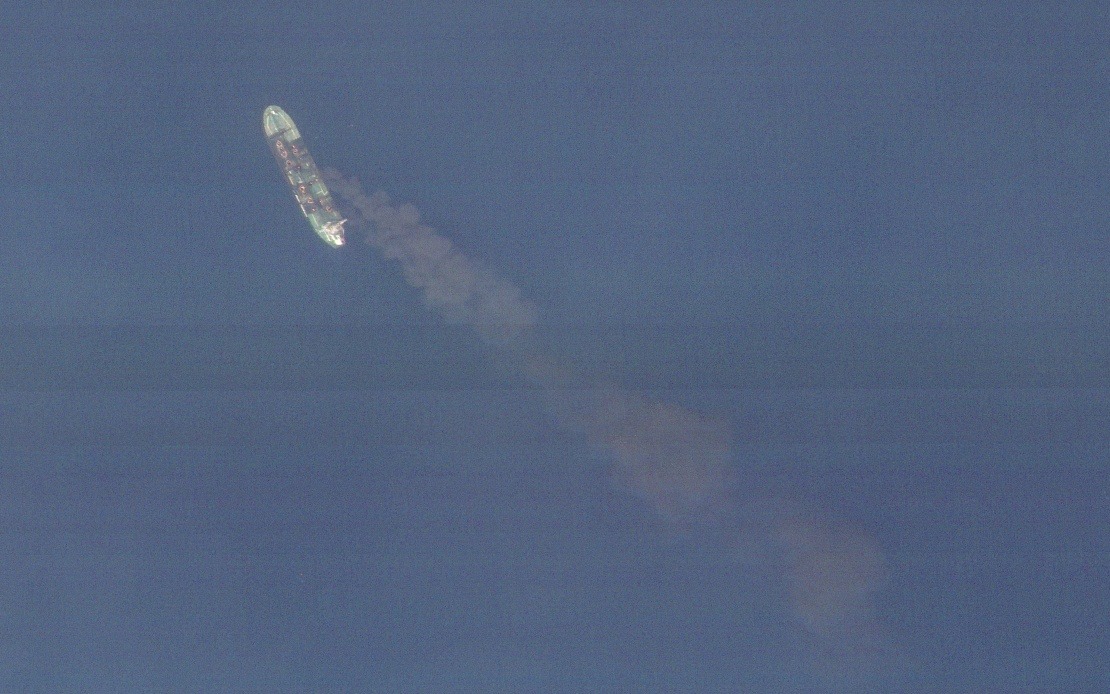
The Saudi-led military coalition operating in Yemen moved swiftly on Monday night to counter the Houthi group's newly announced maritime ban, vowing to deploy all necessary measures to ensure the safe passage of commercial shipping through one of the world's most critical sea lanes. The assertion from coalition leadership underscores mounting tensions in the Red Sea region, where recurring incidents continue to threaten global maritime commerce and deepen the standoff between the Iranian-aligned Houthi faction and the Saudi-backed Yemeni government.
Coalition spokesperson Turki Al-Malki issued a statement through social media declaring that the Joint Forces Command would employ decisive operational steps consistent with international maritime law to defend vessels belonging to coalition members transiting the Bab al-Mandab Strait. His remarks characterised the Houthi maritime ban as both unfounded claims and a deliberate escalatory move, signalling the coalition's determination to maintain freedom of navigation through this strategically vital waterway that connects the Red Sea to the Arabian Sea and serves as a crucial passage for global trade routes.
In deflecting Houthi assertions about a blockade affecting Yemen, Al-Malki pointed to the substantial volume of commercial traffic that has moved through ports under Houthi control during the first half of this year. He noted that more than 300 commercial vessels had delivered essential cargo including food supplies and fuel to these territories, a figure intended to demonstrate that the coalition has not imposed the comprehensive siege that the Houthis claim justifies their maritime restrictions.
The Saudi Foreign Ministry separately issued its own statement condemning what it termed Houthi allegations of a blockade, reframing the kingdom's role as one of humanitarian engagement rather than collective punishment. Officials stressed that Saudi Arabia has pursued various development initiatives and provided budgetary support aimed at alleviating the suffering of Yemen's civilian population, attempting to counter narratives that characterise the kingdom as responsible for the humanitarian crisis gripping the country.
The Houthi announcement of the maritime ban came after they invoked what they described as a "blockade for blockade" principle, framing their action as a reciprocal response to what they characterise as nearly twelve years of Saudi-led siege operations against Yemen. This rhetorical framing reveals how both sides employ justifications rooted in competing historical narratives about responsibility for Yemen's devastation, with each party presenting its actions as defensive rather than aggressive.
The immediate catalyst for renewed hostilities involved an incident at Sanaa International Airport, where the Saudi-backed Yemeni government launched strikes last week specifically targeting an Iranian aircraft carrying a senior Houthi delegation. The attack prevented the aircraft from landing, prompting the Houthis to retaliate by launching missiles and unmanned drones toward Saudi Arabia, demonstrating their capacity to conduct cross-border attacks and their determination to respond forcefully to perceived threats.
Yemen has endured nearly a decade of brutal conflict that began in late 2014 when the Houthi movement militarily seized control of the capital city Sanaa and established dominion over much of northern Yemen. This prompted the Saudi-led coalition, which includes several Gulf states and received international backing, to commence military operations in 2015 with the stated objective of restoring the internationally recognised government. The subsequent conflict has created one of the world's worst humanitarian disasters, with millions displaced and facing acute food insecurity and disease.
The latest escalation threatens to undermine the fragile de-escalation process that emerged following a United Nations-brokered truce in 2022. That ceasefire, though never formally renewed after expiring, had substantially reduced military operations and created space for diplomatic negotiations. Analysts and international observers express growing concern that the recent incidents, combined with the Houthi maritime ban, signal a deterioration in this already precarious arrangement.
For Malaysian and Southeast Asian interests, developments in the Red Sea carry significant implications. The Bab al-Mandab Strait remains essential to shipping routes connecting Asia with Europe and Africa, making regional stability crucial for trade-dependent economies throughout Southeast Asia. Malaysian vessels and cargo transit these waters regularly, exposing the nation's maritime commerce to risks posed by escalating regional tensions. Any sustained disruption to shipping lanes could inflate logistics costs and potentially destabilise supply chains affecting Malaysian importers and exporters across multiple sectors.
The coalition's commitment to protecting commercial vessels suggests preparation for potential intensified military operations in the strait, though international law governing maritime navigation requires balancing security concerns with freedom of passage principles. The Houthi faction's demonstrated capacity to conduct drone and missile attacks has historically disrupted shipping and caused incidents that raised insurance premiums and deterred vessels from the region, creating economic consequences that ripple throughout global markets.
The underlying Yemen conflict reflects broader regional competition between Saudi Arabia and Iran for influence in the Arabian Peninsula and surrounding waters. The Houthis' Iranian backing provides them with military capabilities and strategic direction, while the coalition represents a counter-coalition asserting Saudi interests and those of allied Gulf states. This proxy dimension adds complexity to resolution efforts and suggests that maritime restrictions represent one facet of a multidimensional struggle unlikely to resolve through military measures alone.
International maritime authorities and shipping associations monitor developments in the Red Sea closely, as sustained instability threatens not only commercial interests but also humanitarian corridors needed to deliver essential supplies to Yemen's suffering population. The concentration of critical shipping lanes in this region means that even localised conflicts possess disproportionate global consequences, making the coalition's response and the trajectory of Houthi-Saudi tensions matters of more than regional concern for nations like Malaysia with significant maritime commerce interests.

