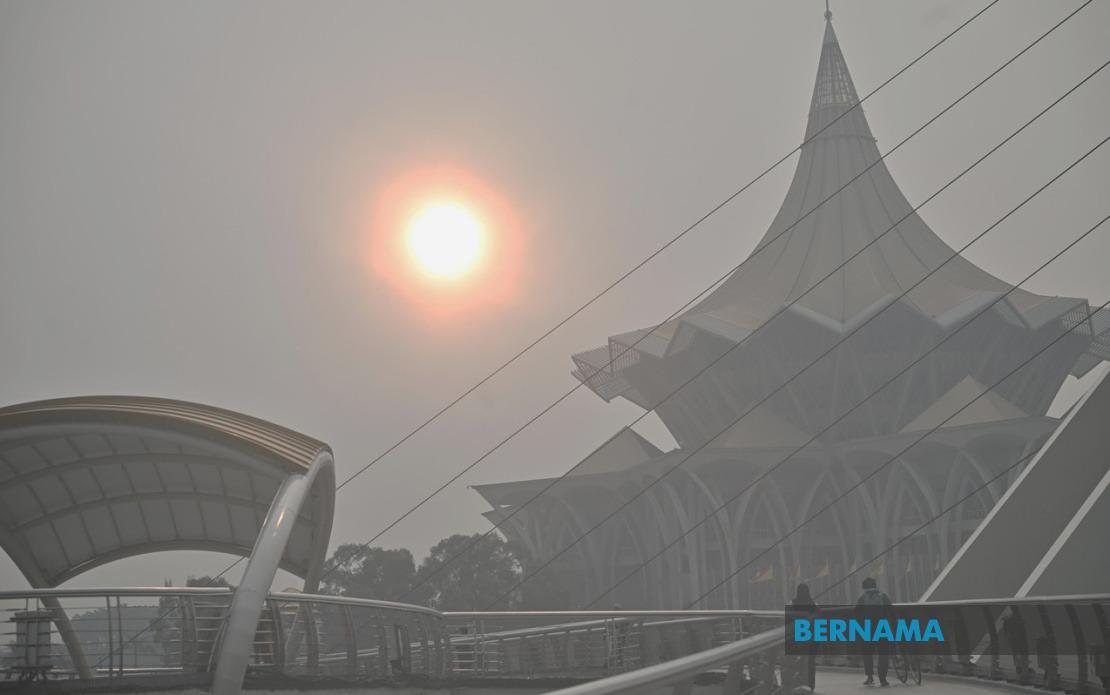
The Sarawak government has temporarily suspended classes at nearly 600 educational institutions across multiple districts, reflecting escalating concerns over extreme weather patterns threatening the state's environmental stability and public health. The two-day closure affects a substantial cross-section of Sarawak's student population, underscoring the severity of current climatic conditions and the authorities' precautionary approach to managing emerging risks.
According to the Sarawak Education Department (JPNS), the temporary closure encompasses 509 primary schools enrolling 107,590 pupils alongside 82 secondary institutions with 89,733 students. These affected schools fall under the administrative purview of 10 District Education Offices spread across the state, representing one of the most comprehensive closures in recent memory. The geographic distribution of affected institutions—spanning from urban centres like Kuching to rural outlying areas such as Lubok Antu and Betong—demonstrates the widespread nature of the weather phenomenon rather than an isolated localized event.
The regions most heavily impacted include Kuching, Padawan, Bau, Lundu, Samarahan, Simunjan, Serian, Sri Aman, Lubok Antu and Betong, covering both densely populated zones and sparsely inhabited peripheral territories. This clustering of affected districts reveals a coordinated response mechanism that prioritizes student welfare across administratively distinct regions when confronting state-level emergencies. The decision to implement simultaneous closures indicates government recognition that heat and drought conditions transcend district boundaries and require integrated crisis management.
Underscoring the seriousness of the situation, the Sarawak State Disaster Management Committee (JPBNS) has elevated its monitoring protocols across multiple environmental indicators. Beyond simply tracking temperature and humidity fluctuations, authorities are simultaneously assessing forest fire hazard levels, peatland vulnerability, air pollutant concentrations, and the state's freshwater availability. This multifaceted surveillance approach reflects sophisticated understanding that extreme heat events generate cascading impacts that extend well beyond classroom comfort concerns.
Peatland fires represent a particularly acute threat in Sarawak's context, given the state's extensive wetland ecosystems and organic soil reserves that, once ignited, prove exceptionally difficult to suppress and generate severe air pollution. The Committee has specifically flagged the elevated risks that prolonged desiccation poses to these fragile environments, warning that sustained dry conditions could trigger uncontrollable fires with transnational air quality implications affecting neighbouring Brunei and Indonesia. This transboundary dimension adds urgency to Sarawak's prevention and mitigation strategies.
Water security emerges as another critical vulnerability highlighted by government warnings. Extended heat and drought cycles deplete reservoir levels and groundwater reserves that supply both urban populations and agricultural communities. For a state dependent on hydroelectric generation and facing competing demands from industrial development, tourism, and residential consumption, prolonged dryness threatens not merely immediate supply adequacy but infrastructure resilience and economic continuity. The Committee's explicit emphasis on monitoring water supply indicates these concerns have moved beyond theoretical projections to operational vigilance.
Air quality monitoring data collected at 2 pm on the closure day painted a concerning picture across multiple population centres. Kuching recorded 191 on the Air Pollutant Index, Samarahan 175, and Serian 195—readings classified as unhealthy and potentially hazardous for vulnerable populations including children, elderly persons, and individuals with respiratory conditions. Additional stations in Sri Aman (178), Sarikei (154), Sibu (108), Lundu (180), Tebedu (169) and Lubok Antu (191) similarly documented elevated pollutant concentrations, suggesting widespread atmospheric degradation.
The presence of unhealthy air quality readings across such geographically dispersed locations indicates that visible pollution sources—whether from forest fires, agricultural burning, or peat degradation—have already begun affecting Sarawak's atmosphere. For educational institutions, poor air quality necessitates either prohibitively expensive air filtration systems or closure, rendering the school suspension decision pragmatically unavoidable alongside its meteorological triggers. Students and staff face genuine respiratory risks from prolonged outdoor exposure during periods of compromised air quality.
Malaysia's response patterns to climate-related disruptions increasingly mirror those of nations confronting accelerating environmental volatility. Sarawak's proactive school closure strategy—implemented before catastrophic conditions manifest—represents graduated risk management that prioritizes preventive action over reactive crisis response. This approach contrasts with historical patterns where authorities typically responded only after demonstrable harm occurred, reflecting evolving institutional learning regarding climate adaptation imperatives.
For Southeast Asian observers, Sarawak's situation illustrates the regional vulnerability to extreme weather intensification driven by broader climatic trends. The state's experience provides instructive lessons regarding how educational systems, environmental governance, and public health preparedness must integrate responses to meteorological hazards. Similar conditions periodically affect neighbouring regions, yet coordinated institutional responses remain inconsistently implemented across the bloc.
The educational disruption itself carries broader implications beyond immediate classroom closure. Extended school suspensions impose childcare burdens on working parents, disrupt learning continuity particularly for examination candidates, and disproportionately affect students from lower-income backgrounds lacking supervised alternatives. These second-order impacts highlight how environmental crises cascade into social and economic disruptions, with consequences extending far beyond atmospheric or hydrological indicators.
Looking ahead, Sarawak's disaster management authorities have committed to sustained monitoring and enhanced prevention strategies focusing on high-vulnerability zones. Their emphasis on preparedness and mitigation reflects acknowledgment that such events may recur with increasing frequency, necessitating permanent institutional adaptations rather than temporary reactive measures. This positioning signals that heat and drought events are transitioning from exceptional disruptions to recurrent operational challenges demanding permanent resource allocation and planning integration.

