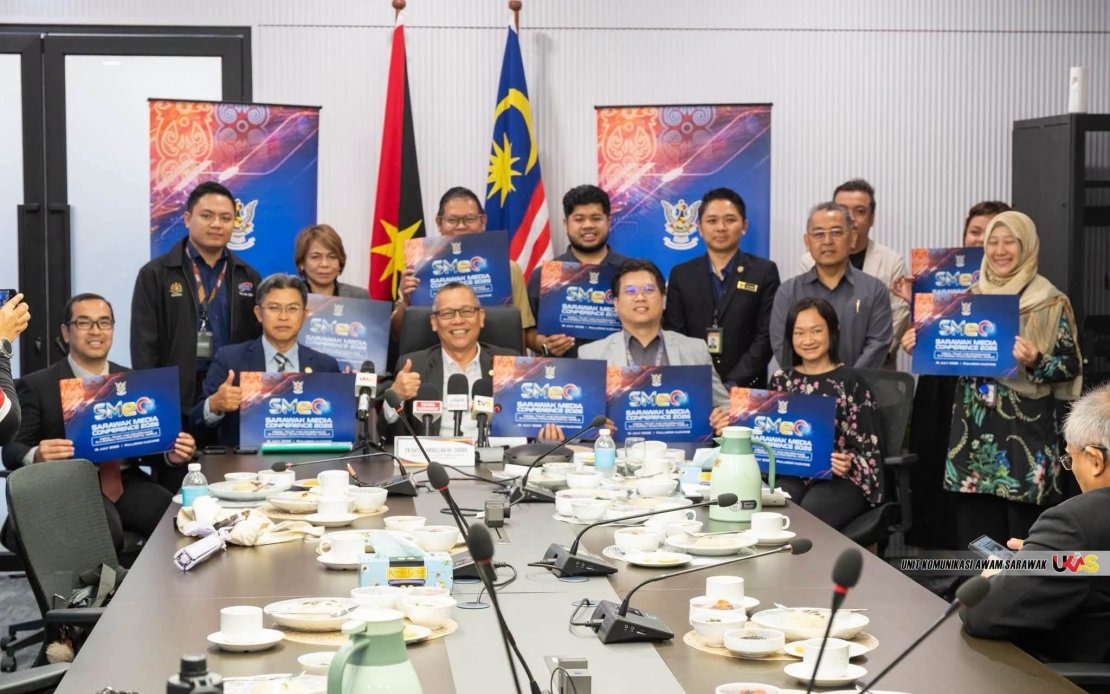
Sarawak will host a landmark gathering of media professionals, academics, and policymakers this month as the state government convenes the Sarawak Media Conference 2026. The event, scheduled for Thursday in Kuching, expects to draw around 800 participants from diverse backgrounds within the communications and information ecosystem. Sarawak Premier Tan Sri Abang Johari Tun Openg will officiate the proceedings, signalling the state government's commitment to elevating discourse around contemporary media challenges.
Organised by the Sarawak Government through its Public Communications Unit (UKAS), the conference arrives at a critical juncture for media institutions across Southeast Asia. The gathering carries thematic weight in its chosen focus: "Media, Trust and Governance in a Rapidly Evolving Digital World." This framing reflects mounting global anxieties about institutional credibility amid technological disruption, misinformation, and shifting audience behaviour that have reshaped the information landscape over the past half-decade.
According to Datuk Abdullah Saidol, Deputy Minister in the Sarawak Premier's Department overseeing corporate affairs and communications, the conference will concentrate on two interconnected imperatives. First, it will examine how media organisations can rebuild and strengthen public confidence—a concern particularly acute in Southeast Asia, where trust indices have fluctuated alongside political polarisation and digital platform proliferation. Second, the agenda will explore frameworks for ethical governance within media institutions themselves, addressing how editors, publishers, and broadcast managers can maintain editorial standards while navigating commercial pressures and technological change.
A substantial portion of the conference programme will engage with artificial intelligence and emerging digital technologies. Rather than treating these tools as inevitably corrosive to journalism, the discussions will probe how AI applications might enhance reporting, fact-checking, and content distribution while posing risks to employment, authenticity verification, and journalistic independence. This pragmatic approach reflects recognition that digital transformation is neither inherently malignant nor beneficial—rather, its effects depend heavily on implementation choices, regulatory frameworks, and professional ethics.
The conference will benefit from expertise housed within Malaysia's media establishment. SOL Digital founder Lunnie Gan and Malaysian Media Council deputy chairman Premesh Chandran are among the prominent figures scheduled to contribute. Their participation brings both practitioner insights from digital media operations and institutional perspectives from Malaysia's formal media governance structures. Such cross-pollination between commercial innovators and regulatory bodies can illuminate pathways for balancing competitive market dynamics with public interest considerations.
Beyond formal daytime sessions, the event programme extends into evening celebrations. A dinner honouring the Sarawak-level National Journalists' Day (HAWANA) 2026 will feature Deputy Prime Minister Datuk Seri Fadillah Yusof. This integration of professional recognition with policy-level participation underscores the Malaysian federal government's interest in media sector developments within the state, particularly as digital transformation reshapes news consumption patterns across the country.
The conference will recognise excellence across multiple dimensions of contemporary journalism through the Sarawak Premier's Special Appreciation Awards. Five categories—Editor/Journalist/Stringer, Photographer, Videographer, Radio News Presenter/Broadcaster, and Social Media Influencer—reflect the broadened definition of journalism now prevalent in the digital age. By honouring social media influencers alongside traditional broadcast journalists, the awards framework acknowledges that information dissemination and public discourse now occur across fragmented platforms rather than through legacy media gatekeepers alone.
For Malaysia specifically, this Sarawak-based gathering carries implications for national conversations around media regulation and digital policy. Sarawak, with significant media institutions and a growing digital ecosystem, serves as a microcosm of challenges facing Malaysian media writ large. The state's experience addressing trust deficits, talent retention amid platform migration, and ethical standards for digital content will inform federal-level discussions as the government considers potential regulatory reforms.
The conference timing also reflects regional momentum around formalising digital media governance. Throughout Southeast Asia, governments and industry bodies are establishing frameworks for content moderation, algorithm transparency, and journalist protection in an era when disinformation campaigns, platform monopolies, and data privacy concerns intersect with traditional press freedom questions. Malaysia's participation in these regional conversations, illustrated through events like SMeC 2026, positions it as an active contributor rather than passive observer.
Moreover, the conference's emphasis on trust—a concept fundamental to journalism's social contract—responds to genuine audience anxieties. Malaysian readers, like their counterparts across the region, increasingly navigate fragmented information environments where distinguishing credible reporting from fabrication requires sophisticated media literacy. Media institutions that can demonstrate commitment to transparent sourcing, correction mechanisms, and ethical conflicts-of-interest disclosure will likely retain audience confidence more effectively than competitors relying on sensationalism or partisan alignment.
The participation of academics alongside practitioners and policymakers suggests that SMeC 2026 will ground discussions in research findings rather than ideology or commercial self-interest alone. Malaysian universities have developed substantial expertise in media studies, journalism pedagogy, and digital communication research. Incorporating this scholarly perspective into practitioner conversations can bridge the gap between ivory tower analysis and newsroom realities.
Finally, the scale of participation—800 attendees representing media, communications, policy, and academic domains—indicates that Malaysian stakeholders recognise media sector challenges as deserving sustained, multidisciplinary attention. In Sarawak and across Malaysia, the coming years will demand difficult choices about regulatory architecture, professional standards, technology adoption, and institutional adaptation. Conferences like SMeC 2026 provide essential forums for deliberation before decisions harden into policy.

