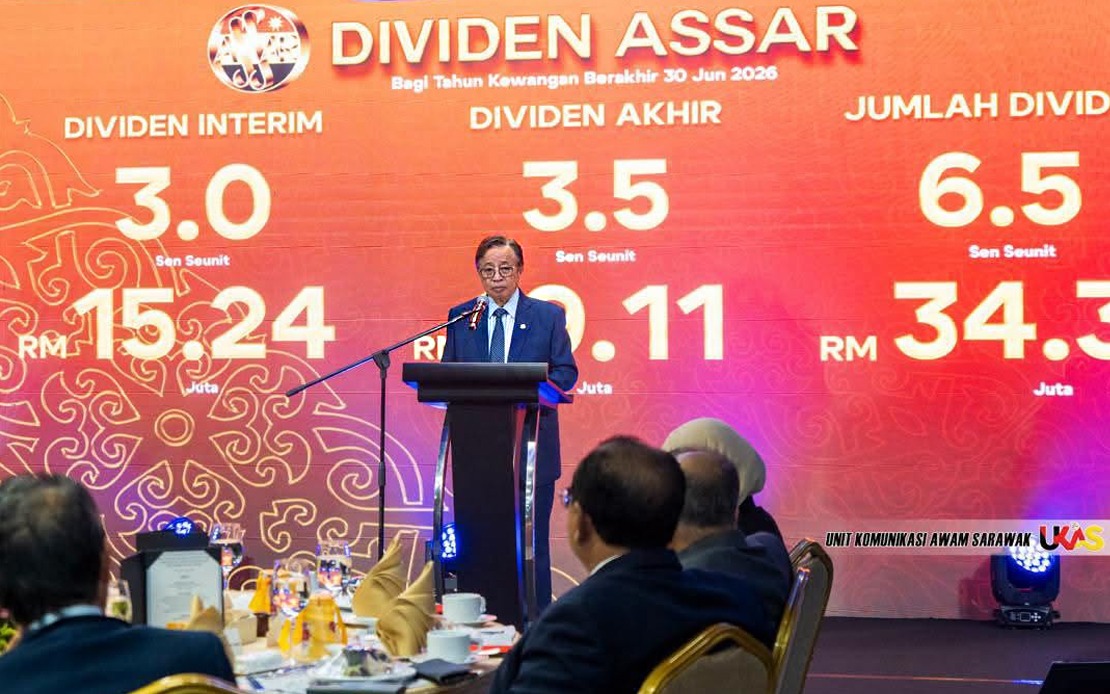
The Sarawak state government is exploring a significant expansion of its flagship investment scheme that could reshape participation in the state's capital markets. Premier Tan Sri Abang Johari Tun Openg revealed that authorities are contemplating a proposal to launch a parallel investment vehicle called ASSAR 2, designed specifically to accommodate non-Bumiputera investors who have previously been excluded from Amanah Saham Sarawak, the existing scheme restricted to indigenous Bumiputera communities.
The announcement represents a notable policy shift toward greater financial inclusivity across Sarawak's investment ecosystem. Currently, ASSAR operates exclusively as a Bumiputera-focused savings instrument, limiting capital accumulation opportunities for non-Bumiputera citizens seeking to participate directly in state-backed investment products. By introducing ASSAR 2 as a parallel mechanism, the Sarawak government aims to harness untapped capital from the non-Bumiputera community while simultaneously broadening the investor base for state-linked ventures.
Abang Johari indicated that the proposal draws inspiration from Permodalan Nasional Berhad, Malaysia's largest sovereign wealth fund, which operates multiple investment vehicles catering to different demographic segments. This benchmarking approach suggests Sarawak policymakers are examining how PNB successfully balances inclusive market access with sector-specific investment mandates. The structural template employed by PNB demonstrates that parallel fund offerings can coexist without compromising the integrity or objectives of original schemes.
The Premier emphasized that the Sarawak government requires thorough internal review before proceeding. The ASSAR board of directors and management will undertake a comprehensive feasibility assessment, examining operational frameworks, regulatory requirements, and capital adequacy considerations necessary to establish and sustain a second fund. This deliberative approach suggests authorities are committed to ensuring proper governance structures precede any launch, avoiding hasty implementation that might undermine investor confidence or regulatory compliance.
Beyond structural considerations, Abang Johari articulated a philosophical rationale grounded in inclusive governance. He characterized the proposal as consistent with Sarawak's broader commitment to ensuring equitable access to investment opportunities across all communities. This framing positions ASSAR 2 as an instrument for economic democratization rather than mere capital mobilization, addressing longstanding disparities in retail investment participation that have historically characterized Malaysia's financial system.
The timing of this announcement aligns with Sarawak's robust economic performance, which Abang Johari highlighted as justification for expanded investor participation. By opening investment channels to non-Bumiputeras, the state seeks to capitalize on strong growth trajectories by channeling fresh capital from currently excluded demographic segments into productive economic activities. This virtuous cycle of expanded investment funding supporting state development becomes particularly relevant for Southeast Asian investors evaluating long-term capital deployment strategies within Malaysia's largest state by land area.
For Malaysian investors broadly, the proposed ASSAR 2 mechanism carries several implications. Non-Bumiputera citizens, particularly in Sarawak, would gain access to a state-backed investment vehicle previously unavailable to them, potentially offering competitive returns comparable to ASSAR offerings. Additionally, the enhanced capitalization resulting from dual fund structures could strengthen Sarawak's financial institutions and state-linked enterprises, benefiting all investors through improved operational capacity and competitive positioning.
From a regulatory perspective, the establishment of ASSAR 2 would necessitate Securities Commission Malaysia approval and potentially require amendments to existing legislation governing ASSAR's establishment and operations. The feasibility review will likely examine whether current regulatory frameworks adequately accommodate parallel fund structures or whether legislative adjustments are necessary. Such procedural requirements, while potentially extending implementation timelines, ensure that investor protections and fiduciary standards remain uncompromised.
The proposal also reflects broader regional trends toward financial inclusion and demographic-neutral investment frameworks. Southeast Asian nations increasingly recognize that restricting investment access based on ethnicity or indigenous status creates inefficiencies in capital allocation and excludes productive investment potential. Sarawak's consideration of ASSAR 2 positions the state as responsive to global best practices while maintaining sensitivity to Malaysia's constitutional framework governing Bumiputera entitlements.
Investor communities, both domestic and international, may view this proposal positively as evidence of Sarawak's commitment to deepening capital markets development. Enhanced retail participation through ASSAR 2 could contribute to greater liquidity in state-linked securities and strengthened local institutional investors' capacity to support regional economic initiatives. Sarawak's economic growth trajectory, coupled with improved investment accessibility, may enhance the state's attractiveness as a destination for long-term capital deployment.
Practically speaking, the implementation of ASSAR 2 would necessitate establishing distinct management structures, investment mandates, and performance metrics while maintaining operational synergies with existing ASSAR frameworks. The complexity of launching a parallel investment vehicle in Malaysia's regulated environment suggests the feasibility review will occupy considerable time and require coordinated input from multiple stakeholders, including Bank Negara Malaysia, the Securities Commission, and state legislative bodies.
Looking forward, the success of ASSAR 2 will depend substantially on investor education and market positioning. Non-Bumiputera investors accustomed to conventional investment vehicles must understand ASSAR 2's unique characteristics, risk profiles, and return potential. Clear communication regarding fund objectives, governance structures, and competitive advantages relative to alternative investments will prove critical for achieving adequate capital mobilization targets.
The proposal ultimately reflects Sarawak's determination to evolve beyond historically restrictive investment structures while respecting constitutional guarantees for Bumiputera communities. By establishing parallel rather than replacing existing mechanisms, the state can simultaneously advance financial inclusion and preserve established policy frameworks. This balanced approach may ultimately prove influential in shaping how other Malaysian states conceptualize demographic-sensitive investment policy in increasingly diverse, globally-integrated markets.

