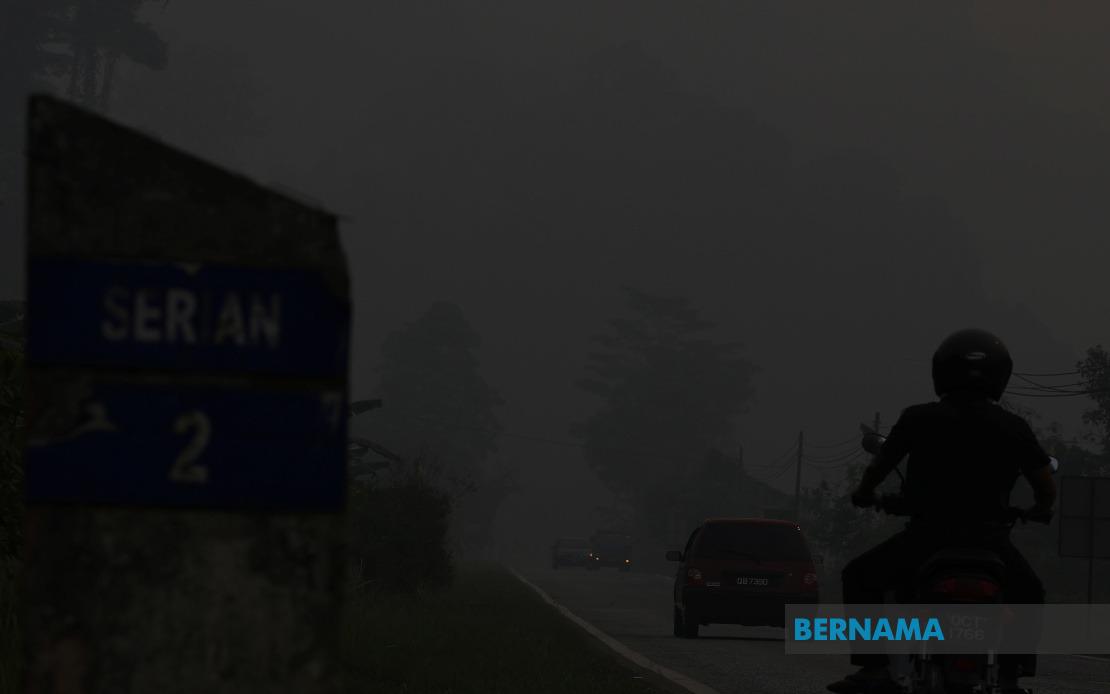
The Sarawak Disaster Management Committee has issued guidance to all event organisers across the state, directing them to evaluate current air quality metrics before making final decisions about whether their planned activities should go ahead as scheduled. Speaking in his capacity as committee chairman, Datuk Amar Douglas Uggah Embas made clear that responsibility for such determinations rests primarily with individual organisers themselves, though they are expected to base any choices on the potential health impacts to the public rather than convenience or financial considerations.
Currently, no blanket prohibitions on outdoor events have been imposed across Sarawak, meaning that the formal authority to cancel or postpone remains within the hands of those staging the activities. However, the committee has established clear thresholds to guide decision-making. Once the Air Pollutant Index climbs above 200, organisers should seriously reconsider whether to proceed with outdoor physical activities, competitive sports events, or programmes involving strenuous exercise. This guidance carries particular weight for events that will draw large numbers of children, elderly participants, or other groups whose respiratory systems are more vulnerable to air quality degradation.
The backdrop to this advisory is the sharp deterioration in air quality that struck multiple locations across Sarawak on the day the statement was issued. By midday, several areas had already recorded hazardous API readings, indicating that haze conditions had intensified rapidly. The most severely affected zone was Serian District, where monitoring equipment at the police headquarters compound registered an API of 412—well into the hazardous range that poses genuine health risks even to generally healthy adults. The nearby Samarahan area recorded 332, while the capital Kuching registered 304, both comfortably above the level where outdoor exertion becomes problematic for vulnerable populations.
Beyond the three most severely impacted districts, a broader band of unhealthy air quality stretched across the state. Sarikei recorded 197, just shy of the 200 threshold, while Sibu, Bintulu, Mukah, Samalaju, Kapit, and Miri all posted readings ranging from 156 to 190. This geographic spread indicates that the haze phenomenon, likely driven by transboundary smoke from regional sources, was affecting the entire state rather than isolated pockets. The data comes from the Department of Environment's official Air Pollutant Index Management System, the authoritative source for air quality assessment in Malaysia.
Rather than issuing directives that completely prohibit outdoor gatherings, the disaster committee is encouraging organisers to consider flexible alternatives that could preserve their events while protecting public health. Indoor venues present an obvious option where logistics permit, as enclosed spaces with proper air filtration can maintain acceptable air quality regardless of external conditions. Where moving indoors is impractical, organisers might reduce the intensity or duration of physical activities, shift schedules to times when air quality historically improves such as early morning hours, or postpone events entirely if conditions continue to worsen.
The committee emphasised that it is actively collaborating with both state and federal environmental and health agencies to maintain close surveillance of the unfolding situation. This monitoring feeds into progressively scaled responses aligned with established disaster management protocols. The operational framework distinguishes between various severity bands, each triggering different types of official action. When API levels exceed 500, which constitutes an extreme emergency level, the formal protocols call for shutting down government and private sector offices and workplaces across the state. Such a drastic measure would only proceed after the National Disaster Management Committee formally declares a Disaster Emergency at the federal level—an exceptional step reserved for the most severe situations.
For Malaysian readers and those across Southeast Asia, transboundary haze events have become almost predictable seasonal occurrences, typically peaking during the dry season when agricultural burning in neighbouring countries combines with unfavourable wind patterns. Sarawak, positioned in northern Borneo, finds itself particularly vulnerable to such events given its geographic proximity to major emissions sources. Unlike peninsular Malaysia, which can sometimes escape the worst of regional haze, Sarawak's location means it frequently bears the brunt of transboundary smoke earlier and more intensely than other parts of the country.
The practical implications of the SDMC's guidance extend beyond event management to broader economic and social considerations. Tourism operators, sporting organisations, cultural groups, and local communities planning gatherings must now factor air quality forecasts into their planning processes with the same rigour they apply to weather predictions. This reflects a maturing recognition that air quality has become as much a planning constraint as rainfall or temperature in the region. For businesses and organisations, the financial risk of last-minute cancellations or the liability exposure of proceeding despite hazardous conditions creates pressing incentives to develop more sophisticated air quality monitoring practices and contingency protocols.
The committee's framing of this issue as a matter for individual organisers, rather than imposing top-down restrictions, reflects a governance approach that balances public health protection with preserving economic and social activity as much as possible. By setting clear thresholds and offering guidance without absolute mandates, authorities allow flexibility while establishing norms for responsible behaviour. This approach depends critically on event organisers acting in good faith and demonstrating genuine concern for participant welfare rather than prioritising schedule adherence or revenue preservation.
Looking forward, the situation will likely evolve over coming days depending on wind patterns, precipitation, and transboundary burning activity. The SDMC statement serves as both an immediate advisory and a reminder that Sarawak residents and those planning activities there must remain attentive to real-time API data. The Department of Environment's APIMS portal provides updated readings continuously, allowing stakeholders to make timely decisions rather than relying on outdated information. For the broader region, such episodes underscore the limitations of purely domestic air quality management strategies and highlight why regional cooperation and transboundary governance mechanisms remain essential for addressing this recurring challenge.

