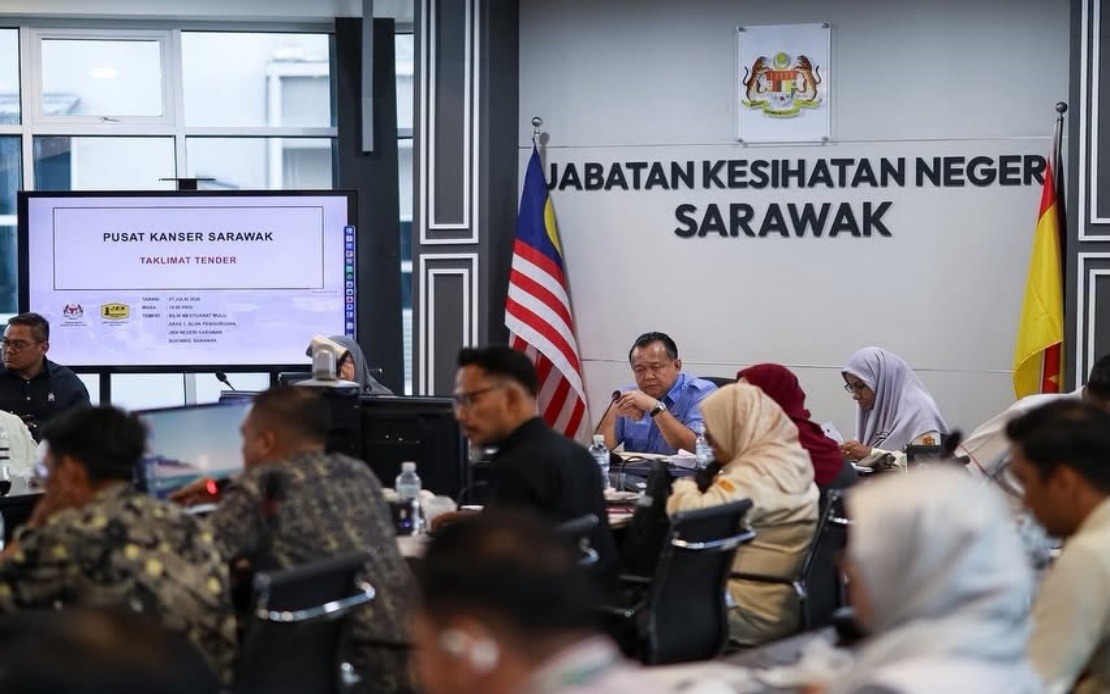
Construction of the Sarawak Cancer Centre in Kota Samarahan is expected to commence in January 2027 following the issuance of the Letter of Acceptance to the winning contractor, according to Works Minister Datuk Seri Alexander Nanta Linggi. Speaking after a site inspection, the minister outlined the timeline and procurement strategy for what represents a major healthcare infrastructure initiative for the state, underscoring the government's commitment to expanding regional medical capabilities for cancer treatment and research.
The project is currently navigating the competitive design-and-build tender process, a procurement method that consolidates responsibility for both architectural design and construction with a single contractor. Ten firms have successfully navigated the pre-qualification stage and participated in a detailed briefing session to comprehend the project's technical requirements and operational parameters before preparing competitive bids. This selective approach ensures that only experienced and financially stable organisations proceed to the proposal submission stage, reducing risks commonly associated with major public infrastructure projects.
Contractors have approximately three months from the briefing to develop and submit detailed proposals addressing design specifications, construction methodology, project scheduling, and cost breakdowns. Following this submission window, the government will undertake a rigorous evaluation process to assess technical merit, value for money, and contractor capability. Nanta expressed confidence that upon completion of evaluations, the Letter of Acceptance could be issued in early January 2027, permitting the successful firm to immediately mobilise resources and commence design finalisation and construction activities.
Once appointed, the successful contractor will operate under a 60-month (five-year) project timeline encompassing both design refinement and complete construction of the facility. Following practical completion of construction, the contractor will enter a two-year Defects Liability Period during which rectification of any defects or deficiencies becomes the contractor's responsibility. This extended liability window protects the government's investment and ensures the facility reaches operational standard before full handover to the Sarawak Health Ministry, mirroring best practices in large-scale healthcare infrastructure projects across the region.
The facility's design must satisfy stringent technical and operational standards established by Malaysia's Health Ministry while incorporating contemporary architectural and technological approaches. The cancer centre will rise on a 10.9-hectare parcel positioned adjacent to the existing Sarawak Heart Centre, creating a cohesive medical precinct focused on complex, specialist treatments. This adjacency offers operational synergies including shared diagnostic facilities, emergency response capacity, and administrative infrastructure, while enabling the development of a regionally significant oncology hub capable of serving Sarawak and neighbouring jurisdictions.
Capacity planning has targeted 310 inpatient beds complemented by comprehensive outpatient services, positioning the centre to accommodate both routine consultations and intensive treatment regimens including chemotherapy and radiotherapy. The dual inpatient-outpatient model reflects evolving international cancer care delivery patterns emphasising day-treatment protocols and short-stay admissions where clinically appropriate, reducing patient displacement while maintaining treatment quality. This flexibility will enhance accessibility for rural and remote Sarawakian communities, many of whom currently travel to Peninsular Malaysia for specialised oncology care.
Project cost estimates exceed RM1 billion, reflecting the sophisticated medical infrastructure, specialised equipment, and expert clinical staffing essential for a world-class cancer treatment centre. The Sarawak state government has provisionally allocated RM1 billion for the initiative, with arrangements for subsequent reimbursement through an agreed mechanism, likely involving federal health budget transfers or public-private partnership structures. This funding approach demonstrates state-level commitment while acknowledging the federal government's role in major healthcare infrastructure development, balancing local autonomy with national health system integration.
The cancer centre represents a strategic response to demographic and epidemiological trends affecting Sarawak and Southeast Asia broadly. Cancer incidence across Malaysia has risen steadily, with projections indicating continued growth driven by ageing populations and lifestyle-related risk factors. Currently, many Sarawakians requiring specialised oncology treatment must travel to Kuala Lumpur or Ipoh, incurring substantial out-of-pocket costs, family displacement, and psychological burden. A locally-based comprehensive centre will democratise access to cutting-edge cancer care, reducing travel burdens and treatment interruptions that compromise outcomes.
The initiative also carries economic development dimensions extending beyond healthcare delivery. Construction activity will generate employment during the five-year build phase across skilled trades, professional services, and supply chains. Once operational, the centre will establish high-skilled employment in medical, nursing, and technical disciplines while attracting regional patient volumes that stimulate broader tourism and service economy activity. Furthermore, the facility positions Sarawak as a regional medical tourism destination, potentially attracting patients from Indonesia, Brunei, and the southern Philippines seeking treatment in a modern, English-language facility.
The adjacent Sarawak Heart Centre, which preceded this cancer facility, established the precedent for specialised medical infrastructure development within the state. That centre's operational success and patient satisfaction metrics have likely influenced confidence in pursuing the more ambitious cancer centre project. The dual-facility precinct will create Southeast Asia's leading integrated cardio-oncology environment, recognising the medical reality that many cancer patients develop cardiovascular complications during or after treatment, enabling coordinated multi-specialty management.
Timeline execution becomes critical for stakeholders across the healthcare and construction sectors. January 2027 represents an achievable but aggressive target requiring smooth contractor selection completion and mobilisation processes. Any delays in evaluation or disputes during award could compress the five-year construction timeline, potentially necessitating extended schedules or expanded budgets. Conversely, early contractor engagement during the design phase could optimise buildability and cost management, benefiting both the contractor's profitability and the government's fiscal position.
For Malaysian healthcare planners, the Sarawak initiative provides valuable lessons in regional infrastructure distribution. Rather than concentrating all specialist capacity in Peninsular Malaysia, strategic investment in East Malaysian facilities addresses equity, accessibility, and demographic realities. This model could inform future facility planning for other specialised services across Sarawak, Sabah, and Peninsular Malaysia's underserved regions, contributing to more balanced, inclusive national healthcare development aligned with constitutional commitments to equitable service delivery.

