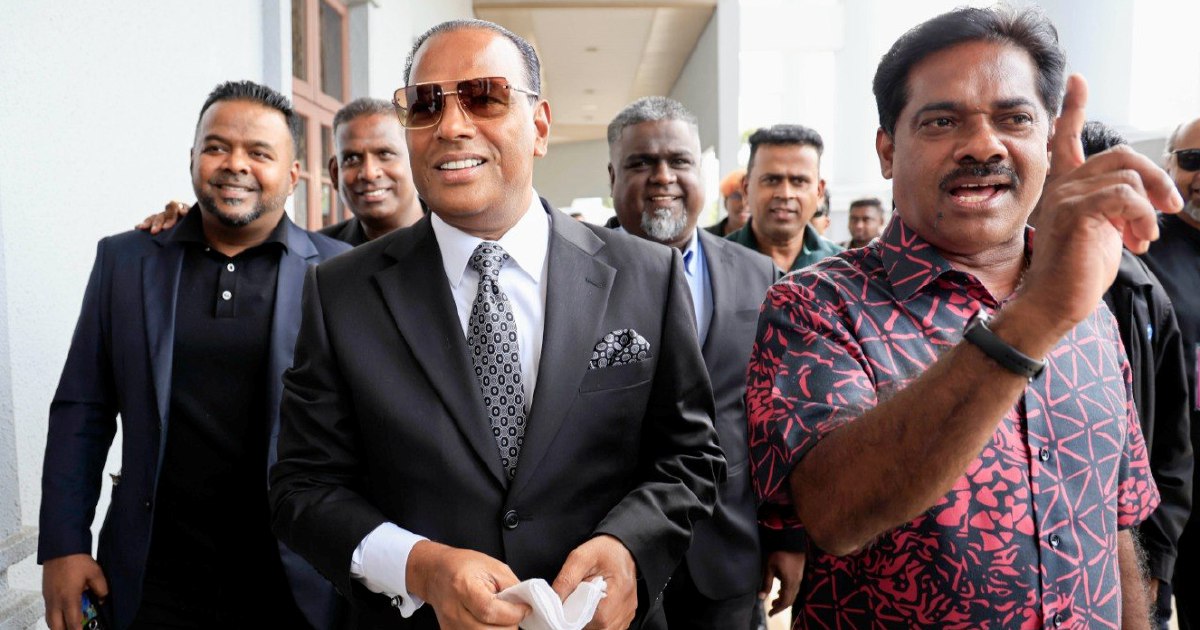
Datuk Seri M. Saravanan, who previously served as Malaysia's Human Resources minister, has forcefully contested three distinct charges alleging he accepted RM1.097 million in bribes. Speaking in Kuala Lumpur, the former minister characterized the accusations as a "wild accusation", signalling his determination to fight what he views as unfounded allegations in what has become a significant development in the country's ongoing anti-corruption efforts.
The charges against Saravanan mark a notable escalation in Malaysia's approach to tackling high-level corruption within government circles. The specific amount of RM1.097 million, broken across multiple transactions, suggests a methodical investigation by authorities into his alleged financial dealings. Such cases carry considerable weight within Malaysia's institutional framework, as they directly challenge the integrity of public office and test the independence of the country's anti-corruption mechanisms.
Saravanan's emphatic rejection of the allegations reflects a broader pattern observed in Malaysian political and legal circles where senior officials under investigation typically maintain their innocence while preparing comprehensive legal defences. His use of the phrase "wild accusation" suggests he may argue that the evidence linking him to the alleged bribes is circumstantial or lacks substantive foundation. This defensive posture will likely shape media narratives and public perception in the coming months as proceedings advance through the courts.
The former HR minister's tenure occurred during a period when Malaysia was attempting to implement various workplace policies and labour reforms. Any findings of corruption during his ministry would carry implications not only for his personal reputation but potentially for the policies and decisions implemented during his time in office. Stakeholders in Malaysia's labour and human resources sectors may scrutinize whether any government contracts or policy initiatives awarded during his tenure warrant further examination.
The case arrives at a time when Malaysian institutions face heightened scrutiny regarding their commitment to pursuing corruption at senior governmental levels. Public confidence in such investigations depends significantly on their perceived independence and rigour. Saravanan's defense strategy and the quality of evidence presented will likely become focal points for assessing whether Malaysia's anti-corruption framework functions effectively when applied to former ministers and high-ranking officials.
For the broader Southeast Asian region, Malaysia's handling of this case carries broader implications. Neighbouring countries such as Singapore, Thailand, and Indonesia are watching closely to understand whether Malaysia can successfully prosecute high-profile figures. The outcome may influence perceptions of Malaysia's governance standards and its commitment to combating white-collar crime, factors that international investors and foreign governments consider when evaluating regional stability and institutional credibility.
The allegations place Saravanan at the centre of a significant test of Malaysia's legal system's capacity to hold powerful individuals accountable. The complexity of proving intent and financial linkages in corruption cases means the prosecution will need to present compelling documentary evidence, witness testimony, and forensic financial analysis. Saravanan's legal team will undoubtedly challenge the interpretation of these materials and the inferences drawn from them.
Political dimensions underpin cases of this nature in Malaysia, where factional alignments and rival power centres sometimes influence the trajectory of high-profile investigations. However, the relative transparency of Malaysia's court proceedings suggests that evidence and legal arguments will ultimately determine the case's direction, even as political observers analyse the timing and circumstances of the charges.
The RM1.097 million figure warrants attention as it represents a substantial sum yet remains below thresholds that might trigger certain enhanced investigative procedures in some jurisdictions. The breakdown of this amount across three separate charges indicates prosecutors have identified distinct transactional instances rather than treating the funds as a single illicit transfer. This approach may strengthen their case by demonstrating a pattern rather than an isolated lapse in judgment.
As these proceedings unfold, the implications extend beyond Saravanan himself to affect public trust in governmental institutions more broadly. Malaysian citizens and international observers will be assessing whether the judiciary remains sufficiently insulated from political pressures to deliver justice based on evidence. Saravanan's continued assertion of innocence suggests he anticipates a protracted legal battle with multiple opportunities for appeal and challenge should the lower courts rule against him.
The case also reflects Malaysia's evolution toward more systematic anti-corruption enforcement, notwithstanding legitimate debates about whether such prosecutions are applied uniformly across society. The involvement of the former HR minister places workplace governance and human resources policy implementation under indirect but real scrutiny, as oversight bodies may examine whether systemic gaps enabled the alleged misconduct.

