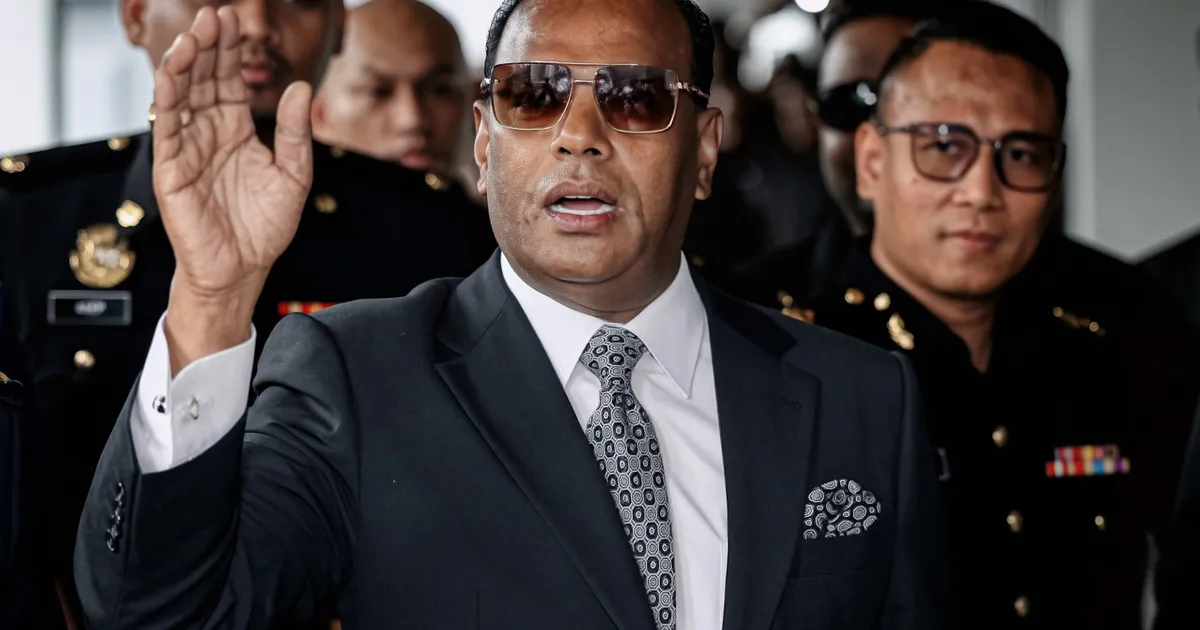
Former Human Resources Minister Saravanan has pushed back against suggestions that his correspondence with Prime Minister Anwar Ibrahim represented an attempt to secure a cover-up of his corruption charges. Instead, Saravanan maintains that the letter was a straightforward request for a thorough and impartial examination of his legal position, which he continues to characterise as fundamentally flawed.
The distinction Saravanan is drawing carries significant political weight in Malaysia's ongoing struggle with corruption perception and governance. His assertion that the charges levelled against him lack substantive merit forms the core of his defence strategy. By framing his communication with the Prime Minister as a procedural request rather than a political manoeuvre, he is attempting to redirect public narrative away from potential perceptions of improper influence or backroom dealing.
The context of Saravanan's correspondence becomes important when considering Malaysia's broader political environment. The country has maintained commitments to anti-corruption frameworks, with various government bodies tasked with investigating and prosecuting cases. Letters from implicated officials to the Prime Minister inevitably attract scrutiny, particularly when graft allegations are involved. Saravanan's clarification suggests awareness of how such communications might be interpreted by political opponents, the media, and the general public.
Saravanan's insistence that his charges lack credibility represents a common element in how political figures defend themselves against corruption allegations in Malaysia. Rather than engaging with specific details of the accusations, he positions the entire case as conceptually unsound. This approach mirrors similar defences mounted by other Malaysian politicians facing graft inquiries, though the effectiveness of such arguments often depends on public confidence in investigative agencies and judicial processes.
The former minister's emphasis on seeking a "thorough review" carries particular resonance given Malaysia's experience with cases where allegations have been subjected to prolonged scrutiny before resolution. Saravanan appears to be invoking this procedural aspect as a shield against accusations that he was attempting to weaponise his access to the Prime Minister's office. The request for comprehensive examination, in his framing, becomes an appeal for transparency rather than concealment.
For Prime Minister Anwar Ibrahim, receiving such correspondence presents a delicate balancing act. The government has positioned itself as committed to anti-corruption efforts, yet must navigate situations where sitting or former ministers face legal challenges. The Prime Minister's office maintains official distance from ongoing investigations and prosecutions, but personal letters from affected individuals inevitably create political complications. How Anwar handles such matters influences both his government's credibility on governance issues and relations within his political coalition.
The broader implications for Malaysian politics extend beyond Saravanan's individual situation. Public confidence in whether the country's anti-corruption institutions operate independently or remain susceptible to political interference hinges partly on how high-profile cases are managed. Each instance where a minister or former official communicates with the Prime Minister regarding ongoing charges reinforces questions about the separation between executive authority and prosecutorial independence.
In Southeast Asia more broadly, Malaysia's handling of corruption allegations involving political figures carries regional significance. International observers monitoring governance trends across the Association of Southeast Asian Nations (ASEAN) pay close attention to how established democracies like Malaysia address such challenges. The perception that anti-corruption processes function fairly and without political contamination affects Malaysia's standing in regional governance rankings and international assessments.
Saravanan's defensive posture also reflects the intensifying political polarisation within Malaysia's governing coalition. Different factions maintain competing interests in how cases involving current or former allies are resolved. By publicly clarifying his position, Saravanan appears to be managing multiple audiences simultaneously: his legal team, the institutions investigating him, potential allies within government, and the electorate more broadly.
The distinction between seeking a cover-up and requesting case review, while seemingly semantic, holds genuine legal and political consequences. Saravanan's characterisation allows him to maintain that his actions remained within acceptable bounds of seeking justice, whereas accepting cover-up allegations would constitute admission of improper conduct. This rhetorical positioning becomes crucial as his case progresses through Malaysia's judicial system.
Moving forward, the resolution of Saravanan's case will likely influence how similar situations are handled by future officials facing corruption allegations. Whether he ultimately succeeds in establishing that charges against him lack credibility remains to be determined through proper legal channels. Meanwhile, his public statements attempt to shape the narrative around not merely the substance of the allegations but also the appropriateness of his efforts to address them at the highest levels of government.

