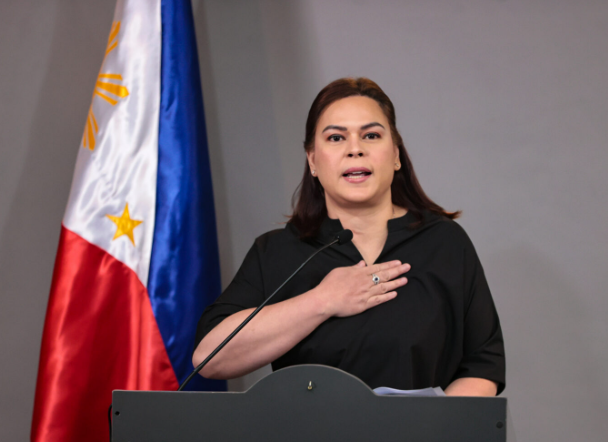
Vice President Sara Duterte has stepped up her political assault on President Ferdinand Marcos Jr, using a major religious congregation's demonstration in Manila to amplify her message that the administration is losing public confidence due to widespread governance failures and an increasingly repressive political environment. Speaking on Tuesday, June 30, Duterte interpreted the thousands of Iglesia ni Cristo members who converged along Epifanio de los Santos Avenue as evidence of a "growing sentiment" of discontent with Marcos that she claims to have warned about consistently throughout 2024.
The INC's demonstration was ostensibly organised around specific grievances: the church objected to what it characterised as "selective justice" and distortions of legal procedure, particularly following the announcement of a plunder complaint against Senator Rodante Marcoleta. However, Duterte's broader framing of the rally transcends these immediate legal disputes, positioning the gathering instead as an expression of deeper public frustration with the administration's fundamental competence and character.
Duterte's indictment of Marcos centres on economic mismanagement and presidential detachment from widespread hardship. She argues that ordinary Filipinos face mounting pressure from inflation, employment insecurity, and escalating costs of basic necessities—challenges she contends Marcos either ignores or mishandles through ineffective governance. Rather than formulating substantive policy responses to these entrenched problems, Duterte alleges, the administration has prioritised suppressing criticism and constraining democratic participation.
The vice president characterises government responses to dissent as fundamentally authoritarian in character. She suggests that critics face intimidation whether they question alleged financial impropriety within Malacañang, assess the administration's track record, or raise concerns about the President personally. This pattern, Duterte argues, represents a systematic erosion of free expression and democratic accountability—the institutional safeguards that legitimise governance and protect citizens from abuse of state power.
Duterte's escalating rhetoric about democratic backsliding resonates particularly in Southeast Asia's political landscape, where several governments have faced international scrutiny over press freedom, civil liberties, and institutional independence. Her warnings about an "increasingly oppressive political environment" and government intimidation of critics speak to concerns that extend beyond immediate partisan conflict into questions about whether democratic institutions retain meaningful capacity to constrain executive authority and protect dissenting voices.
The vice president contends that Marcos himself embodies the failures she describes. She portrays him as lacking the character and leadership qualities necessary for navigating complex national challenges, instead allowing his political weaknesses to metastasise into systemic governance problems. Duterte suggests that a president unable to confront legitimate policy failures through competent administration inevitably turns to repression, creating a vicious cycle where declining legitimacy produces heightened authoritarianism.
Duterte's framing strategically elevates the conflict beyond conventional political competition. She argues the dispute concerns "the honour of the State and the future of a people," language that positions her criticism as patriotic obligation rather than partisan opportunism. By emphasizing that Filipinos "continue to bear the weight of economic hardship," she anchors her critique in tangible suffering—inflation, joblessness, reduced purchasing power—rather than abstract institutional concerns, making her message accessible to voters experiencing material distress.
This escalation occurs as Duterte herself faces impeachment proceedings initiated by the House of Representatives. The charges against her include alleged threats directed at Marcos and his wife, unexplained accumulation of wealth, and misuse of confidential government funds. The Senate Impeachment Court is scheduled to commence her trial on July 6, creating a politically charged environment where both figures are simultaneously accusing each other of grave misconduct and constitutional violations.
The timing of Duterte's statement during a major public rally generates mutual reinforcement between her political messaging and opposition mobilisation. Massive gatherings like the INC demonstration—regardless of their ostensible organisational purpose—provide platforms for broader anti-administration sentiment and create visual evidence of public dissatisfaction that political figures can amplify through media statements. For Duterte, citing the Edsa rally as validation of her criticisms lends apparent grassroots legitimacy to her charges.
The ideological stakes of this conflict warrant attention from Malaysian observers monitoring regional democratic trajectories. Southeast Asia contains multiple democracies where executive-legislative tensions have periodically threatened institutional stability and civil liberties. The Marcos-Duterte confrontation illustrates how declining institutional trust, economic anxiety, and personalised political rivalries can destabilise even ostensibly consolidated democratic systems. Both figures command substantial political constituencies and institutional resources, making their conflict potentially consequential for Philippine democratic stability.
Moreover, the confrontation highlights vulnerability to cycles of mutual accusation where both sides claim to defend democracy while attacking the other for authoritarianism. Such dynamics risk normalising increasingly polarised discourse and weakening commitment to institutional processes among contending factions. If impeachment proceedings are perceived as politically motivated rather than principled accountability, public faith in constitutional mechanisms deteriorates regardless of trial outcomes.
The underlying economic grievances Duterte emphasises—inflation, employment, cost of living—are regionally resonant concerns affecting several Southeast Asian nations. Philippine voter frustration over economic management mirrors anxieties in neighbouring countries, suggesting that Duterte's appeal to material hardship taps into widespread regional dissatisfaction with governance capacity and distributional outcomes. Her political success in channelling such frustration could influence opposition strategies across Southeast Asia.
As the Senate Impeachment Court prepares to hear charges against Duterte, her public statements attacking Marcos and his administration's legitimacy represent an attempt to shift political terrain from her own legal vulnerabilities to broader systemic critiques of presidential governance. Whether this rhetorical strategy influences proceedings remains uncertain, but her willingness to invoke major public demonstrations and frame the dispute in constitutional rather than merely partisan terms indicates determination to sustain pressure on an administration she portrays as fundamentally illegitimate.

