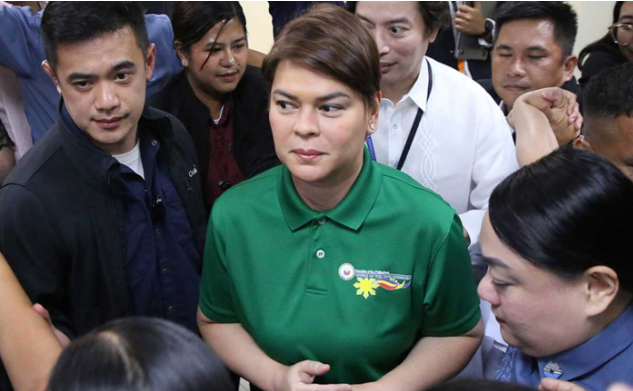
The impeachment trial of Philippine Vice President Sara Duterte entered its fourth day on Tuesday with the defendant maintaining her position that prosecutors have failed to establish a factual basis for charges she conspired to assassinate President Ferdinand R. Marcos Jr, First Lady Liza Marcos, and former House Speaker Martin Romualdez. In a statement released as Senate proceedings resumed, Duterte characterised the prosecution's case as fundamentally deficient, arguing that the presentation of evidence thus far had demonstrated precisely what her legal team had contended from the outset: the allegations rest on conjecture rather than substantiation.
The focus of Tuesday's session centred on Article IV of the formal complaints, which addresses the alleged kill plot that Duterte herself had publicly disclosed in March, creating one of the Philippines' most polarising political crises. The prosecution called Zuleika Lopez, Duterte's chief of staff, as its third witness, though legal observers have noted that the House prosecution panel has managed to call only two witnesses in the first four days and has completed barely half of the eleven days allocated for arguments surrounding this specific article. The glacial pace raises questions about the prosecution's preparedness and strategic approach, suggesting the entire Senate impeachment court process could extend well into 2027 given the projected ninety-two-day timeline.
During cross-examination on Tuesday, Mark Vinluan, one of Duterte's defence lawyers, exposed apparent discrepancies in documentation presented by Jeremy Lotoc, the National Bureau of Investigation's Regional Director for the Bangsamoro Autonomous Region in Muslim Mindanao. The inconsistencies involved conflicting dates in affidavits and mismatched docket numbers within NBI files, raising questions about the investigative agency's record-keeping and the reliability of evidence submitted to the Senate court. These technical vulnerabilities in the prosecution's documentary evidence have become a focal point for Duterte's defence strategy, which appears designed to undermine the credibility of the entire case by highlighting procedural and evidentiary defects.
In her Tuesday statement, Duterte articulated a broader constitutional argument about the nature of impeachment proceedings. She contended that repeatedly asserting threats without substantiation, inventing perpetrators of violence that do not exist, and manufacturing evidence to buttress unproven allegations fundamentally violates the principle that impeachment must rest on factual foundation rather than political narrative. This framing positions the trial not merely as a dispute over specific allegations but as a test of whether the Senate impeachment court will enforce evidentiary standards or permit the proceedings to become a vehicle for political prosecution. The vice president emphasised that such procedural collapse would damage institutional integrity, erode public confidence in governance, squander resources needed elsewhere, and ultimately corrupt the institutional search for truth.
The legal and political stakes of this trial extend well beyond Duterte's political future. Southeast Asian observers have noted that the trial reflects broader tensions within Philippine democracy regarding the appropriate use of impeachment as a mechanism for addressing high-level political conflicts. In Malaysia and other regional democracies, similar questions have arisen about whether constitutionally serious removal proceedings should be deployed in contexts of routine political disagreement or reserved for genuine abuse of power. The Duterte trial, broadcast extensively across Philippine media and discussed throughout Southeast Asia's political circles, may influence how other nations contemplate the balance between parliamentary accountability mechanisms and the risks of weaponising impeachment for partisan purposes.
Duterte's refusal to attend Senate proceedings in person remains strategically noteworthy. While her legal team has mounted vigorous defences through cross-examination and public statements, the vice president's physical absence from the courtroom has become a subsidiary issue in itself. Some political analysts interpret her non-attendance as signalling confidence in her legal position or as a statement of delegitimisation regarding the proceedings' fairness, while others suggest it reflects calculation that direct engagement might expose her to unfavourable media narratives. Regardless of intent, her absence shapes how the trial unfolds in the Philippines' information ecosystem, where her presence or absence carries symbolic weight beyond mere courtroom procedure.
The prosecution's sluggish progress through even a single article of the multi-part impeachment complaint suggests that the Senate court faces substantial time management challenges. With only two witnesses presented across four days and eleven days theoretically available for Article IV alone, the arithmetic indicates that the prosecution may struggle to complete comprehensive examination of its evidence within allocated timeframes. If the pattern continues, the trial's projected extension into early 2027 may prove optimistic, potentially creating a political situation in which the trial's resolution becomes entangled with Philippine electoral cycles and broader shifts in the political landscape. This temporal dimension adds pressure to both prosecution and defence to make their cases efficiently while maintaining evidentiary rigour.
The technical evidentiary problems exposed during Lotoc's cross-examination highlight practical challenges facing the prosecution. Inconsistent dating and mismatched docket numbers, while potentially explainable through clerical error or differing record-keeping systems, provide Duterte's defence team with concrete points to contest witness credibility and documentary reliability. In an impeachment context, where senators must be persuaded that the charges warrant removal of a sitting official, such technical defects carry disproportionate weight because they undermine confidence in the entire investigative foundation. The NBI, as the prosecution's primary witness provider, bears institutional responsibility for the precision of its records, and lapses in that precision ripple through the entire prosecution narrative.
For Malaysian observers of Philippine politics, the Duterte trial illustrates how constitutional crises and institutional conflicts in neighbouring democracies can raise important questions about governance principles applicable across Southeast Asia. The trial's focus on evidentiary standards, the proper scope of impeachment procedures, and the responsibility of investigative agencies to maintain meticulous records touches issues relevant to any constitutional democracy. Malaysia's own experience with high-level political accountability mechanisms, including anti-corruption proceedings and parliamentary oversight procedures, provides comparative context for evaluating whether the Philippine Senate is handling its impeachment responsibilities appropriately. The trial thus functions as a practical civics lesson about the mechanics and vulnerabilities of constitutional government across the region.

