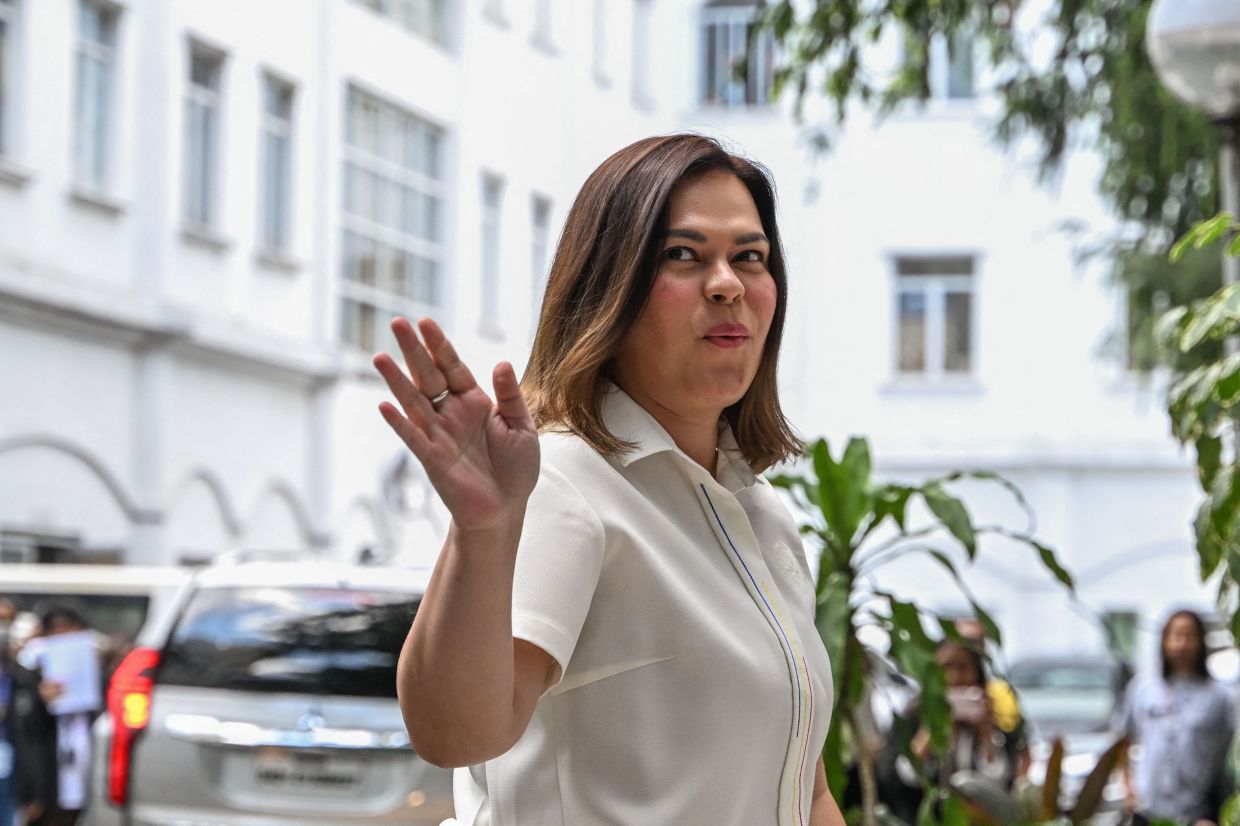
Vice President Sara Duterte remains outside the Philippines as her impeachment proceedings advance, with the presidential palace formally confirming on Tuesday that she obtained official approval for an extended foreign journey lasting through the end of July. Palace press officer Claire Castro disclosed that President Ferdinand Marcos Jr authorised the trip through the Office of the Executive Secretary, permitting Duterte to travel from July 16 through 31 across multiple countries. The timing of her departure—occurring while formal charges against her are being heard—has drawn attention to the constitutional questions surrounding a sitting vice president's ability to leave jurisdiction during an active impeachment trial.
The itinerary for Duterte's personal trip encompasses five nations: Qatar, Germany, the United Kingdom, Northern Ireland, and the Netherlands. Defence spokesperson lawyer Michael Poa indicated during Tuesday's proceedings that Duterte is currently located in The Hague, the Dutch city home to international legal institutions. Poa suggested her return to the Philippines would occur relatively soon, though he provided no specific timeline. The confirmation of her presence in the Dutch capital carries particular significance given the family circumstances that appear to have motivated at least part of her journey abroad.
Duterte is in The Hague to be near her father, former President Rodrigo Duterte, who has been detained there since March of the previous year pending trial before the International Criminal Court. The elder Duterte faces charges of crimes against humanity, specifically allegations that he served as an indirect co-perpetrator in extrajudicial killings carried out during the anti-drug and anti-criminal campaigns spanning 2011 to 2019. These operations occurred while he held the position of Davao City mayor and subsequently during his tenure as Philippine president. His arrest followed Philippine authorities' execution of an ICC warrant, representing a historically unprecedented moment in the nation's political landscape.
For Malaysian and Southeast Asian observers, the case of Rodrigo Duterte represents a watershed moment in regional accountability and the reach of international legal mechanisms. The ICC's intervention signals that even heads of state or former leaders cannot assume immunity from prosecution for systematic human rights violations, a principle with ramifications throughout the region. The detention of a former Philippine president on international criminal charges establishes precedent that challenges the traditional understanding of executive privilege and state sovereignty in Southeast Asia. Other regional leaders with documented records of state violence or extrajudicial operations may view this development with considerable concern.
The circumstances surrounding the extrajudicial killings during Duterte's presidency remain deeply controversial. Between his assumption of office in 2016 and his departure in 2022, thousands of individuals died in operations framed as part of the war on drugs. Human rights organizations have documented patterns suggesting systematic targeting rather than isolated incidents, characteristics that distinguish mass killings from ordinary criminal activity. The ICC's determination to prosecute Duterte as an indirect co-perpetrator implies that prosecutors believe he bore command responsibility for operations conducted by subordinate security forces, a legal theory with significant implications for how future leaders may be held accountable.
Sara Duterte's decision to travel to The Hague while facing impeachment charges in Manila reflects the complex political dynamics within Philippine governance. Her defence team has maintained that the vice president remains engaged with the legal process, with Poa's statement suggesting imminent return. However, the optics of the impeachment trial proceeding without the defendant present raises questions about the adequacy of the proceedings themselves. Constitutional scholars have noted that defendants in impeachment trials possess the right to attend proceedings and confront evidence against them, though absences do not automatically render trials invalid.
The impeachment charges against Duterte have become increasingly contentious within Philippine politics, with supporters and critics sharply divided over the substance of allegations and the appropriateness of the proceedings. The fact that President Marcos Jr approved her foreign travel suggests at minimum that the executive branch has not viewed her departure as constituting contempt or flight. The approval mechanism itself raises interesting questions about the separation of powers: whether a president should exercise discretion over a vice president's international movement, particularly when impeachment proceedings are underway. In some constitutional systems, such matters would fall entirely within the legislative sphere once impeachment had commenced.
The international dimension of this case—with elements scattered across Manila, The Hague, and other capitals—illustrates how twenty-first-century political crises often transcend national borders. The ICC's involvement in prosecuting a Southeast Asian leader represents one manifestation of globalised accountability mechanisms, while the family's international travel patterns during simultaneous legal proceedings in multiple jurisdictions demonstrate the practical complexities these situations generate. Malaysian political observers should note that Southeast Asia's judicial and quasi-judicial institutions lack comparable enforcement mechanisms, meaning that accountability for serious crimes often depends on international cooperation and mechanisms based in Europe or other regions.
The convergence of Sara Duterte's impeachment trial with her father's ICC prosecution creates unusual political pressures within the Philippine political system. Her continued absence during trial proceedings, now formally sanctioned through presidential approval, represents an unusual aspect of impeachment proceedings that typically demand the defendant's presence. The defence team's confidence in her imminent return suggests a calculated gamble that the political benefits of visiting her detained father outweigh the risks of appearing to evade domestic legal processes. Whether this strategy will ultimately prove effective in shaping public and legislative opinion regarding the impeachment charges remains uncertain as the proceedings continue in her absence.

