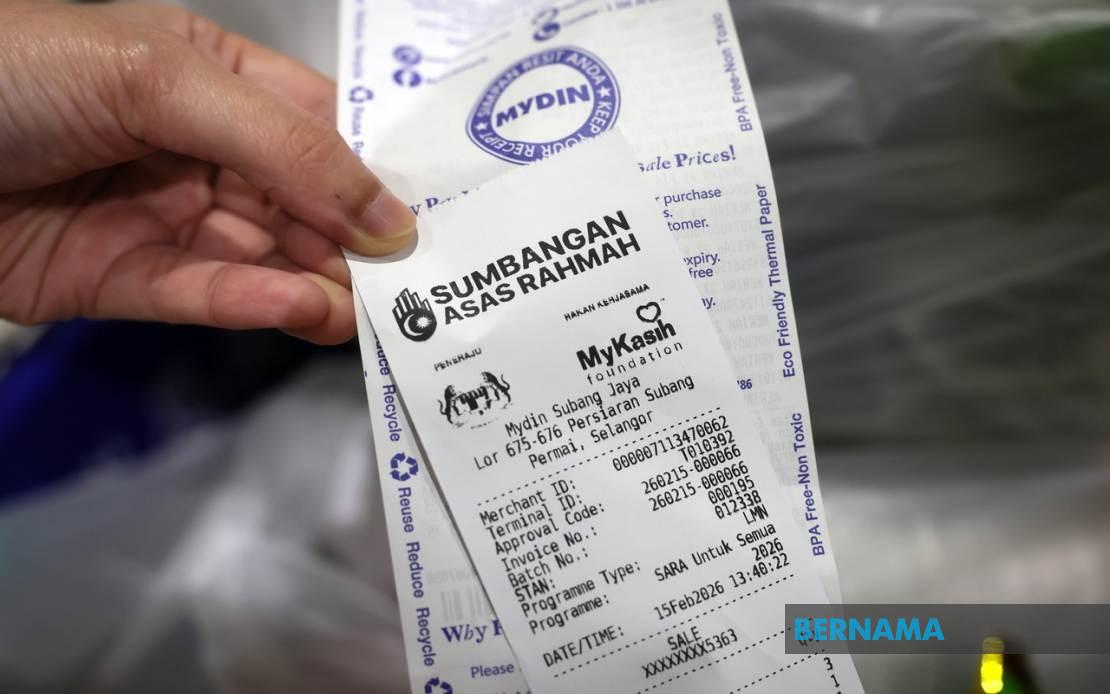
Malaysia's Sumbangan Asas Rahmah (SARA) programme has demonstrated remarkable operational success, with nearly nine million monthly cash assistance beneficiaries utilising the system at a 99 per cent rate and contributing RM3.45 billion to the economy so far this year. The Ministry of Finance disclosed these figures in response to parliamentary questioning from Datuk Aminolhuda Hassan, highlighting the scheme's effectiveness in delivering targeted relief to vulnerable populations during a period of sustained inflationary pressure on household budgets.
The SARA initiative operates as a cashless mechanism whereby eligible recipients receive credits loaded onto their MyKad identity cards, which can then be spent at a network of registered SARA Rakan Niaga merchants. This approach fundamentally differs from traditional direct cash transfers by channelling assistance into 15 designated categories of essential goods, encompassing basic groceries, personal hygiene items, household cleaning products, and medicines. The curated product list reflects government policy to ensure funds support genuine living cost relief rather than discretionary spending, creating a structured safety net for lower and middle-income earners grappling with inflation.
Beyond the primary SARA programme, the government has expanded its reach through the SARA Untuk Semua initiative, which extends benefits to approximately 22 million people representing 87 per cent of all eligible recipients in the broader assistance framework. This extension has generated over RM1.77 billion in documented local market transactions, demonstrating the scheme's capacity to stimulate domestic economic activity while simultaneously providing household support. The concentration of spending within local retail networks creates multiplicative economic benefits as merchants increase inventory and hiring to meet elevated demand from assistance recipients.
The Ministry of Finance characterised recipient spending performance as a critical performance metric for assessing programme effectiveness, arguing that actual utilisation rates reflect the genuine impact of assistance on household purchasing power and living standards. The 99 per cent uptake figure suggests the scheme successfully reaches its target demographic and that beneficiaries view the available product range as genuinely addressing their priority needs. This alignment between programme design and recipient behaviour indicates relatively sophisticated targeting compared to other social assistance schemes that sometimes struggle with adoption rates or recipient dissatisfaction regarding available options.
The cashless delivery mechanism provides the government with unprecedented transparency regarding aid utilisation and effectiveness, enabling real-time monitoring of which product categories experience highest demand and whether assistance reaches intended recipients for stated purposes. This technological infrastructure contrasts sharply with earlier cash transfer systems where programme administrators possessed limited visibility into how funds were ultimately spent. The detailed transaction data generated through SARA creates an evidence base for refining assistance categories and identifying emerging cost-of-living pressures affecting lower-income households most acutely.
Government commitment to the assistance framework has intensified materially, with the Ministry of Finance announcing that cumulative STR and SARA allocations will reach RM15 billion in 2026, representing a 50 per cent increase from the RM10 billion budgeted in 2024. This trajectory reflects policy recognition that cost-of-living pressures have persisted and deepened rather than dissipating, requiring sustained and expanding government intervention to maintain household purchasing power and preserve macroeconomic stability. The escalating financial commitment signals that assistance programmes have graduated from temporary crisis measures to permanent structural components of Malaysia's social safety net architecture.
The RM3.45 billion already deployed through SARA spending this year represents capital injected directly into the retail sector, predominantly benefiting small and medium-sized merchants who form the backbone of SARA Rakan Niaga networks across urban and rural Malaysia. These merchants function as crucial distribution points for the assistance programme while simultaneously gaining from increased customer transaction volumes. The commercial dynamics create natural incentives for network expansion and operational efficiency improvements, encouraging merchants to accept SARA participation even in lower-population-density areas where traditional retail margins might otherwise prove insufficient.
For regional observers, Malaysia's SARA model offers an instructive case study in technology-enabled targeted assistance delivery. The scheme demonstrates how e-wallet infrastructure and merchant networks can be repurposed to distribute social assistance with unprecedented efficiency and transparency, providing a template potentially relevant to other Southeast Asian nations confronting similar cost-of-living pressures and seeking alternatives to traditional cash transfer systems. The documented transaction data and uptake metrics provide empirical evidence supporting the viability of such approaches across diverse demographic populations and geographic contexts.
The spending concentrations and merchant participation patterns documented through SARA transactions offer policymakers granular intelligence regarding which neighbourhoods and communities experience most acute purchasing pressure and which product categories command disproportionate budget allocations among assistance recipients. This evidence base enables dynamic programme refinement rather than static annual budgeting, allowing assistance design to evolve responsively as household economic circumstances shift. The Ministry of Finance's commitment to continued monitoring and potential adjustment reflects understanding that cost-of-living assistance requires adaptive management rather than fixed implementation.
Looking forward, the SARA framework's demonstrated success in achieving near-universal uptake and generating substantial documented economic activity positions assistance programmes as both humanitarian interventions and macroeconomic stabilisation mechanisms. As inflation continues pressuring household budgets and wage growth struggles to match price increases, expanded assistance allocations serve dual functions of reducing household financial stress while maintaining consumer spending levels that sustain economic growth. The balance between targeted assistance and economic stimulus appears increasingly central to Malaysia's economic management strategy.
The parliamentary accountability mechanism through which the Ministry of Finance reported SARA performance metrics underscores institutional commitment to programme transparency and regular performance evaluation. This structured reporting framework creates expectations for continuous improvement and evidence-based policy adjustment rather than permitting assistance programmes to operate with minimal oversight. Routine parliamentary questioning regarding assistance programme performance metrics establishes norms of fiscal responsibility and results orientation that should strengthen programme design and implementation quality over time.

