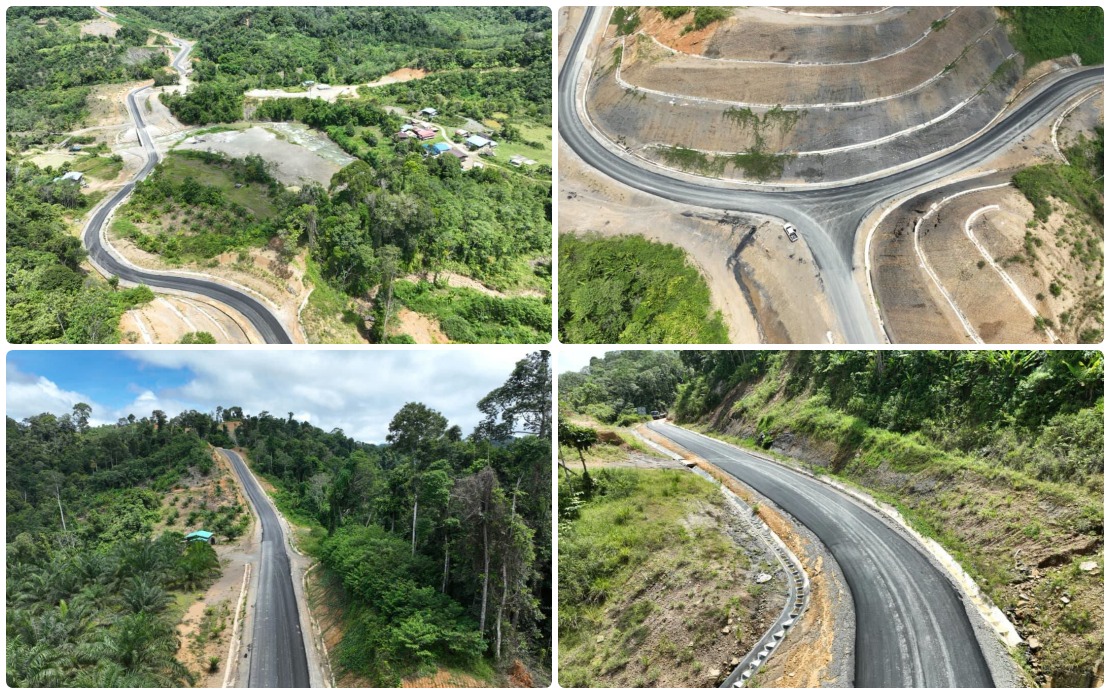
The long-awaited paving of the Sapulut-Salong-Pagalungan-Pensiangan corridor has reached Pensiangan town, marking a significant milestone in infrastructure development for Sabah's interior and delivering on a key election pledge made by the area's Member of Parliament. The completion of this vital arterial route represents more than a simple road upgrade—it signals a broader transformation strategy aimed at unlocking economic potential in one of the state's most remote constituencies.
Datuk Seri Arthur Joseph Kurup, who serves as Minister of Natural Resources and Environmental Sustainability and represents Pensiangan in parliament, highlighted the tangible benefits already emerging from the improved thoroughfare. The journey from Keningau to Pensiangan town has been compressed from over six hours to merely three, a reduction that fundamentally alters accessibility for residents and essential workers alike. This improvement addresses a long-standing challenge that previously rendered travel hazardous during adverse weather, when motorists risked becoming stranded on deteriorating routes.
The transformation is visible in the changing landscape of Pensiangan town itself. Where boats once dominated the transportation ecosystem, vehicles now populate parking areas throughout the settlement, reflecting the practical shift from water-based logistics to road-based commerce and movement. This shift carries implications for how goods, services, and people circulate through the region. Teachers, healthcare professionals, and administrative personnel can now reach their postings with greater reliability and less time lost to transit, potentially improving service delivery across education and health sectors.
Arthur's infrastructure ambitions extend well beyond the completed segment. Phase Four of the project aims to push the road network further eastward to the international border with Kalimantan, Indonesia, a development that could reshape cross-border trade dynamics and tourism potential for the Pensiangan constituency. Such expansion would position local communities closer to new market opportunities and create incentives for value-added activities serving both domestic and regional demand.
The road project forms the centerpiece of a comprehensive master development plan that Arthur has pursued over recent years. This broader vision encompasses multiple complementary initiatives designed to create integrated infrastructure supporting rural economic diversification. The completed Jalan Sinaron-Linayukan in Tongod and the partially finished Jalan Rancangan Belia Tiulon-Simbuan represent parallel efforts to expand the road network across the constituency, ensuring that improved connectivity benefits extend beyond the main highway corridor.
Commodity processing facilities are being integrated into this infrastructure framework. A Sapulut coffee processing factory under construction will allow local growers to capture greater value from their harvests rather than selling raw beans. Similarly, the Pagalungan Tamu and Salong Agrobazaar provide structured marketplaces for agricultural products, reducing intermediary costs and direct connecting farmers to buyers. The upgrading of jetty and boat facilities at Pangkalan Salong maintains the competitive advantage of water transport for goods that benefit from waterborne logistics, while complementing rather than replacing road transport.
Telecommunications infrastructure upgrades throughout the district address a constraint that often accompanies geographic remoteness. Improved telephone and internet connectivity enables residents to access digital services, market information, and educational resources previously difficult to obtain. Agricultural extension services, banking transactions, and distance learning become feasible when broadband reliability improves, amplifying the economic impact of physical infrastructure investment.
Collection and trading infrastructure demonstrates strategic thinking about how to organize agricultural commerce. The completed agricultural collection centre enables farmers to consolidate production before transport to larger markets, reducing individual transaction costs. These facilities, combined with improved roads, create conditions where smallholder farmers can operate at greater scale and efficiency.
The planned immigration and customs complex at the Kalimantan border crossing represents institutional infrastructure matched to planned economic integration. Currently undergoing approval processes, this facility would formalize and facilitate legitimate cross-border trade, potentially reducing informal arrangements that circumvent proper channels. The timing of this facility's development aligns with the road expansion, suggesting coordinated planning across multiple government agencies.
Educational infrastructure has received attention alongside commercial and transport development. The completed Sixth Form Centre at Sekolah Menengah Kebangsaan Nabawan extends secondary educational options for Nabawan district residents, reducing the necessity for talented students to relocate to urban centers for advanced studies. When combined with improved road access, such facilities can help stem youth outmigration by providing pathways for education and employment closer to home.
Arthur noted that young people are beginning to return to villages to develop agricultural land and support local economies, a demographic trend that infrastructure improvements can facilitate but rarely generate independently. Better roads reduce the relative disadvantage of rural residence, making it feasible to operate businesses serving both local and external markets. This reversal of long-standing migration patterns, if sustained, could address demographic decline in interior constituencies.
The Pensiangan development strategy illustrates how modern rural transformation requires integrated rather than piecemeal approaches. Roads enable market access, but markets require products to sell and consumers to buy. Educational infrastructure supports human capital development, while digital connectivity connects rural communities to information and opportunities. Agricultural facilities help farmers capture margins historically lost to middlemen. Together, these investments create conditions where remote interior communities might achieve genuine economic dynamism rather than merely subsisting on government transfers or traditional activities.
For Malaysian policymakers and other Southeast Asian governments, the Pensiangan experience offers lessons in constituency-level development planning. The program demonstrates how targeted investment across transportation, digital infrastructure, agricultural value addition, and education can jointly address the complex challenge of rural economic revitalization. Whether such comprehensive approaches can be replicated at scale across other interior constituencies remains an open question, but the early returns suggest that integrated infrastructure investment merits serious consideration in regional development strategies.

