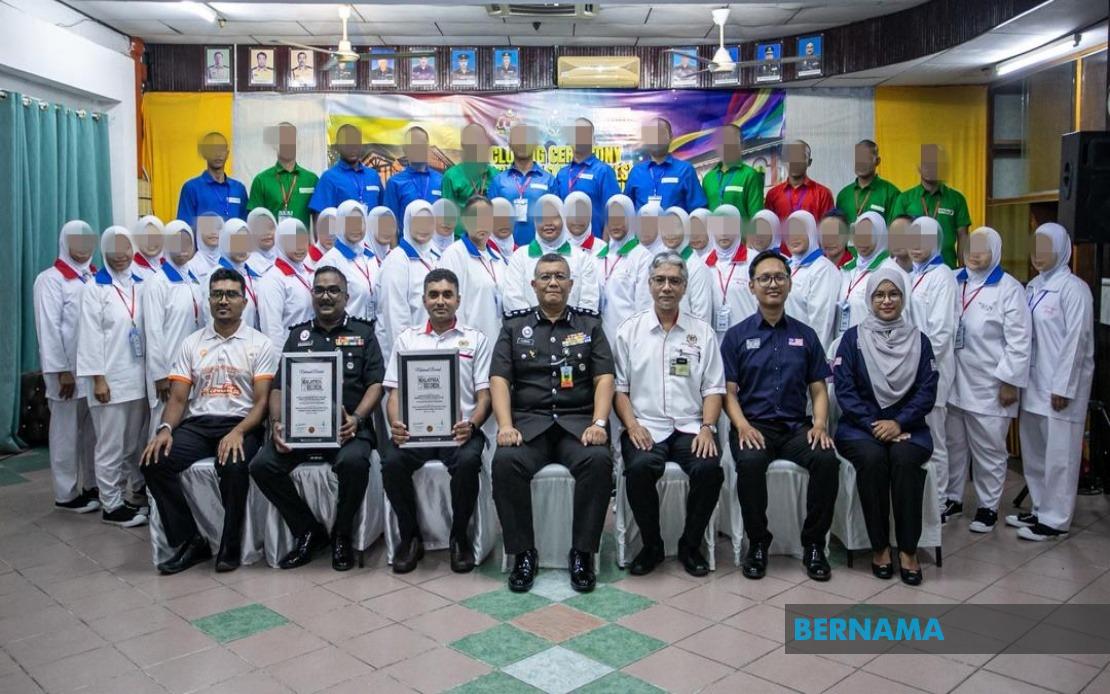
Home Minister Datuk Seri Saifuddin Nasution Ismail has commended the Malaysian Prisons Department for earning recognition from the Malaysia Book of Records in connection with a specialised medical training initiative, highlighting what he describes as a pivotal shift in the nation's approach to incarceration. The achievement centres on a Basic Life Support and Automated External Defibrillator training course conducted at the Batu Gajah Correctional Centre, in which 42 inmates participated and successfully obtained recognised qualifications.
In remarks shared via Facebook, Saifuddin underscored that the distinction reflects a broader transformation within Malaysia's penal system, one that extends beyond conventional punitive frameworks. The initiative demonstrates how correctional institutions can function as venues for meaningful skill acquisition and personal development, rather than existing solely as spaces where sentences are served. This reconceptualisation carries particular significance given ongoing international discourse about the efficacy of rehabilitation-focused versus punishment-centred prison models.
The Home Minister's emphasis on rehabilitation represents an important policy signal at a time when Southeast Asian nations are increasingly scrutinised for their correctional systems. Malaysia's investment in upskilling detainees with medically certified competencies addresses both immediate practical needs and longer-term reintegration objectives. By equipping individuals with credentials in life-saving techniques, the Prisons Department simultaneously builds human capacity within its facilities and enhances the employability prospects of those preparing for release.
Saifuddin articulated that programmes of this calibre accomplish multiple objectives simultaneously. Beyond the tangible acquisition of technical knowledge in cardiopulmonary resuscitation and defibrillator operation, such training reinforces intangible qualities including self-discipline, personal responsibility, and interpersonal confidence. These character attributes, he suggested, form essential foundations for successful community reintegration and for individuals to function productively within families and employment settings post-release.
The philosophical dimension underpinning the Prisons Department's approach, as articulated by the minister, contests the notion that correctional facilities should operate primarily as instruments of retribution. Instead, the department positions itself as an institution committed to transformation, one that provides incarcerated persons with meaningful opportunities to acquire marketable skills and to internalise values conducive to lawful citizenship. This positioning aligns with contemporary criminological research suggesting that rehabilitation-oriented interventions produce measurably better recidivism outcomes than purely punitive approaches.
The Batu Gajah Correctional Centre's accomplishment carries implications that extend beyond the immediate cohort of 42 participants. Recognition through the Malaysia Book of Records elevates the profile of correctional innovation within public consciousness and may encourage similar initiatives across other facilities within the Malaysian Prisons Department network. Such institutional visibility can catalyse broader conversations about criminal justice reform and the potential for embedding occupational training within custodial settings.
For Malaysian policymakers and regional observers, the initiative exemplifies how resource-constrained correctional systems can leverage partnerships and existing expertise to deliver substantial benefits. The implementation of medical training within a prison environment required coordination between correctional authorities, qualified instructors, and relevant credentialling bodies, demonstrating the feasibility of cross-sector collaboration in pursuit of rehabilitative goals. This model potentially offers lessons applicable to other Southeast Asian jurisdictions grappling with prison overcrowding and limited rehabilitation infrastructure.
Saifuddin's public commendation serves a strategic communicative function, signalling governmental commitment to rehabilitation-centred corrections at a moment when Malaysian public discourse often emphasises punitive responses to crime. By highlighting institutional success stories and linking them to broader departmental philosophy, the minister shapes narratives about Malaysia's correctional system in ways that may influence public opinion and political support for rehabilitation-focused budgeting and policy initiatives.
The minister has further indicated that the Prisons Department intends to expand similar high-impact programmes across its facilities, suggesting that the Batu Gajah achievement represents not an isolated accomplishment but rather a template for systematic institutional development. This expansion strategy would require sustained investment, training capacity development, and partnerships with external organisations capable of delivering specialised instruction. The availability of such resources remains a practical constraint within many correctional systems, presenting ongoing implementation challenges.
Looking forward, the initiative's success metrics will likely extend beyond Malaysia Book of Records recognition to encompass post-release employment outcomes and recidivism rates among programme participants. Longitudinal tracking of individuals who complete such training could provide empirical evidence regarding the rehabilitative efficacy of skills-based interventions within custodial settings. Such data would strengthen advocacy for expanded funding and institutional prioritisation of vocational and medical training programmes.
The Batu Gajah achievement ultimately reflects a maturing understanding within Malaysian correctional policy that rehabilitation and skill development represent investments in public safety and social stability. By transforming incarcerated individuals into trained life-savers, the Prisons Department simultaneously addresses human resource needs within communities whilst providing individuals with pathways toward dignified reintegration. This dual benefit structure positions rehabilitative programming as aligned with both humanitarian values and pragmatic governance objectives.

