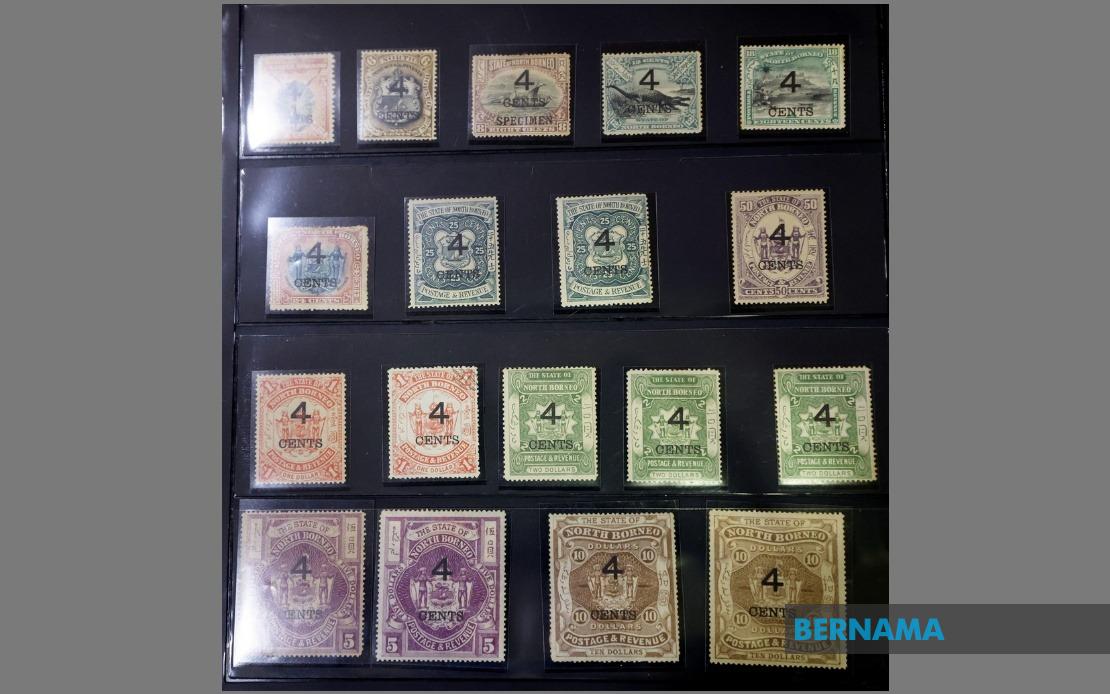
Sabah's postal heritage faces an existential threat as collectors and enthusiasts struggle to preserve North Borneo stamps spanning more than a century of the territory's history. The philatelic collection, issued between 1883 and 1963, represents far more than decorative objects or investment pieces—they constitute tangible records of the region's colonial past, economic activities, and cultural identity during formative periods of development. As younger generations gravitate away from traditional stamp collecting, institutions and dedicated hobbyists are intensifying preservation efforts to ensure these miniature historical documents survive for posterity.
Dr Shari Jeffri, founder and president of the Borneo History Association, has emerged as a principal advocate for this conservation movement. At 56 years old, Shari views the scattered stamp collections across Sabah as a "living archive" that demands systematic care and intergenerational transmission. His perspective carries particular weight given his four decades of immersion in philately and his painstaking stewardship of stamps passed down through his family. He underscores a generational divide that threatens the hobby's continuity: contemporary youths have minimal exposure to stamp collecting compared to earlier cohorts, and active practitioners are increasingly rare. This demographic shift compounds preservation challenges, as the custodians of knowledge about authentication, storage, and historical context retire without successors.
Market surveys conducted in Kota Kinabalu's antique district reveal the precarious position of these artifacts. North Borneo stamps have become progressively difficult to source, with surviving specimens commanding elevated prices determined by age, physical condition, and scarcity. A particularly significant discovery emerged from one antique shop's inventory: an album containing a six-cent stamp portraying Queen Elizabeth II alongside a Dusun woman, alongside a ten-cent denomination depicting logging operations, both issued during the 1954-1961 period. These finds illustrate how scattered collections remain dispersed throughout commercial channels, vulnerable to acquisition by non-specialists or even destruction through ignorance.
Shari's personal journey illuminates how stamp collecting became embedded in Sabah's social fabric during the colonial era. His grandfather, employed at the Recreation Club Jesselton in the 1920s, developed his philatelic interest by observing British officers who pursued the hobby with enthusiasm. That cross-cultural transmission of passion shaped an entire family lineage of collectors. Shari himself encountered stamps at age seven but only seriously committed to the pursuit during secondary school, where he and fellow students bonded through shared acquisitions and exchanges. This biographical pattern reveals how the hobby functioned as an educational and social vehicle, particularly among educated elites during the twentieth century.
The foundational 1883 North Borneo issue represents the crown jewel of serious collections and exemplifies the stakes involved in preservation. These earliest stamps, featuring brown sailing boats with postal cancellations, command exceptional esteem among philatelists because their presence completes historical narratives. Shari treasures two specimens from this inaugural series, recognizing that each stamp transcends its utilitarian postage function to become a documentary artifact capturing a specific historical moment. The rarity and value intensify when stamps retain complete postal cancellations—the date stamps, office identifiers, and location marks that transformed a single envelope into a dated historical record. Without these markings, the stamps' evidentiary power diminishes substantially.
The visual evolution of North Borneo stamps tracks broader changes in territorial identity and British colonial administration. Initially, designers incorporated imperial symbols including lions, boats, and tigers alongside organizational mottos. However, a significant redesign in 1894 reoriented the aesthetic paradigm toward representing Borneo's distinctive natural world. Flora, fauna, and indigenous wildlife became central design elements, reflecting both scientific interest in the region's biodiversity and emerging consciousness of local identity. A subsequent 1935 redesign further crystallized Sabah's visual representation, while denominations expanded from two sen to one dollar, accommodating the territory's expanding economy and postal needs across five decades of continuous service.
Authentication and preservation standards form the technical backbone of serious collecting. Shari emphasizes that stamps must be stored exclusively in acid-free albums to prevent chemical degradation that causes fading and structural deterioration. Paper composition and adhesive properties constitute additional authentication markers that distinguish genuine stamps from counterfeits or inferior specimens. Recognizing the complexity of these technical dimensions, Shari sought mentorship from Singapore-based experts Voon Kyam Foh and Tan Chun Lim, while consulting specialized catalogues like Commonwealth & British Empire Stamps. This international expertise network demonstrates how philately, despite its highly localized collecting focus, operates within transnational communities of practice that maintain rigorous standards.
The economic dimension adds urgency to preservation initiatives. As postage-paying letters became obsolete through digital communication, North Borneo stamps lost their primary utilitarian function, transitioning entirely into the domain of historical artifacts and collectibles. This status shift elevated their monetary value while simultaneously rendering them vulnerable to speculative trading divorced from historical appreciation. Commercial dealers, antique shops, and auction houses treat valuable stamps primarily as commodities rather than cultural patrimony. Without institutional frameworks for preservation and scholarly study, these collections risk fragmentation, loss, and degradation through circulation in an unregulated market economy.
Dr Shari Jeffri's advocacy for systematic preservation represents a counterforce to market fragmentation and generational forgetting. His foundational work with the Borneo History Association reflects recognition that philatelic collections require more than individual custodianship to survive intact. Institutional support, educational programs engaging younger audiences, and digitization initiatives could stabilize collections currently scattered across private hands and commercial channels. The North Borneo stamps constitute irreplaceable primary sources for understanding Sabah's economic history, colonial administration, indigenous cultures, and modernization trajectory. Their preservation transcends nostalgia or hobby enthusiasm to become an obligation toward historical documentation and cultural inheritance.
The challenge facing Sabah's philatelic heritage mirrors broader struggles across Southeast Asia to document and preserve material records of pre-independence and colonial periods. As witness bearers to particular historical moments, these stamps carry evidentiary weight that written archives cannot replicate. Their visual aesthetics communicate how territorial authorities represented themselves and understood their domains. The declining collector population threatens this knowledge ecosystem; as practitioners retire without passing comprehensive understanding to successors, contextualized interpretation becomes increasingly difficult. Investment in collection cataloguing, conservation laboratories, and public exhibitions could transform dispersed private holdings into accessible historical resources while rekindling public interest in philately as a gateway to regional history.

