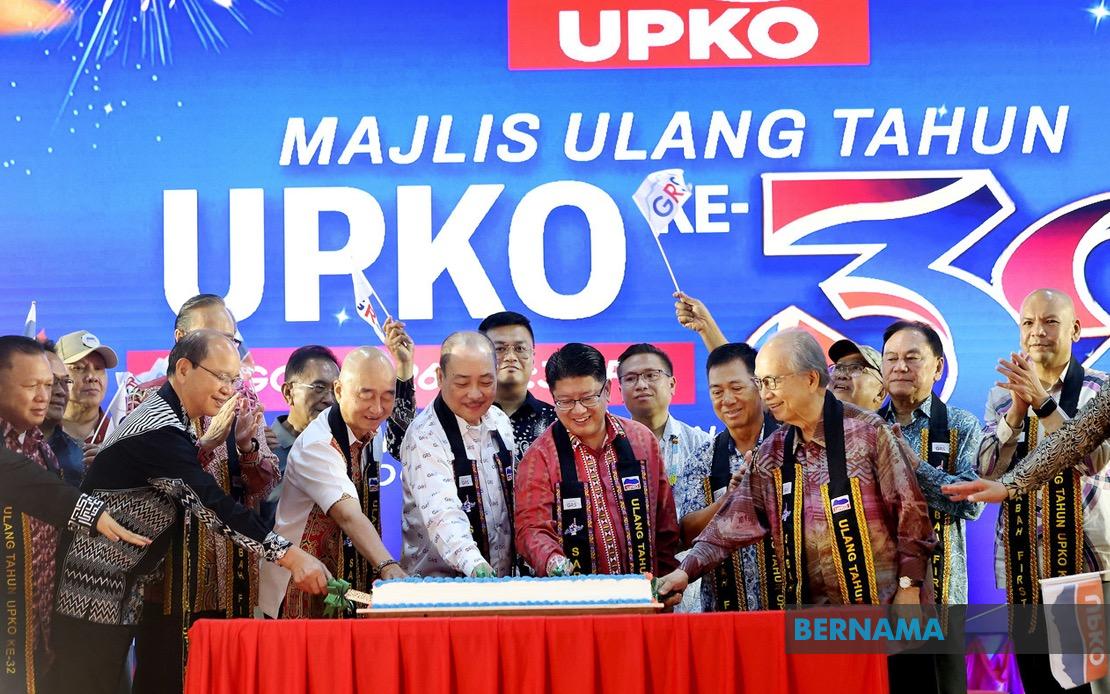
Sabah's Chief Minister Datuk Seri Hajiji Noor has reiterated the state government's commitment to ensuring that all revenue flowing from the Federal Government directly benefits the people of Sabah through targeted development initiatives and welfare assistance. Making the pledge during his address at the 32nd anniversary celebration of the United Progressive Kinabalu Organisation (UPKO) and the opening of the 17th UPKO Triennial Delegates Conference in Kota Kinabalu, Hajiji outlined how the state intends to deploy the enhanced federal funding for immediate and tangible improvements across the region.
The centrepiece of Sabah's spending strategy is the recent elevation of the interim special grant payment to RM1.5 billion annually, a decision made by Prime Minister Datuk Seri Anwar Ibrahim that Hajiji welcomed as a significant boost to state finances. The expanded allocation represents a meaningful injection of capital that the Sabah government has already begun mobilising, with RM600 million of the initial RM1.5 billion payment having been disbursed in June. This structure allows the state to begin executing priority projects without waiting for the full annual allocation to be received.
Transportation infrastructure forms a core pillar of Sabah's development roadmap. The state government intends to utilise the increased federal grant to expand its network of paved roads and concrete bridges, addressing long-standing connectivity challenges across rural and semi-rural areas. For a state characterised by difficult terrain and scattered settlements, improved road access translates directly into enhanced mobility for residents, reduced transportation costs for agricultural and resource-based industries, and better emergency response capabilities. The emphasis on concrete bridges suggests a focus on durability and longevity, ensuring that capital investments generate lasting returns rather than requiring frequent costly maintenance.
Beyond transportation, the expanded federal funding will support critical utilities that underpin economic development and quality of life. Water and electricity supply improvements across Sabah represent foundational investments that enable both household welfare and commercial activity. In a state where utility infrastructure gaps remain pronounced in numerous districts, targeted upgrades address a persistent bottleneck limiting agricultural productivity, manufacturing capability, and population retention in peripheral regions. The government's explicit commitment to these sectors signals recognition that development extends beyond headline projects to encompass essential services that anchor community wellbeing.
Hajiji outlined two flagship welfare programmes slated to receive funding allocations: the Rumah Mesra Sabah Maju Jaya (SMJ) housing initiative and the Sentuhan Kasih Rakyat (SYUKUR) assistance scheme. The SMJ programme represents the state's effort to address housing deficits through standardised, affordable construction projects, thereby improving residential standards for lower-income households. The SYUKUR programme complements this approach by providing direct assistance to families facing hardship, creating a dual-track strategy combining structural improvements with immediate welfare relief.
The state government has simultaneously focused on strengthening its own revenue generation capacity, a complementary strategy to federal allocations. Sabah's annual revenue collections have been consistently maintained at RM7 billion since 2022, reflecting stable tax administration and economic activity across the state. Government projections anticipate this figure rising to RM8 billion in the current year, representing growth of approximately 14 percent and indicating improving compliance, economic expansion, or enhanced collection efficiency. This upward trajectory is significant because it demonstrates that while federal transfers remain important, Sabah's fiscal trajectory reflects growing self-sufficiency and reduced dependency on central government support over time.
The broader context of Sabah's economic resilience becomes particularly relevant when considered against the backdrop of both domestic and international headwinds. Malaysia's economy, alongside regional peers, has navigated inflationary pressures, volatile commodity markets, and geopolitical uncertainties in recent years. That Sabah has maintained stable revenue collection and achieved growth forecasts under these conditions speaks to underlying economic fundamentals rooted in the state's natural resource endowment and diversifying economic base. Hajiji's characterisation of Sabah as a strategic investment destination reflects confidence that the state can continue attracting capital despite broader uncertainties.
For Malaysian readers and policymakers, Sabah's experience illustrates the ongoing tension between centralised fiscal transfers and state-level revenue autonomy. The Federal Government's decision to increase the interim special grant acknowledges regional disparities and Sabah's particular development needs, yet the state's ability to sustain and grow its own collections suggests that a sustainable model involves both central support and local revenue generation. The distribution model outlined by Hajiji—channelling all federal revenue back to constituents—represents a political commitment to transparency and accountability, though implementation fidelity will determine actual impact on citizens.
The concentration of announced spending on infrastructure and welfare reflects conventional development priorities, but their sequencing and geographic distribution remain crucial variables. Roads and bridges that serve primarily urban or commercially strategic corridors generate different distributional outcomes than those reaching remote communities. Similarly, housing and assistance programmes can be designed to prioritise particular demographic groups or geographic regions. Hajiji's speech indicates intent but leaves specifics regarding prioritisation and implementation timelines to subsequent policy documentation.
For Southeast Asia more broadly, Sabah's development challenges and policy responses mirror patterns evident across the region. Bridging infrastructure deficits, ensuring equitable utility access, and balancing federal transfers with local revenue generation constitute shared policy preoccupations for states and provinces throughout the ASEAN area. The particular emphasis on federal funding suggests that Sabah, like comparable regions, views central government transfers as essential to achieving development parity, a dynamic likely to persist absent structural changes to revenue distribution formulae.
Moving forward, the effectiveness of Sabah's development agenda will depend significantly on implementation capacity and sustained fiscal discipline. The announcement of funding allocations and policy intentions necessarily precedes actual project delivery, which involves procurement, contractor management, quality assurance, and adaptation to local conditions. The state government's demonstrated ability to maintain consistent revenue collection suggests institutional capability, though scaling implementation across diverse geographic and terrain conditions presents distinct challenges. Hajiji's emphasis on people-centric returns from federal funding reflects political sensitivity to the need for tangible improvements that resonate with constituents, a necessary orientation for any government seeking to convert financial allocations into genuine wellbeing gains.

