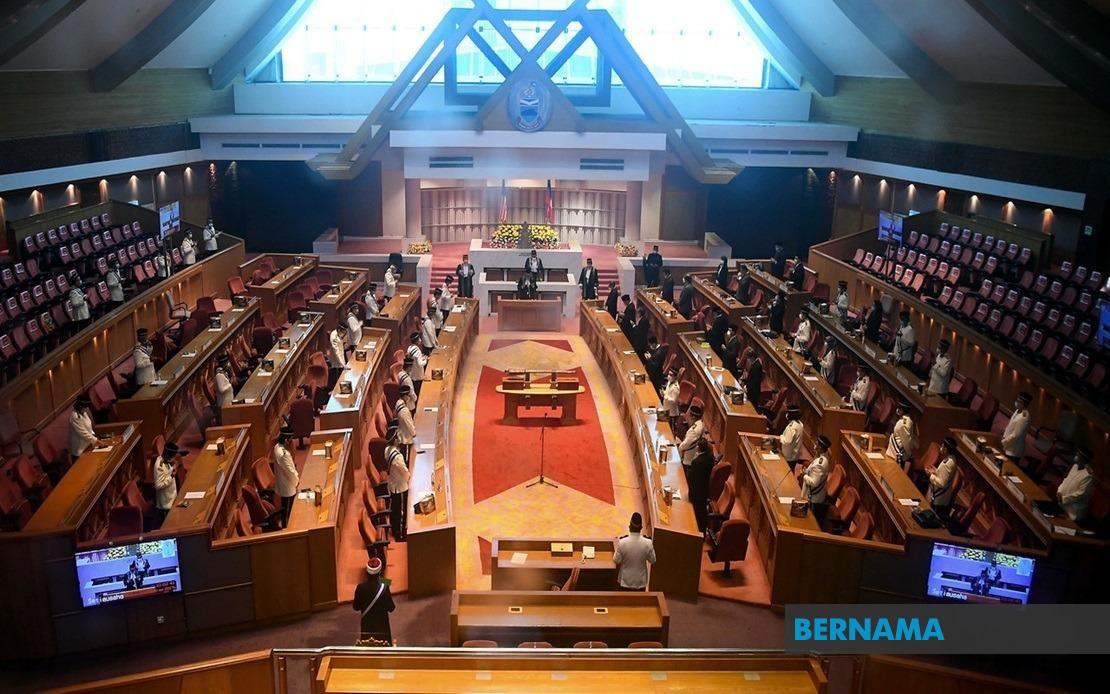
Sabah's battle against water wastage has reached a critical juncture, with state authorities unveiling an ambitious roadmap to slash non-revenue water losses from their current troubling level of 59.6 per cent to 45 per cent within the next six years. Speaking in the state legislative assembly in Kota Kinabalu, Deputy Minister Datuk Limus Jury outlined a multi-pronged strategy that underscores the urgency of addressing water leakage and illegal connections—a persistent challenge across Southeast Asian utilities.
The non-revenue water figure, which captures water lost through leakage, theft, and metering errors before it reaches paying customers, represents one of the most visible signs of infrastructure decay in Sabah's water system. At nearly 60 per cent, the state's loss rate stands well above the national average and far exceeds the performance of leading utilities in the region, signalling both the scale of the problem and the potential for recovery. For a state grappling with growing urban populations and industrial demands, particularly in fast-developing corridors like Kota Kinabalu and coastal towns, this leakage represents not only squandered resources but also a missed opportunity for revenue generation that could fund further improvements.
To accomplish this reduction, the Sabah Water Department has engineered a comprehensive framework combining infrastructure renewal with operational discipline. The department is systematically replacing critical pipelines that have degraded over decades, upgrading consumer metering systems that have surpassed their seven-year useful life, and deploying advanced pressure management techniques to minimise burst incidents. Critically, the strategy also targets the illegal water connections that have proliferated in informal settlements and rural areas, a problem that requires both technical solutions and community engagement.
Integrated operations emerge as a cornerstone of the reform agenda, allowing the water department to coordinate detection and repair efforts across districts with greater efficiency. This approach moves beyond reactive maintenance—where teams respond only after major failures occur—towards proactive identification of leaks through regular surveys and monitoring systems. For Malaysian readers familiar with the recurring water crises in Selangor and other states, Sabah's emphasis on integrated operations offers a instructive model of how coordination across departments can yield measurable results.
Funding mechanisms underpinning these initiatives reflect a partnership between federal and state coffers, with the 13th Malaysia Plan providing the framework. Under this umbrella programme, federal support is reaching 18 districts whilst state allocations cover an additional 12 districts, ensuring that water loss reduction efforts are not concentrated solely in urban centres but distributed across Sabah's diverse geography. This inclusive approach acknowledges that leakage in rural districts, though often less visible, collectively represents substantial waste that compounds when multiplied across the entire state.
Three districts—Kota Kinabalu, Tawau, and Lahad Datu—have been designated as flagship sites for intensive rehabilitation work. Kota Kinabalu's project, which commenced in September 2022 and is nearing completion this month, has been engineered to recover 10 million litres of water daily, a figure that alone could supply thousands of households. The twin projects in Tawau and Lahad Datu, which began earlier this year, target combined recovery of 24 million litres daily, with completion anticipated in 2027. These concrete targets and timelines provide accountability mechanisms that are often lacking in infrastructure announcements across the region.
The scale of potential water savings carries profound implications beyond accounting ledgers. In Southeast Asia, where rapid urbanisation is straining water resources and climate variability threatens dry seasons, recovering even a fraction of lost water can defer expensive desalination projects and upstream dam development. For Sabah specifically, improved water retention means greater supply security during the dry months, reduced pressure on watersheds in the interior, and improved reliability of supply to agricultural regions that support the state's rural economy.
Yet achieving a 14-percentage-point reduction in non-revenue water within six years demands more than infrastructure investment. It requires sustained commitment to enforcement against illegal connections, training of technical staff in modern leak detection methodologies, and public education campaigns that cultivate conservation consciousness. International experience from cities that have successfully reduced water losses suggests that visible improvement requires visible leadership—when communities see that authorities are genuinely tackling waste, voluntary compliance with billing and conservation measures typically improves.
The economic dimension cannot be overlooked. Every percentage point reduction in non-revenue water translates directly into additional revenue for the water utility, funds that can be reinvested in expanding coverage to underserved areas or upgrading treatment facilities. For a state where access to clean water remains uneven between urban and rural zones, this revenue recycling becomes the engine of inclusive service expansion. Neighbouring states and regional utilities monitoring Sabah's progress will be watching closely, as successful implementation could provide a template for similar campaigns across Malaysia and the broader ASEAN region.
Completing these ambitious timelines will test the Sabah Water Department's capacity for sustained execution. Technical challenges—such as locating legacy pipes laid decades ago without proper documentation, or engineering solutions for pressure management in areas with topographical extremes—could delay individual projects. Moreover, maintaining momentum through staff transitions and budget cycles will demand institutional discipline that sometimes falters in the Malaysian public sector. The next six years will reveal whether the department possesses the organisational resilience to match its current strategic vision.

